PIALLETTI / BLOCK PLANES
English translation at the end of the article

I pialletti (block planes in inglese), sono pialle di piccole dimensioni, utilizzate soprattutto per lavori di finitura. Proprio il fatto di essere di ridotte dimensioni le rende particolarmente maneggevoli ed utilizzabili anche con una sola mano, arrivando in punti altrimenti non raggiungibili con le comuni pialle da banco.
Essendo piccole, sono “pialle da viaggio” e risultano molto utili se dobbiamo fare lavori o montaggi di manufatti sul posto, anziché nel nostro laboratorio.
I pialletti trovano il loro maggior utilizzo su pezzi piccoli e per piallature di testa o per smussare i bordi. In questi casi solitamente si usano con un sola mano. Per i pezzi più grandi si possono utilizzare anche con due mani.
Essendo di ridotte dimensioni, la suola non copre interamente la superficie del pezzo che dobbiamo sagomare e questo permette di avere una maggiore visibilità dell’area di lavoro.

Essendo bevel up, il tagliente copre maggiormente l’apertura della bocca e questo è un altro fattore che la rende particolarmente adatta a lavori sulle fibre di testa.
In commercio esistono block planes con seduta a 12 gradi (c.d. ad angolo basso o low angle) e a 20 gradi. Affilando il bisello a 25 gradi (che è la normale inclinazione di affilatura delle lame delle pialle) si raggiungono rispettivamente 37 gradi oppure 45 gradi. L’angolo di taglio a 37 gradi é più basso dei 45 gradi riscontrabile nelle normali pialle da banco e lo rende più efficace per le lavorazioni su legno di testa e traverso vena. Uno dei vantaggi delle pialle bevel up low angle è che possiamo preparare più lame affilate a gradazioni diverse ed utilizzarle a seconda del tipo di lavorazione che dobbiamo fare.
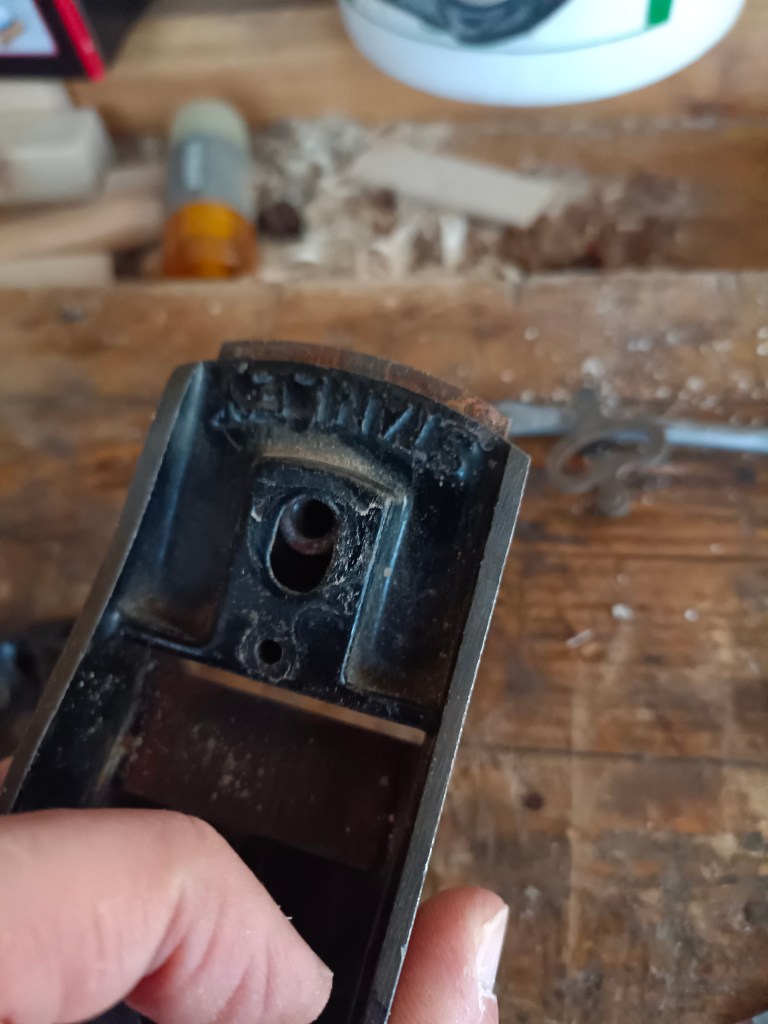
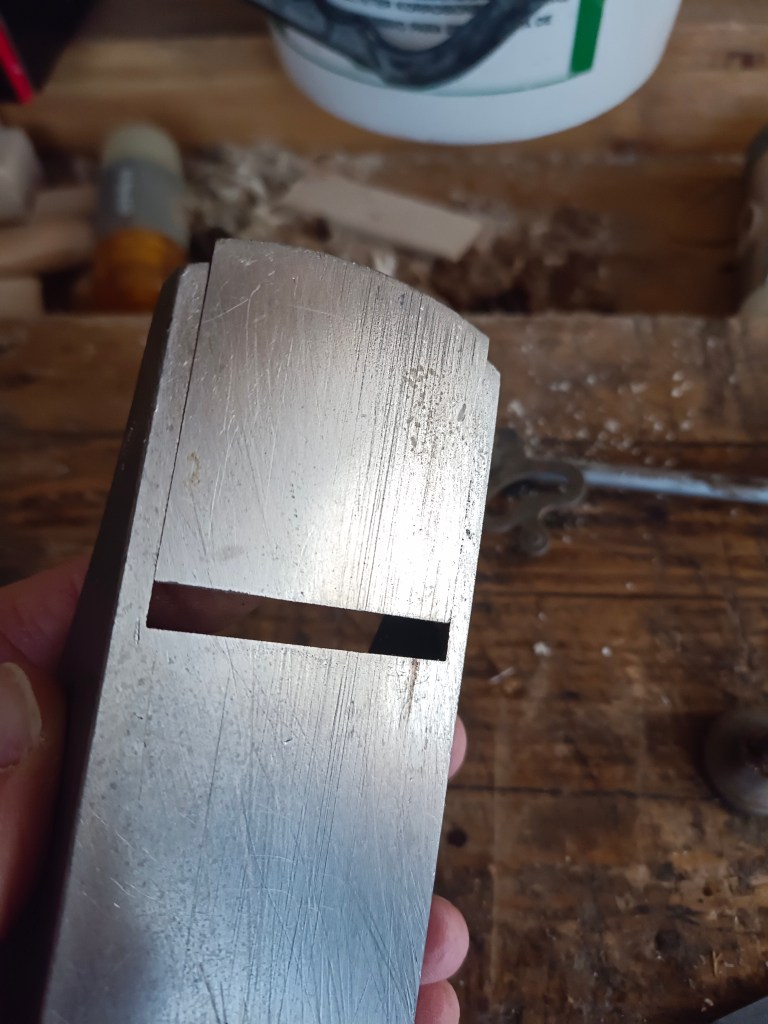
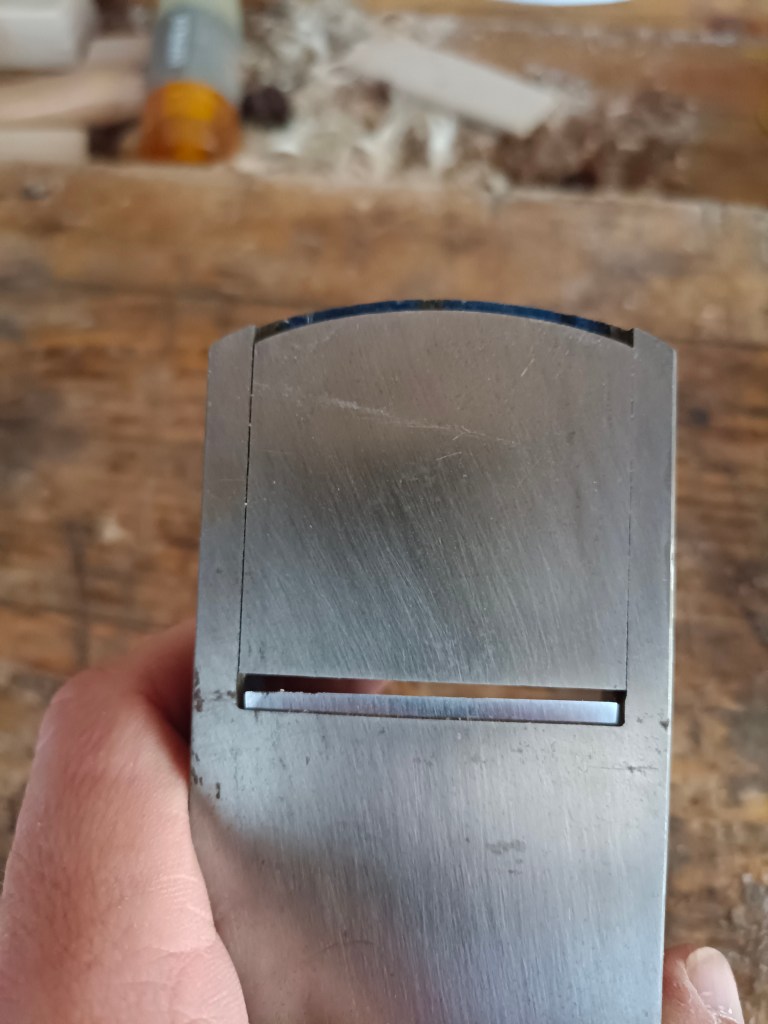
In molti modelli di block plane é inoltre possibile aumentare le dimensioni della bocca, spostando in avanti la porzione frontale della suola.
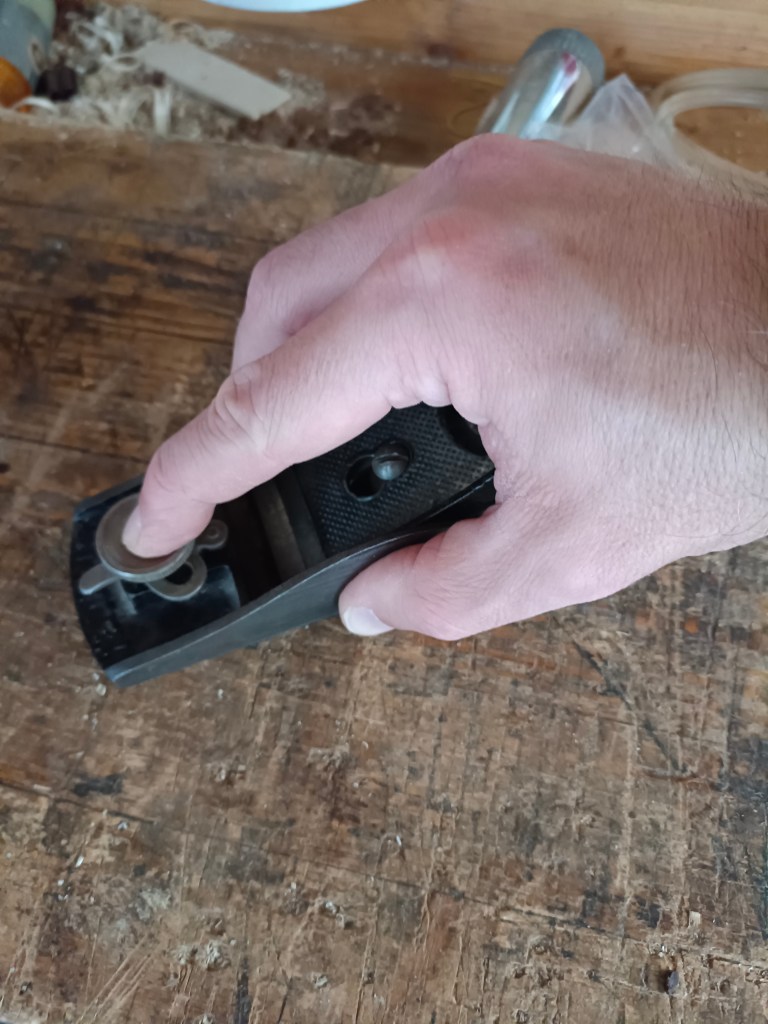
Se usiamo il pialletto con una sola mano, il palmo della mano dominante si appoggia sulla parte superiore e anteriore e le dita avvolgono i fianchi mentre con il dito indice, poggiato sul pomello o sul bottone frontale, si comanda la direzione. Questa posizione, unita alle misure contenute, permette di esercitare una pressione proprio in corrispondenza del tagliente, mantenendo la suola ben adesa e contrastando il c.d. fenomeno del chattering, ovvero il sobbalzamento della lama, comune nelle piallature di testa e traverso vena.
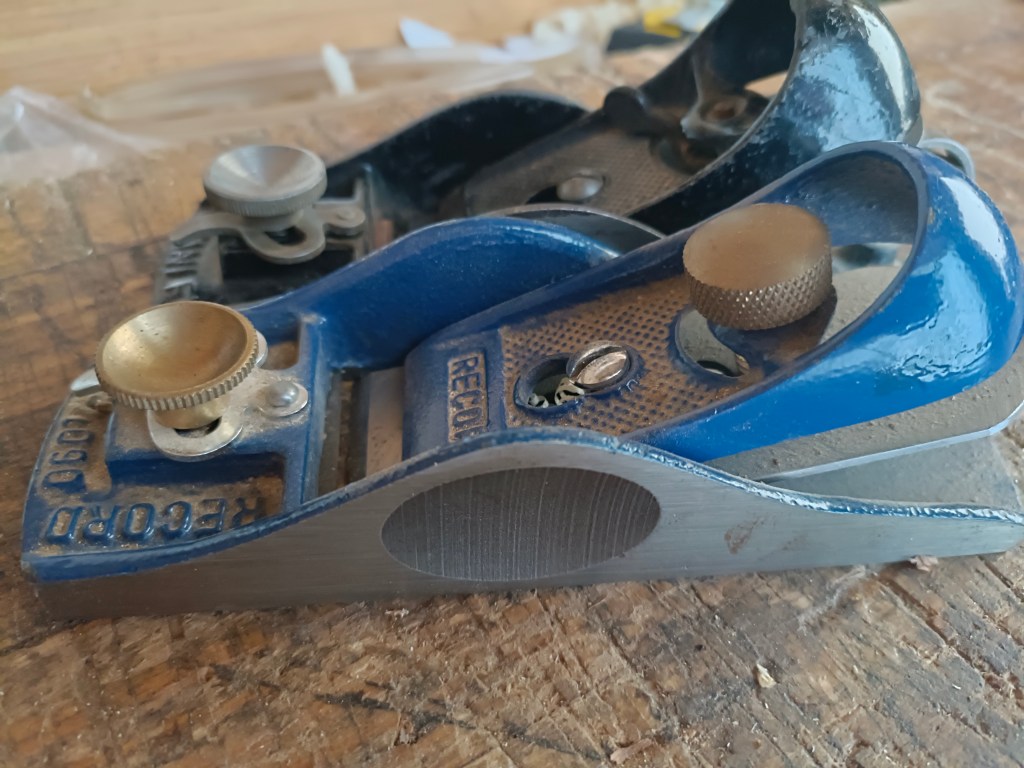
I modelli più diffusi di block plane sono quelli prodotti da Stanley e, tra questi, i due più famosi sono la Stanley 9 1/2 e la Stanley 60 1/2. Anche la Record ha prodotto delle block planes ricalcando in tutto e per tutto lo stile Stanley. Vediamo di seguito i due modelli.
Stanley 9 1/2
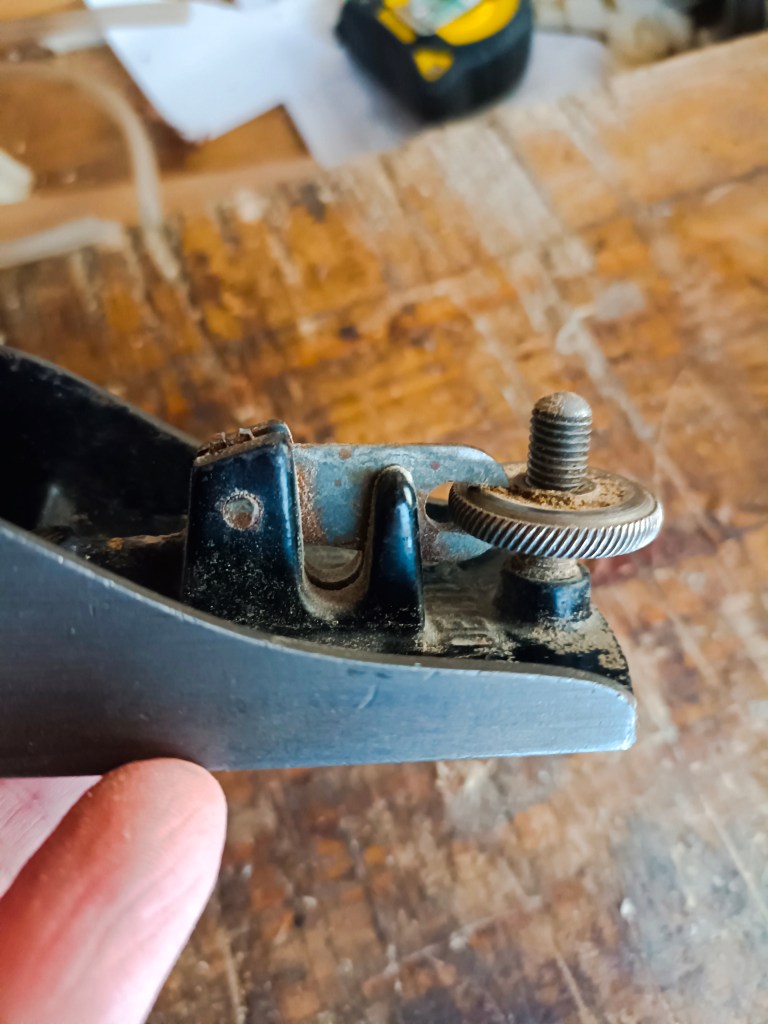

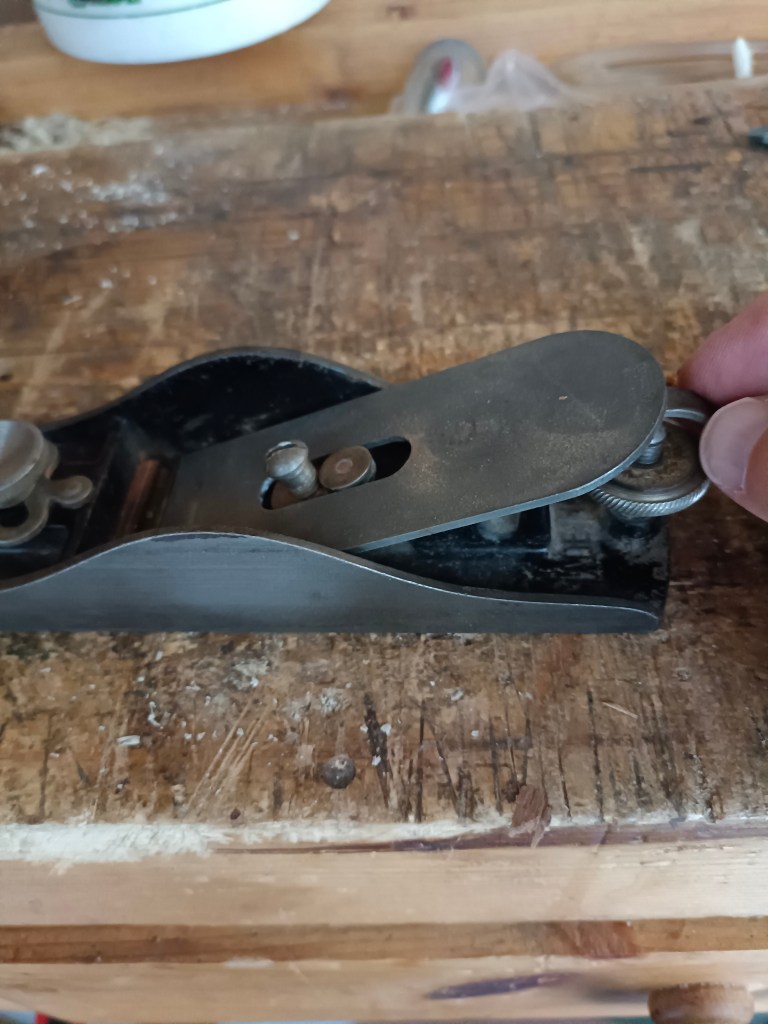
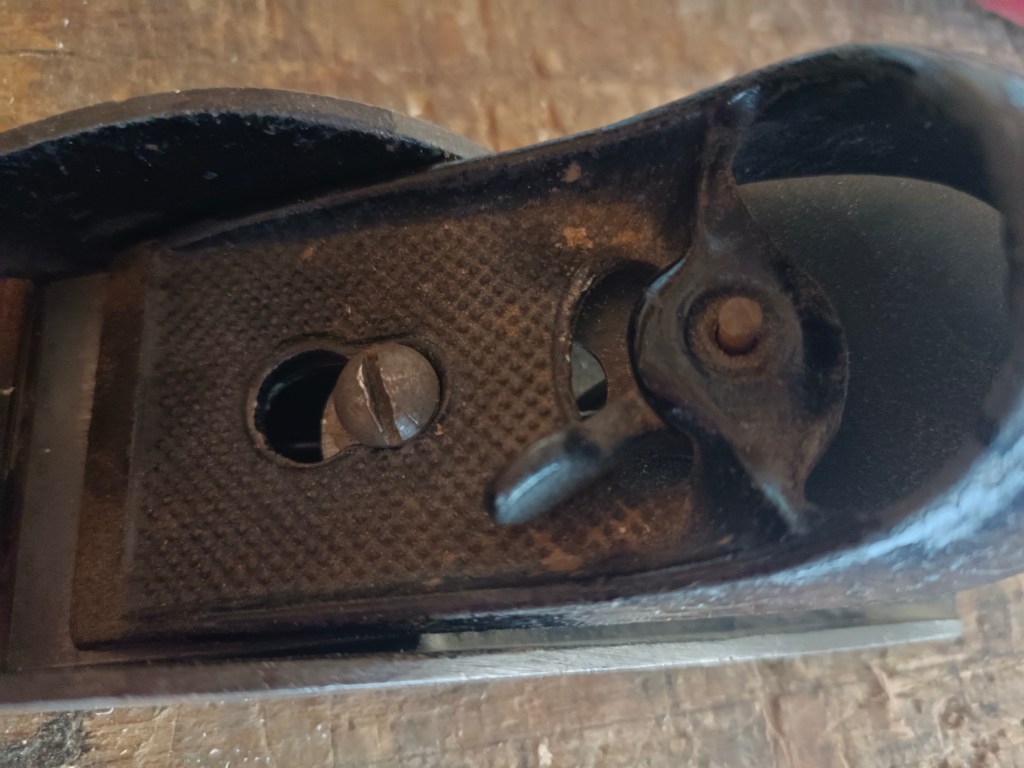
Descrivere la Stanley 9/12 è descrivere la maggior parte delle block planes prodotte da Stanley. E’ provvista di una rotella di regolazione di profondità della lama che è trattenuta da un sistema a ganascia. Ruotando la rotella in senso orario o antiorario il sistema a ganascia arretra o avanza consentendo al perno, che ingaggia in una delle svariate scanalature presenti sul dorso inferiore della lama, di far arretrare o avanzare la lama. E’ presente inoltre una leva di spostamento laterale della lama e un bottone (o pomello) anteriore che, se svitato, permette di spostare avanti ed indietro la parte anteriore della suola così da ottenere una bocca più o meno ampia. Come abbiamo già detto, la lama è in configurazione bevel up, non è presente il controferro e l’angolo di seduta è di 20 gradi. Il lever cap è mantenuto in posizione dalla classica vite centrale e serrato da una leva a stringere.
Il modello che possiedo, e mostrato nelle foto, è made in USA e cercando un pò su internet sembrerebbe appartenere ai c.d. modelli militari, dati in dotazione alle forze armate USA durante la seconda guerra mondiale. Non sono presenti parti in ottone e in legno ma solo in acciaio, più spesso di quello utilizzato di solito su questo modello di pialla. Inoltre non sono presenti sui fianchi le classiche sagomature che ne facilitano l’impugnatura.
Record 60 1/2
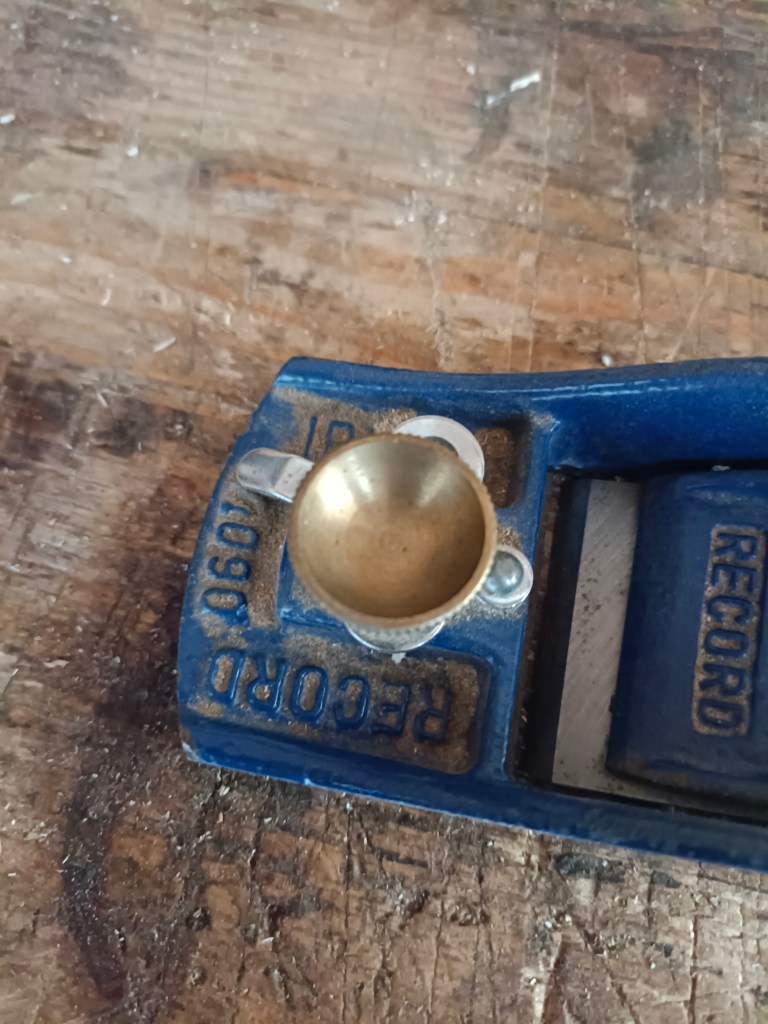
La Record 60 1/2 è un clone della Stanley 60 1/2. Come la Stanley 9 1/2, di cui abbiamo parlato sopra, ha la possibilità di aumentare o diminuire la dimensione della bocca spostando in avanti o indietro la parte anteriore della suola, svitando il pomello anteriore. Il sistema di regolazione di profondità è governato da una rotella che interagisce con una lunga vite che fa scendere o salire la lama, nella quale sono presenti le scanalature di ingaggio del perno. Non è presente la leva di aggiustamento laterale della lama ed ha le sagomature laterali per l’impugnatura. L’ angolo di seduta della lama e di 12 gradi e quindi è da considerarsi una low angle, particolarmente adatta per lavorare il legno di testa.

Il mio uso delle block planes è sporadico e non le ritengo un acquisto fondamentale. Le utilizzo solo se devo lavorare il legno di testa su piccoli pezzi oppure fare delle rifiniture sugli spigoli del legno.
_________________________________________________________
Block planes are small planes, used mainly for finishing work. Precisely the fact of being small in size makes them particularly easy to handle and can be used even with just one hand, reaching places that would otherwise be unreachable with common bench planes.
Being small, they are “travel planes” and are very useful if we have to do work or assemble products on site, rather than in our laboratory.
Block planes find their greatest use on small pieces and for planing end grain or for chamfering edges. In these cases it is usually used with just one hand. For larger pieces it can also be used with two hands.
Being small in size, the sole does not entirely cover the surface of the piece we need to shape and this allows for greater visibility of the work area.
Being bevel up, the cutting edge covers the mouth opening more and this is another fact that makes it particularly suitable for work on end grain.
There are block planes on the market with a 12 degree seat (so-called low angle) and 20 degree seat. By sharpening the bevel at 25 degrees (which is the normal sharpening inclination of plane blades) you reach 37 degrees or 45 degrees respectively. The 37 degree cutting angle is lower than the 45 degrees found in normal bench planes and makes it more effective for working on end grain and cross grain. One of the advantages of low angle bevel up planes is that we can prepare many sharpened blades at different grades and use them depending on the type of work we need to do.
In many block plane models it is also possible to increase the size of the mouth by moving the front portion of the sole forward.
If we use the plane with only one hand, the palm of the dominant hand rests on the upper and front part and the fingers wrap around the sides while the index finger, resting on the knob or on the front button, controls the direction. This position, combined with the small dimensions, allows you to exert pressure precisely at the cutting edge, keeping the sole well adhered and counteracting the so-called chattering phenomenon, i.e. the bouncing of the blade, common in end and cross-grain planing.
The most popular block plane models are those produced by Stanley and, among these, the two most famous are the Stanley 9 1/2 and the Stanley 60 1/2. Record also produced block planes following the Stanley style in every way. Let’s see the two models below.
Stanley 9 1/2
To describe the Stanley 9/12 is to describe most of the block planes produced by Stanley. It is equipped with a blade depth adjustment wheel which is held by a jaw system. By rotating the wheel clockwise or anticlockwise, the jaw system moves backwards or forwards, allowing the dog, which engages in one of the various slots in the undrside of the cutting iron, to move the blade backwards or forwards. There is also a lateral blade movement lever and a front button (or knob) which, if unscrewed, allows you to move the front part of the sole back and forth so as to obtain a more or less wide mouth. As we have already said, the blade is in a bevel up configuration, there is no cap iron and the seat angle is 20 degrees. The lever cap is held in position by the classic central lever cap screw and tightened by a tightening lever.
The model I own, and shown in the photos, is made in the USA and looking a little on the internet it would seem to belong to the so-called military models, supplied to the US armed forces during the Second World War. There are no brass or wooden parts but only steel, thicker than that usually used on this model of plane. Furthermore, the classic shapes that make it easier to grip are not present on the sides.
Record 60 1/2
The Record 60 1/2 is a clone of the Stanley 60 1/2. Like the Stanley 9 1/2, which we talked about above, it has the possibility of increasing or decreasing the size of the mouth by moving the front part of the sole forwards or backwards, unscrewing the front knob. The depth adjustment system is governed by a wheel that interacts with a long screw that lowers or raises the cutting iron, in which there are slots for engaging the dog. There is no lateral blade adjustment lever and it has lateral contours for the handle. The seating angle of the blade is 12 degrees and therefore is to be considered a low angle, particularly suitable for working end grain.
My use of block planes is sporadic and I don’t consider them an essential purchase. I only use them if I have to work the end grain wood on small pieces or do finishing touches on the edges of the wood.


 CREAROBI
Lascia un commento