PUNTERUOLO PER LEGNO / THE AWL FOR WOOD
English translation at the end of the article
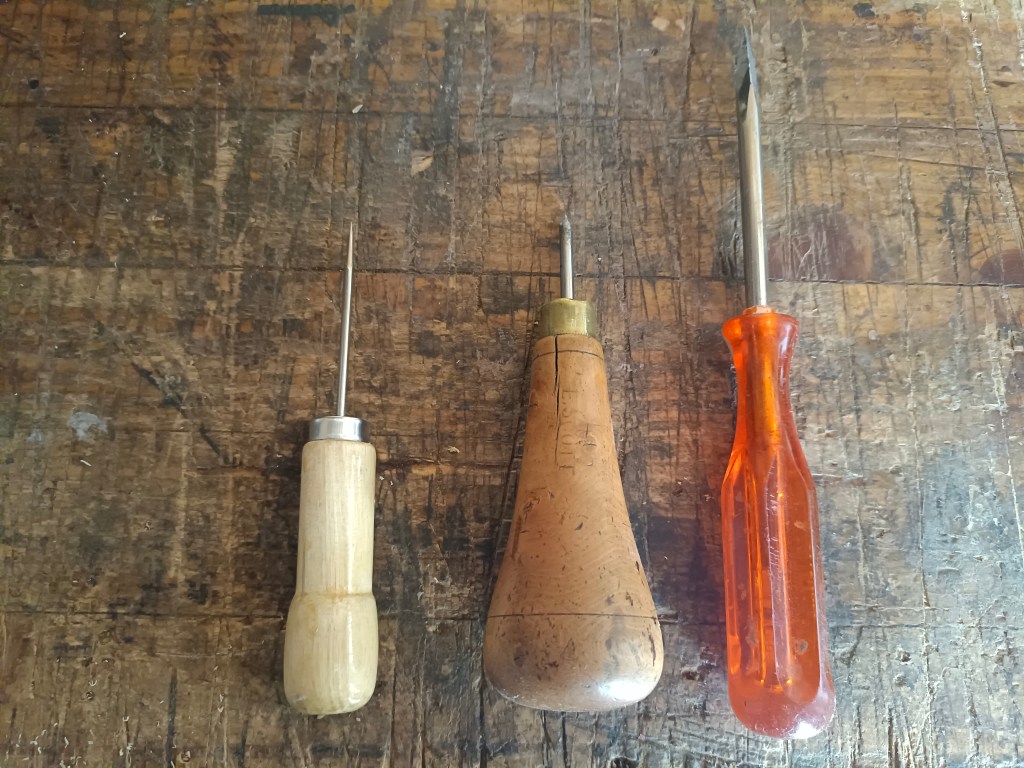
Il punteruolo è un utensile estremamente semplice sia nella forma che nel suo utilizzo. Somiglia ad un piccolo cacciavite ma il suo utilizzo è completamente diverso. Serve per praticare piccoli fori di invito nel legno per facilitare il successivo inserimento di viti o altri elementi.
Il primo utilizzo che viene in mente per chi fa lavori di falegnameria amanuense é per l’inserimento delle viti nelle cerniere, di cui abbiamo parlato in questo recente post. Come montare le cerniere piane a libro / How to install mortise butt hinges
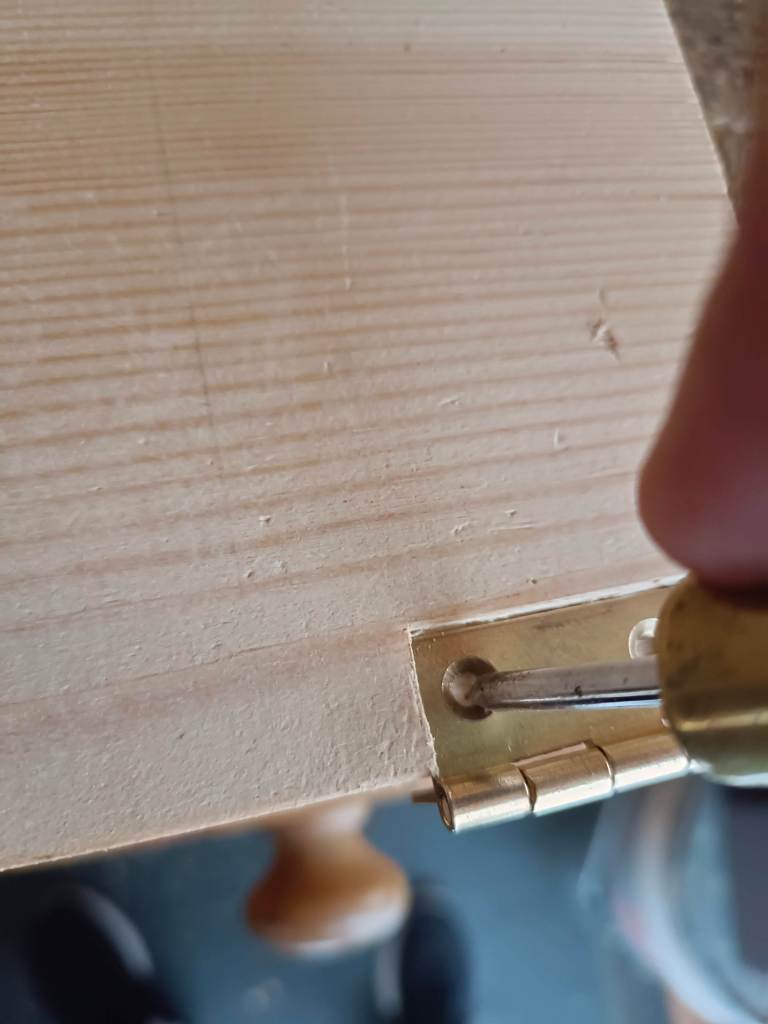
Prima di procedere all’inserimento di una vite sarebbe sempre opportuno marcare con il punteruolo il punto esatto dove andrà inserita e approfondire poi l’incisione di quanto si ritiene opportuno. Il suo utilizzo è estremamente semplice e intuitivo. Si fa forza sul punteruolo mentre si ruota di un quarto di giro avanti e indietro sino ad ottenere un foro di invito ottimale. Questo tipo di utensile è estremamente utile quando dobbiamo forare in prossimità della testa di un pezzo di legno, zona ad alto rischio di fessurazione. Praticare un foro di invito abbastanza profondo (anche utilizzando una punta per legno) permetterà di inserire la vite senza pericolo di spaccare il legno. I primi punteruoli, diciamo quelli ante 1960, erano fatti solo con il manico in legno. Successivamente é iniziata anche la produzione di punteruoli con il manico in plastica. Oggi si trovano in commercio ambedue i tipi. Personalmente preferisco quelli con il manico in legno, meglio se con la ghiera in ottone per rinforzare la zona dove il ferro è inserito nel manico.
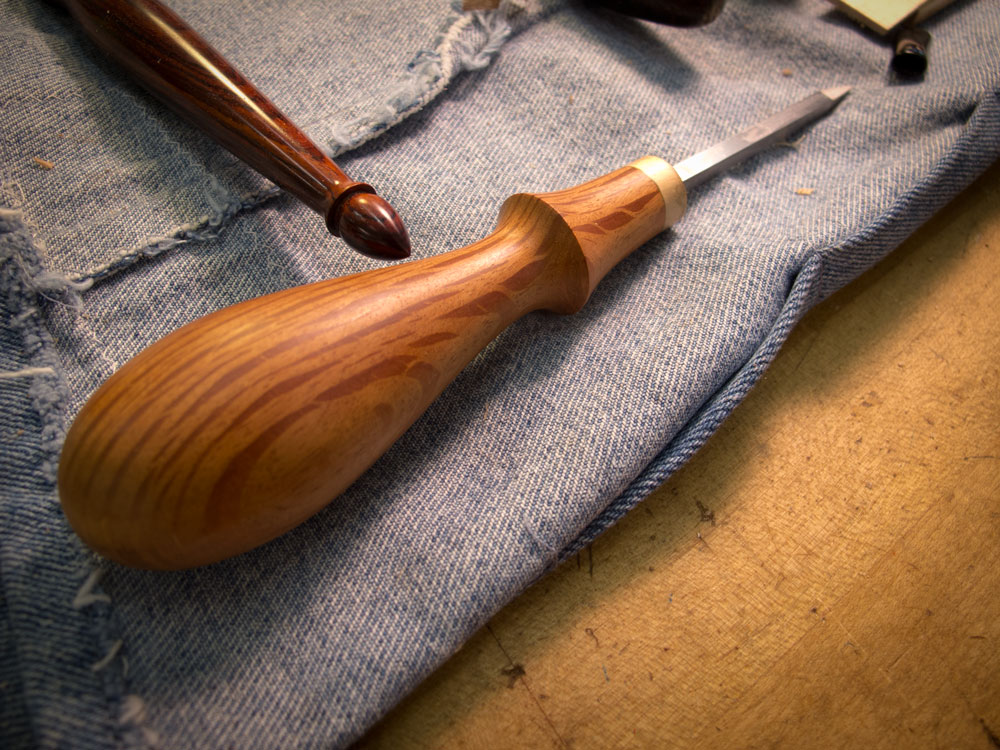
In commercio esistono cinque tipi di punteruolo. A gambo rotondo e punta conica, a gambo rotondo e punta a taglio, a gambo quadrato e punta squadrata, a gambo quadrato e a gambo tondo a punta piramidale. I punteruoli a gambo rotondo a punta conica (scratch awl) sono usati prevalentemente per incisioni su pellame, plastica e carta ma sono poco utili in falegnameria.
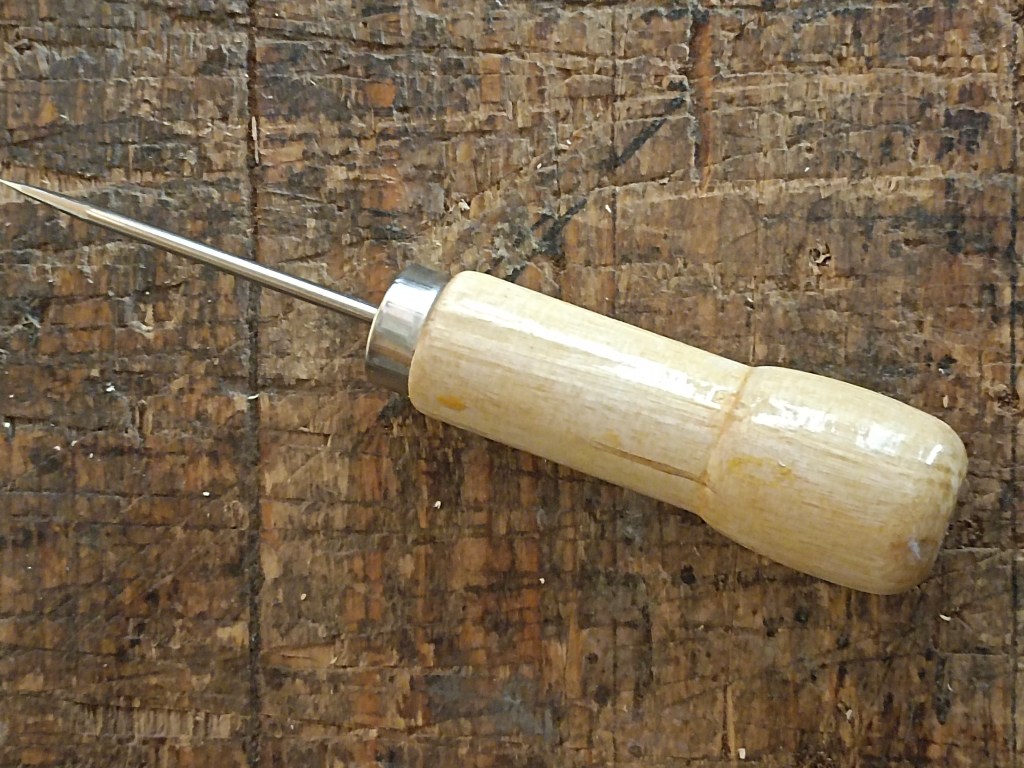
I punteruoli a gambo rotondo e punta a taglio (bradawl) sono sconsigliati perché si usurano facilmente e tendono a fessurare il legno. In falegnameria di solito si usano i punteruoli con gambo quadrato o rotondo ma con punta piramidale o squadrata. Questo tipo di punteruoli si chiamano in inglese square awl oppure birdcage awl (perché utilizzati in passato per realizzare le gabbiette per gli uccellini).
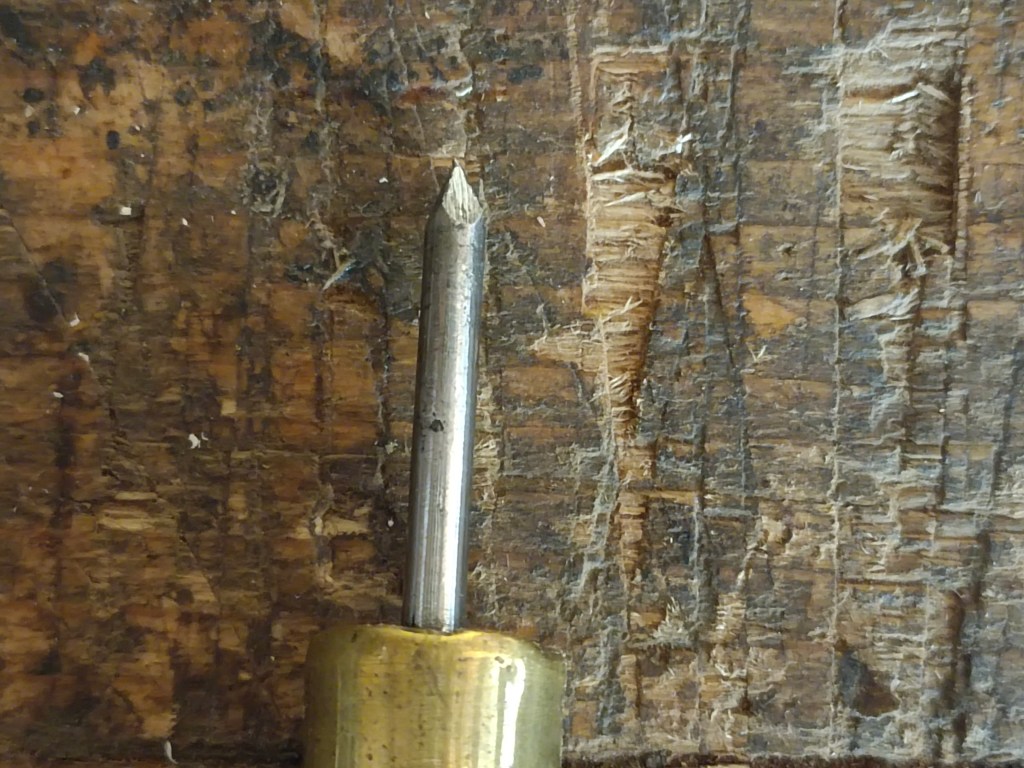
La punta piramidale o squadrata permette di fare fori di invito precisi che non rimuovono il legno ma più semplicemente lo spostano. Insistendo poi con il movimento rotatorio, arrivando ad utilizzare anche il gambo del punteruolo, la sua forma permetterà di ricavare un foro di invito dello stesso diametro della vite ovviando al contempo al pericolo di spaccature del legno nelle zone vicino al legno di testa.
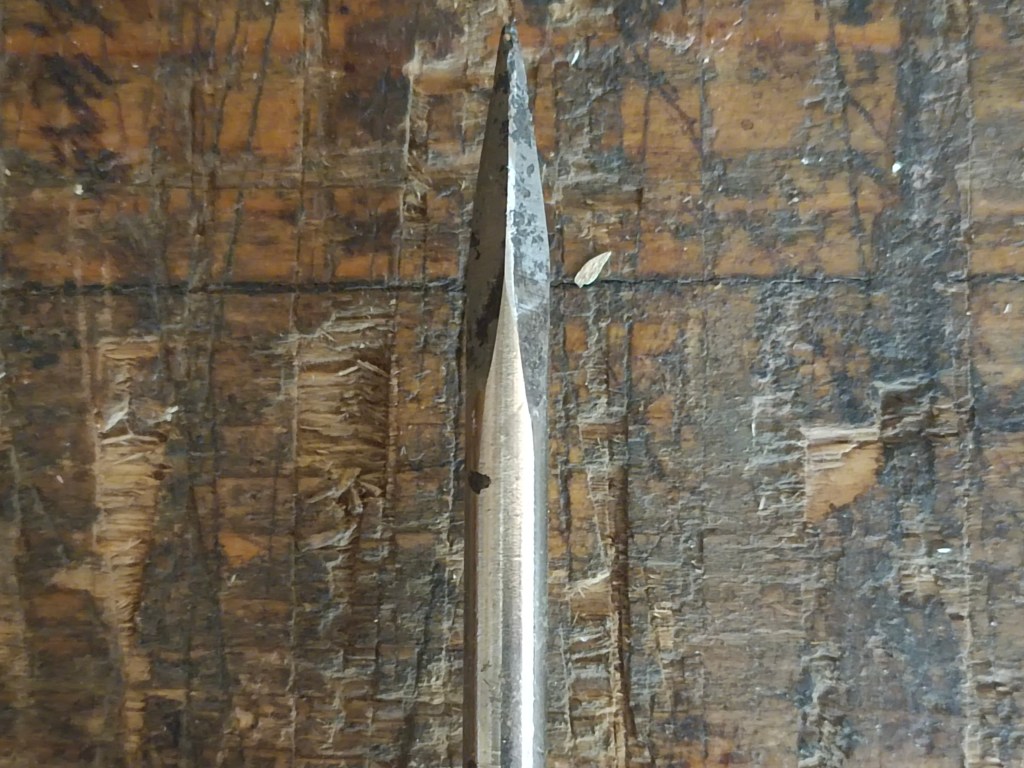
É possibile di tanto in tanto affilare sia i fianchi del gambo che la punta del punteruolo con una lima per ferro. In definitiva un utensile sicuramente poco conosciuto ed utilizzato oggigiorno ma indispensabile nella lavorazione manuale del legno.
———————————————————————-
The awl is an extremely simple tool both in form and in its use. It looks like a small screwdriver but its use is completely different. It is used to make small invitation holes in the wood to facilitate the subsequent insertion of screws or other elements. The first use that comes to mind for those who do woodworking by hand is for inserting screws in the hinges, which we talked about in a recent post. Before proceeding with the insertion of the screw, it would always be advisable to mark the exact point where it will be inserted with the awl and then deepen the incision as far as appropriate. Its use is extremely simple and intuitive. Force is applied to the awl while rotating a quarter turn back and forth until an optimal pilot hole is obtained. This type of tool is extremely useful when we need to drill near the head of a piece of wood, an area with a high risk of splitting; drilling a sufficiently deep pilot hole (even using a wood drill bit) will allow you to insert the screw without the risk of splitting the wood. The first awls, let’s say those before 1960, were made only with a wooden handle. Subsequently, the production of awls with plastic handles also began. Today, both types are commercially available. Personally I prefer those with a wooden handle, preferably with a brass ferrule to reinforce the area where the shank is inserted into the handle. There are five types of awl on the market. Round shaft and conical point, round shaft and flat point, square shaft and square point, square and round shaft and pyramidal point. The round shaft awls with conical point (scratch awls) are mainly used in non-carpentry fields such as for example for engraving on leather, plastic and paper but are not very useful in woodworking. Awls with a round shaft and a flat point (bradawl) are not recommended because they wear easily and tend to split the wood. In woodworking, awls with a square or round shaft and a pyramidal or square point are usually used. This type of awl is called square awl or birdcage awl (because they were used in the past to make bird cages). Their square or pyramidal point allows you to make precise pilot holes that do not remove the wood but simply move it. Insisting with the rotary movement and using the shaft of the awl, its shape will make it possible to obtain an invitation hole of the same diameter as the screw, while at the same time obviating the danger of splitting the wood in the areas near the end grain. From time to time it is possible to sharpen both the sides of the shaft and the point of the awl with an iron file. Ultimately a tool certainly little known and used today but indispensable in woodworking by hand.

 CREAROBI
Lascia un commento