SEGARE IL LEGNO. KNIFEWALL E TAGLIO TRAVERSO VENA / TO SAW A PIECE OF WOOD. KNIFEWALL AND CROSSCUT
English translation at the end of the article
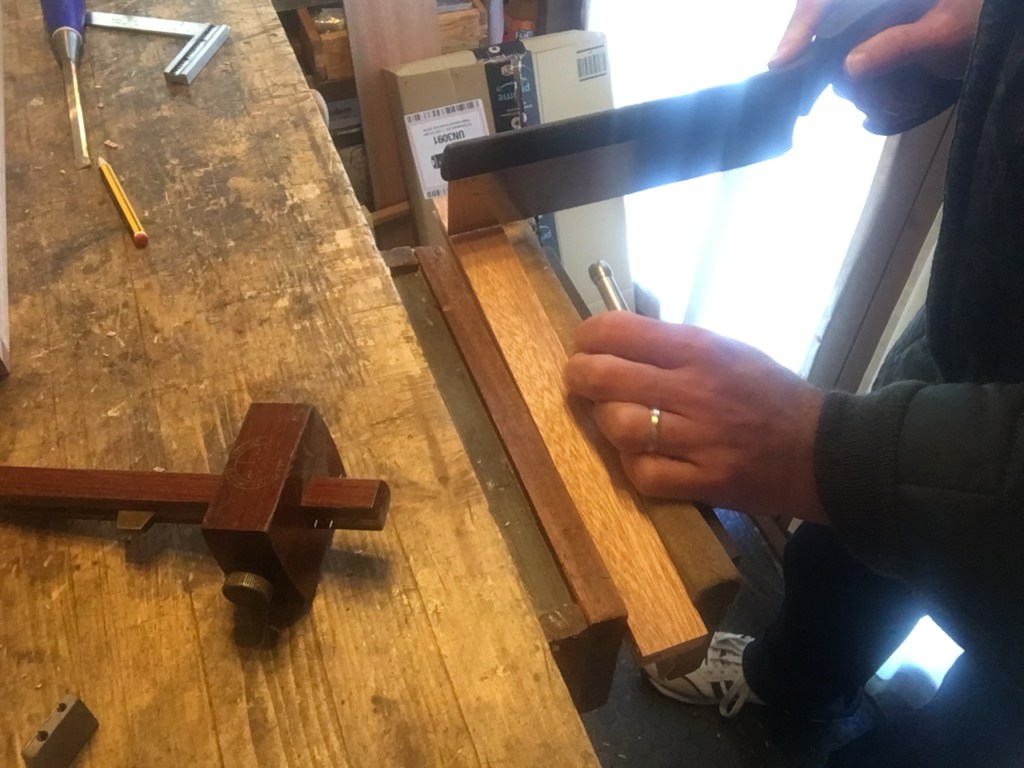
Inizia con questo post una serie di articoli nei quali metteremo in pratica molte delle conoscenze acquisite fino adesso e che saranno utili per poi poter iniziare i nostri progetti. Saranno articoli brevi e circostanziati così da non perdere di vista l’obiettivo primario.
Quando acquistiamo il legno é molto difficile che questo sia già delle giuste misure. La prima azione che dobbiamo fare é quasi sempre quella di segare il legno per portarlo alle dimensioni volute. Vediamo dapprima come tagliare traverso vena una tavola di legno, rimandando il taglio lungo vena al prossimo articolo. Tagliare traverso vena significa segare perpendicolarmente alla direzione della venatura, troncando le fibre del legno.
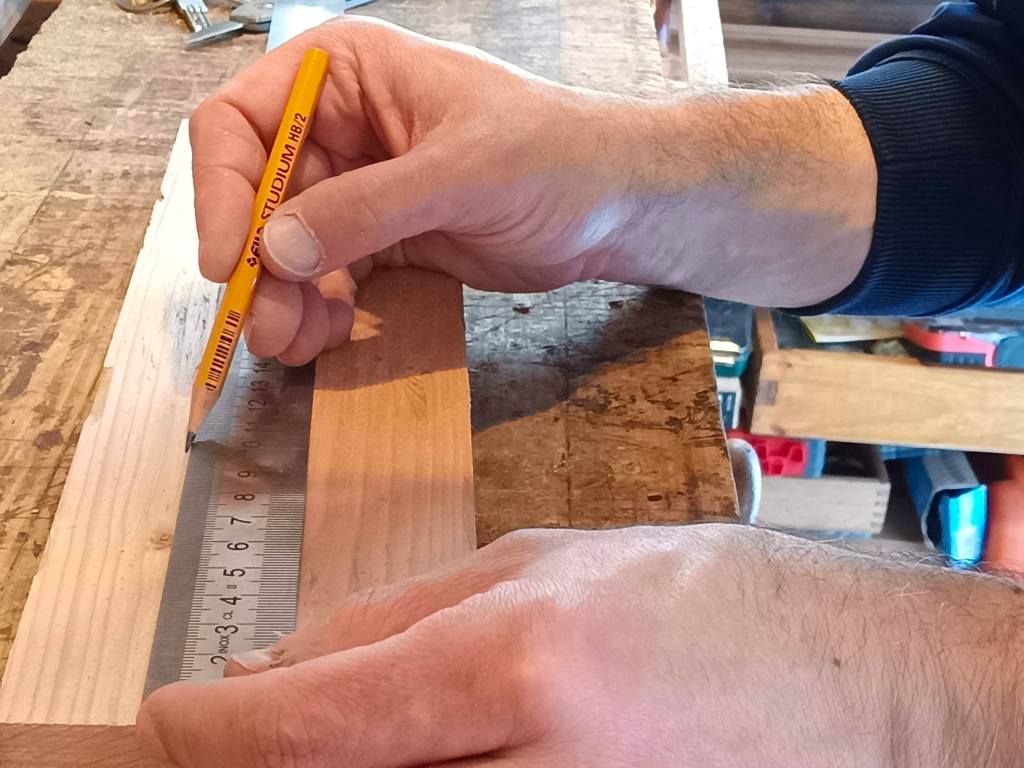
Con un flessometro o un righello prendiamo la misura e segniamola sul pezzo con un piccolo segno a matita.

Quindi, con una squadra posizioniamoci sulla traccia e con un coltellino da tracciatura pratichiamo una traccia per tutta la larghezza del pezzo.
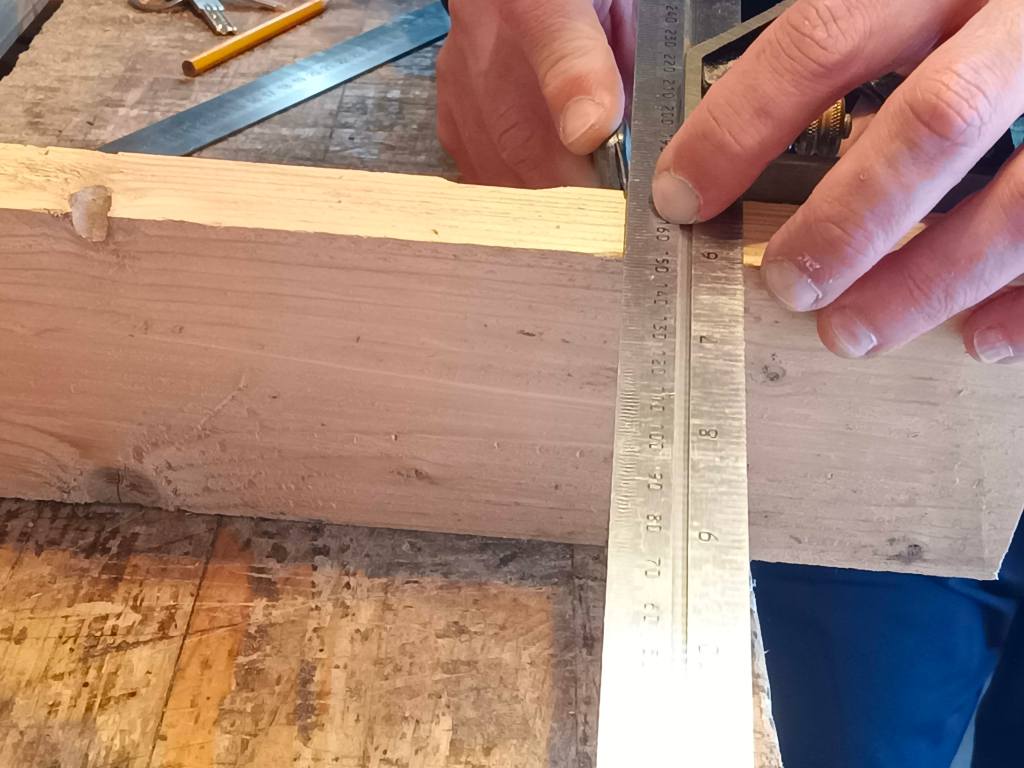
Usando come battuta lo stesso fianco, riportiamo la traccia sul fianco stesso e sull’altra faccia del pezzo. Infine congiungiamo le tracce sull’ultimo bordo.
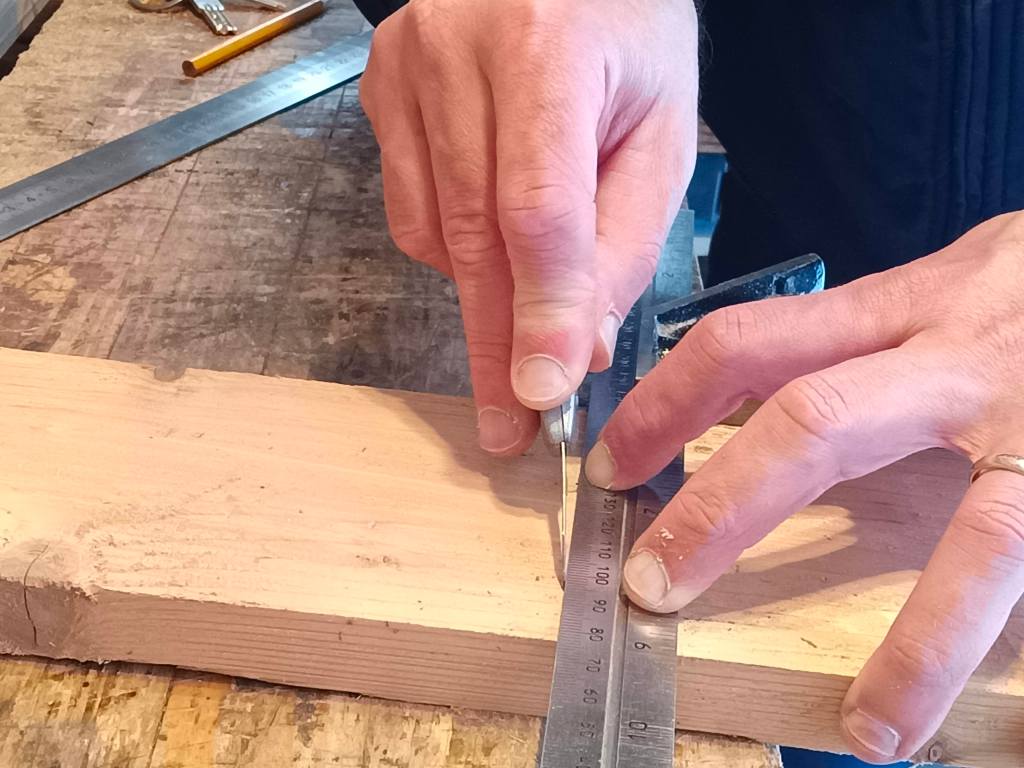
Durante la tracciatura manteniamo il coltellino leggermente inclinato esternamente per compensare lo smusso della lama.

Se vogliamo, possiamo ripassare la traccia con una matita ben appuntita, per una migliore visibilità.

Con una sega per tenoni o per code di rondine seghiamo a circa un millimetro di distanza dalla traccia, cercando di mantenerci dritti mentre tagliamo.
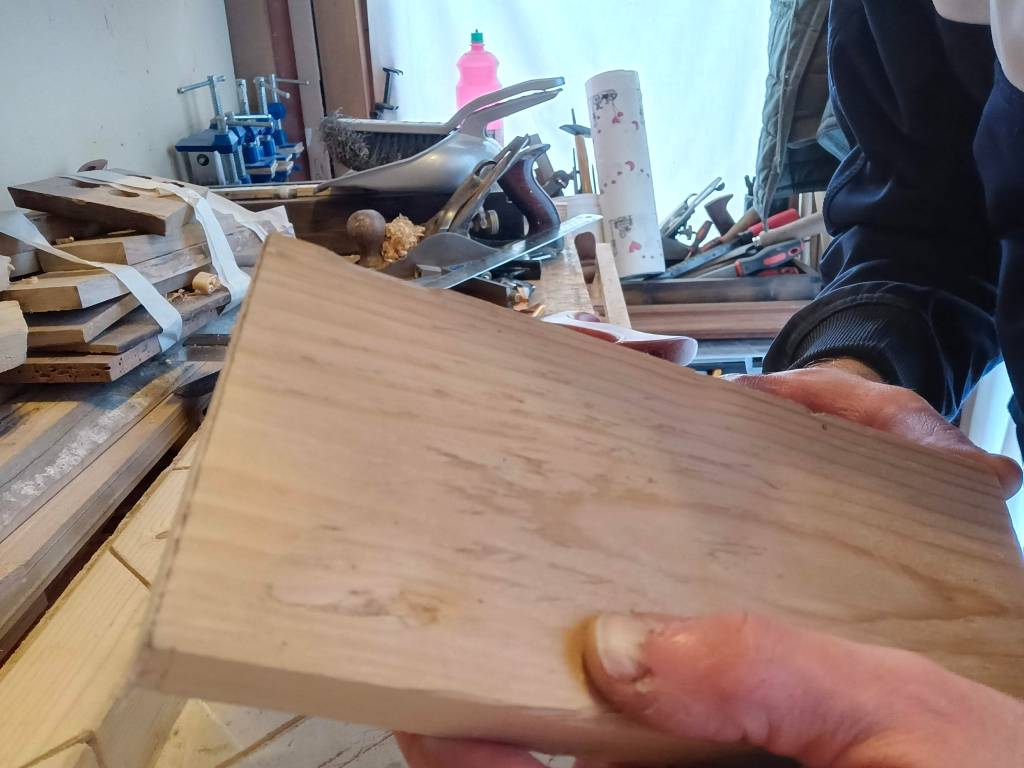
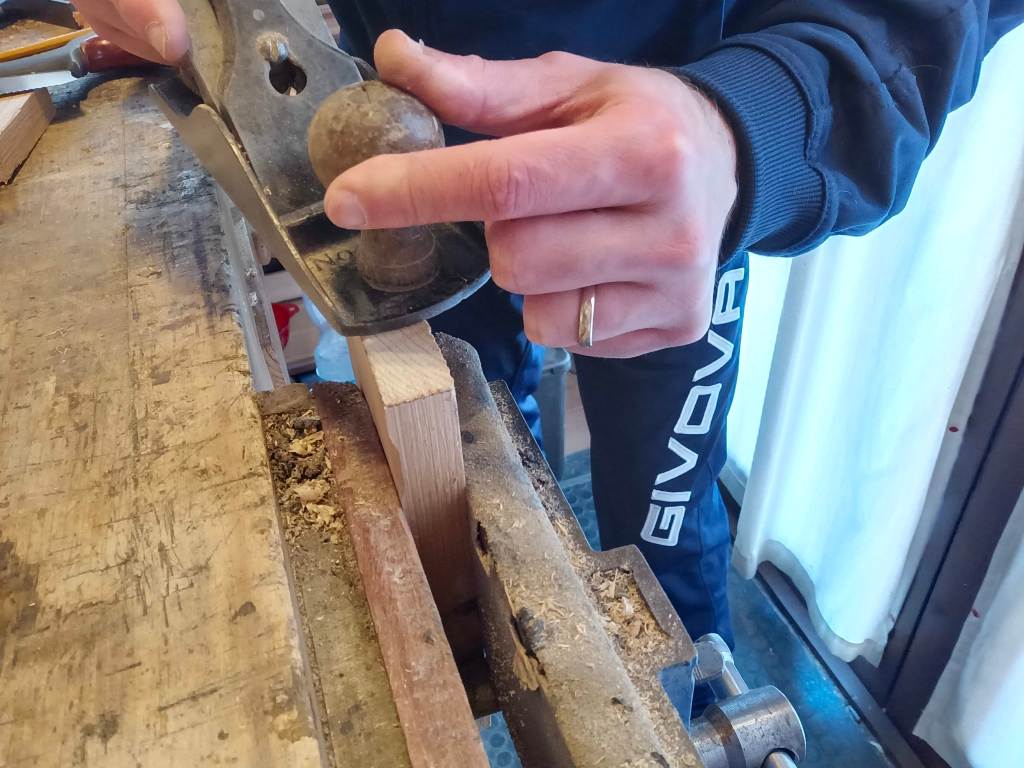
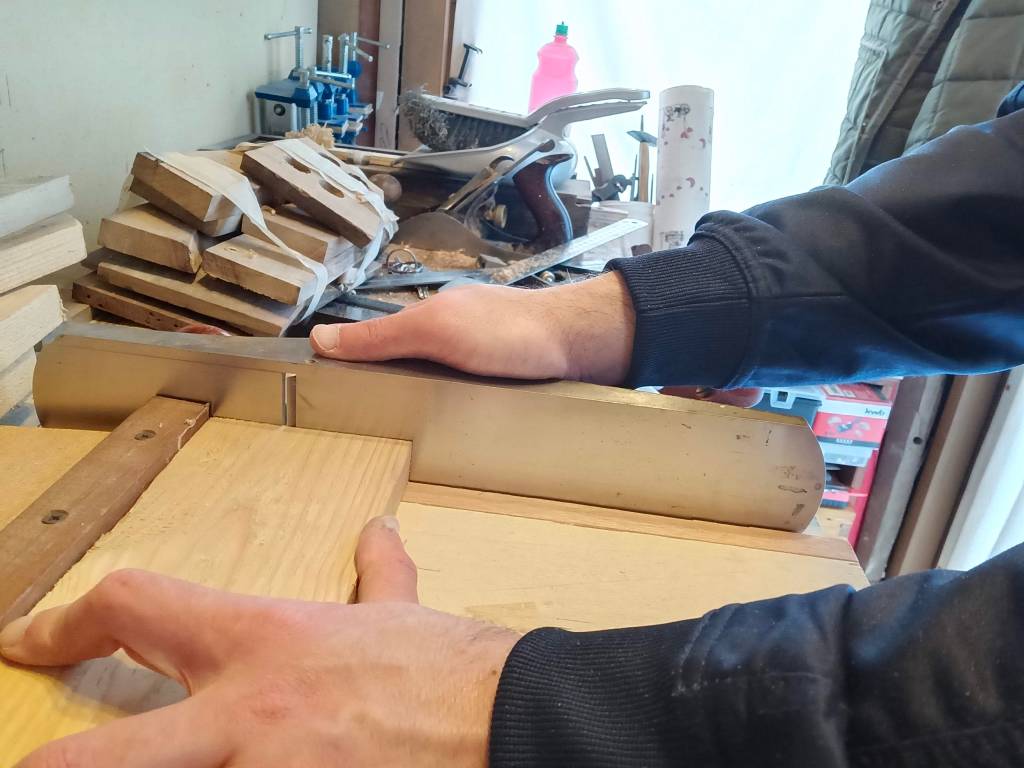
Infine, con il pezzo inserito nella morsa del banco o con l’ausilio di una shooting board, pialliamo sino alla traccia.
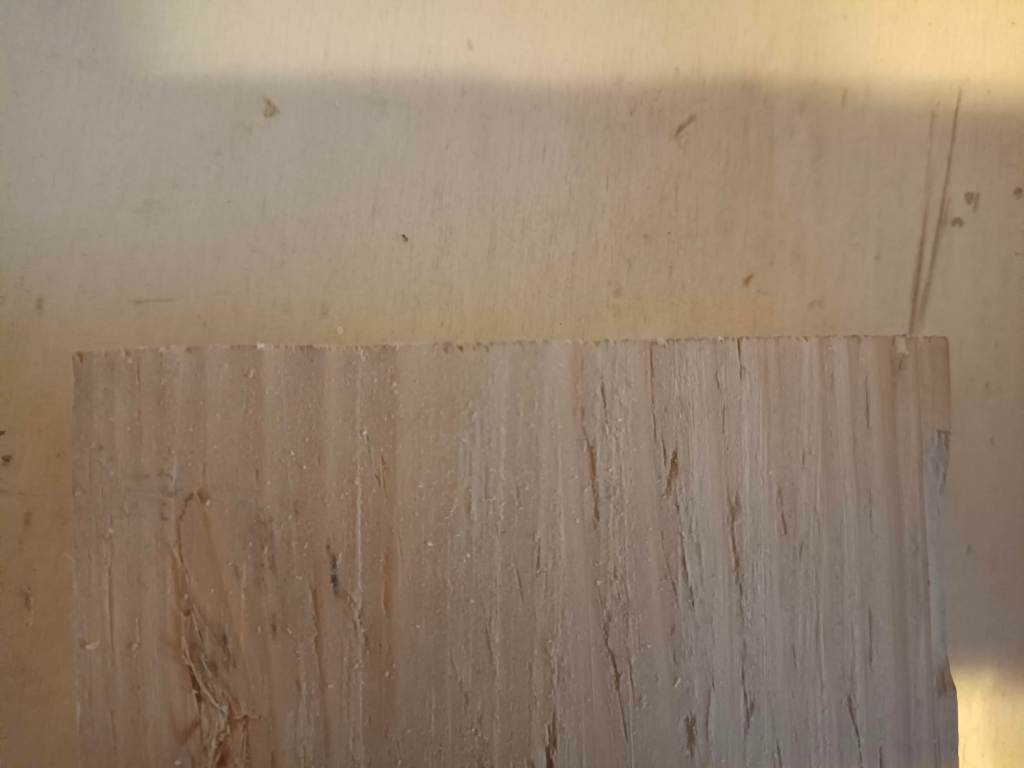
Se dobbiamo ricavare due pezzi dalla stessa tavola possiamo praticare due tracce invece di una. Facciamole distanziate in modo tale che lo spazio tra di esse possa accogliere lo spessore della lama della sega più un paio di millimetri. Seghiamo nel mezzo tra le due tracce cercando sempre di non andare storti. Infine pialliamo i due pezzi sino alle tracce.
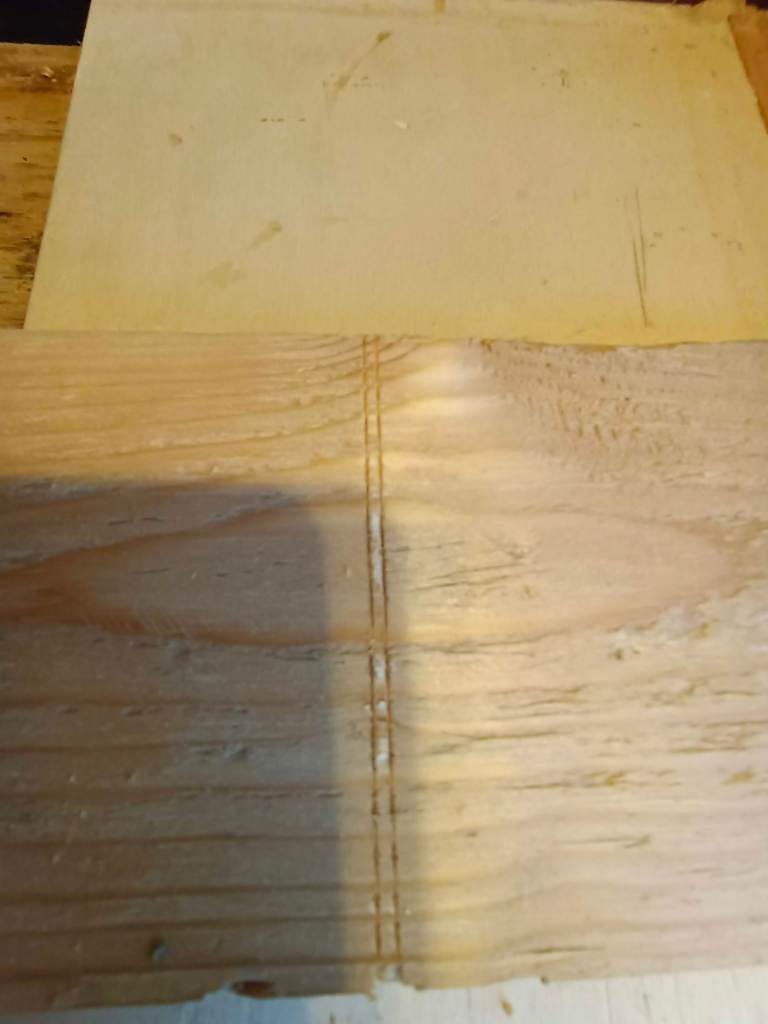
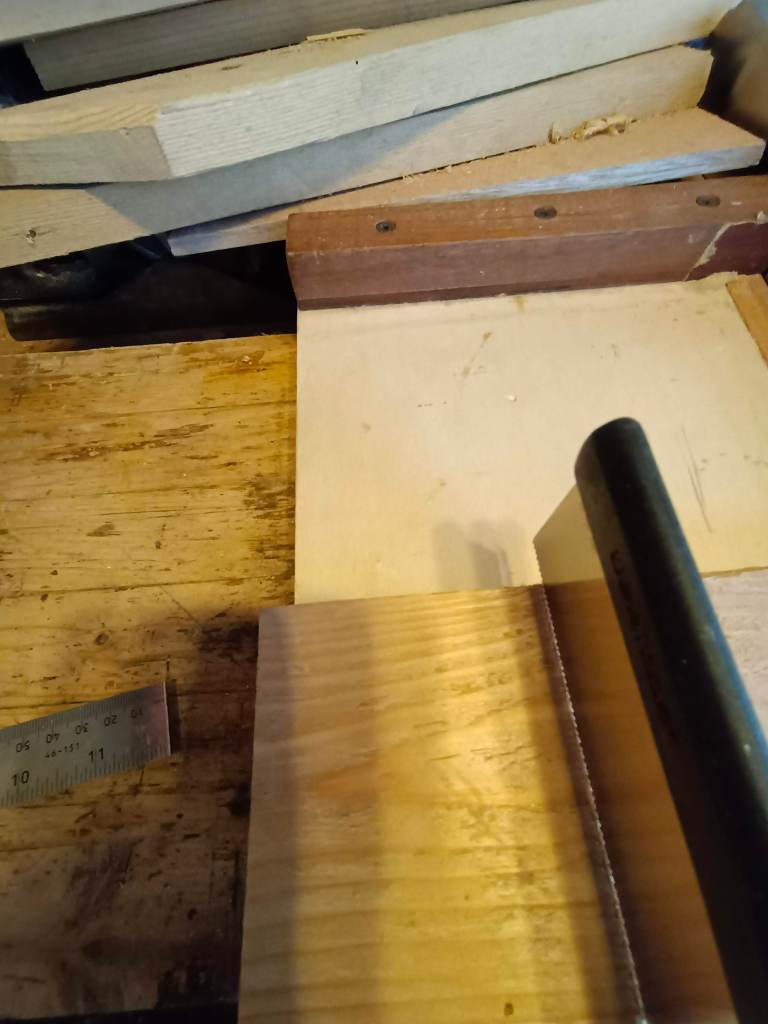
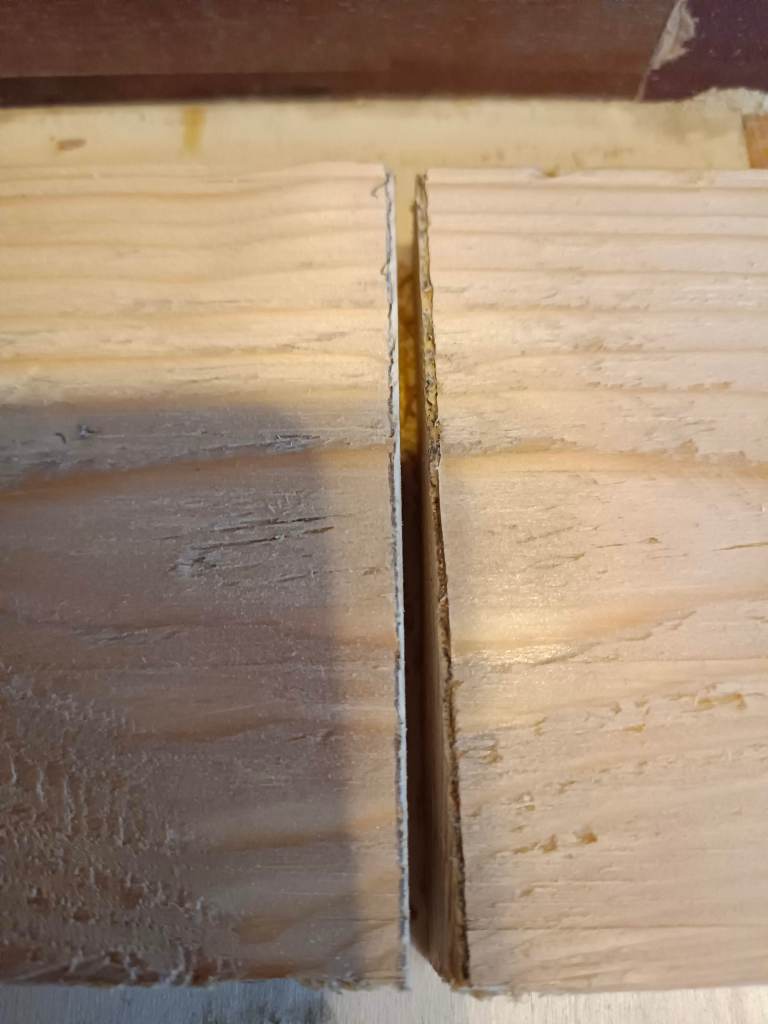
Questo sistema di tracciatura é stato chiamato knifewall dall’artigiano inglese Paul Sellers, ed é un classico metodo di tracciatura utilissimo perché permette di ottenere, oltre ad un riscontro visivo della misura, un limite fisico alla successiva piallatura a misura.
___________________________________________________________________________________
Start with this post a series of articles in which we will put into practice many of the knowledge acquired up to now and which will be useful to start our future projects. They will be short and detailed articles so as not to lose sight of the primary objective.
When we buy wood it is very difficult that this is already of the right measures. The first action we have to do is almost always to saw the wood to bring it to the desired size. Let’s first see how to cut a wooden board across the grain, postponing the cut along the grain to the next article. Cross grain cutting means sawing perpendicular to the direction of the grain, cutting off the wood fibers.
With a tape measure or a ruler we take the measurement and mark it on the piece with a small pencil mark.
So, with a square let’s position ourselves on the trace and with a knife we make a trace for the whole width of the piece.
Using the same edge as a measure, we report the trace on the same efge and on the other side of the piece. Finally we join the trace on the last edge.
During the tracing we keep the knife slightly inclined externally to compensate for the bevel of the blade.
If we want, we can go over the trace with a sharp pencil, for better visibility.
With a tenon or dovetail saw we saw about a millimeter away from the trace, trying to keep straight as we cut.
Finally, with the piece inserted in the bench vice or with the help of a shooting board, we plane up to the trace.
If we have to get two pieces from the same board we can practice two traces instead of one. Let’s make them spaced so that the space between them can accommodate the thickness of the saw blade plus a couple of millimeters. We cut in the middle between the two tracks always trying not to go wrong. Finally we plane the two pieces up to the traces.
This tracing system was called knifewall by the English craftsman Paul Sellers, and is a classic tracing method very useful because it allows to obtain, in addition to a visual confirmation of the measure, a physical limit to the subsequent planing to size.


 CREAROBI
Lascia un commento