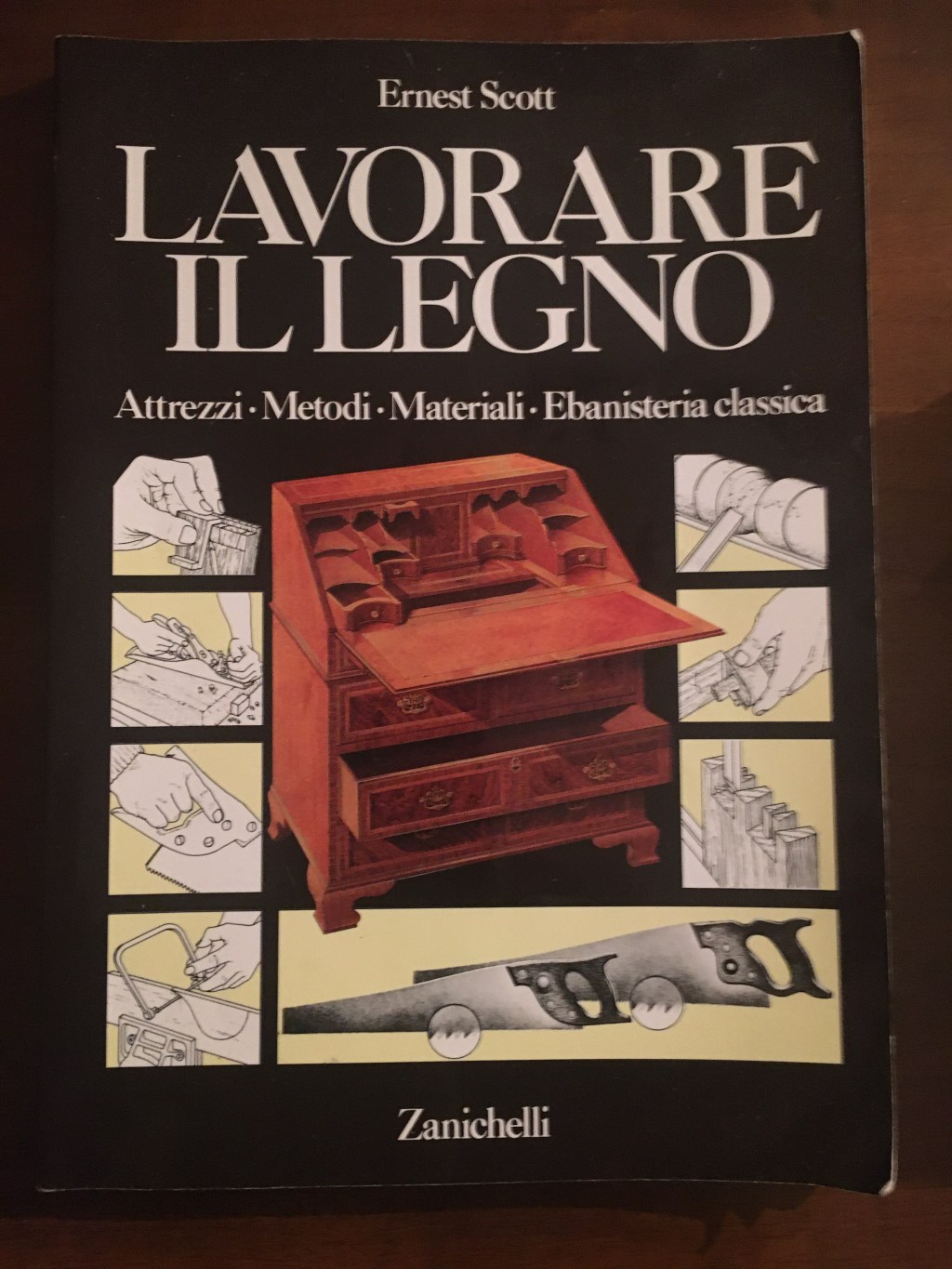
LAVORARE IL LEGNO DI ERNEST SCOTT / WORKING IN WOOD BY ERNEST SCOTT
English translation at the end of the article
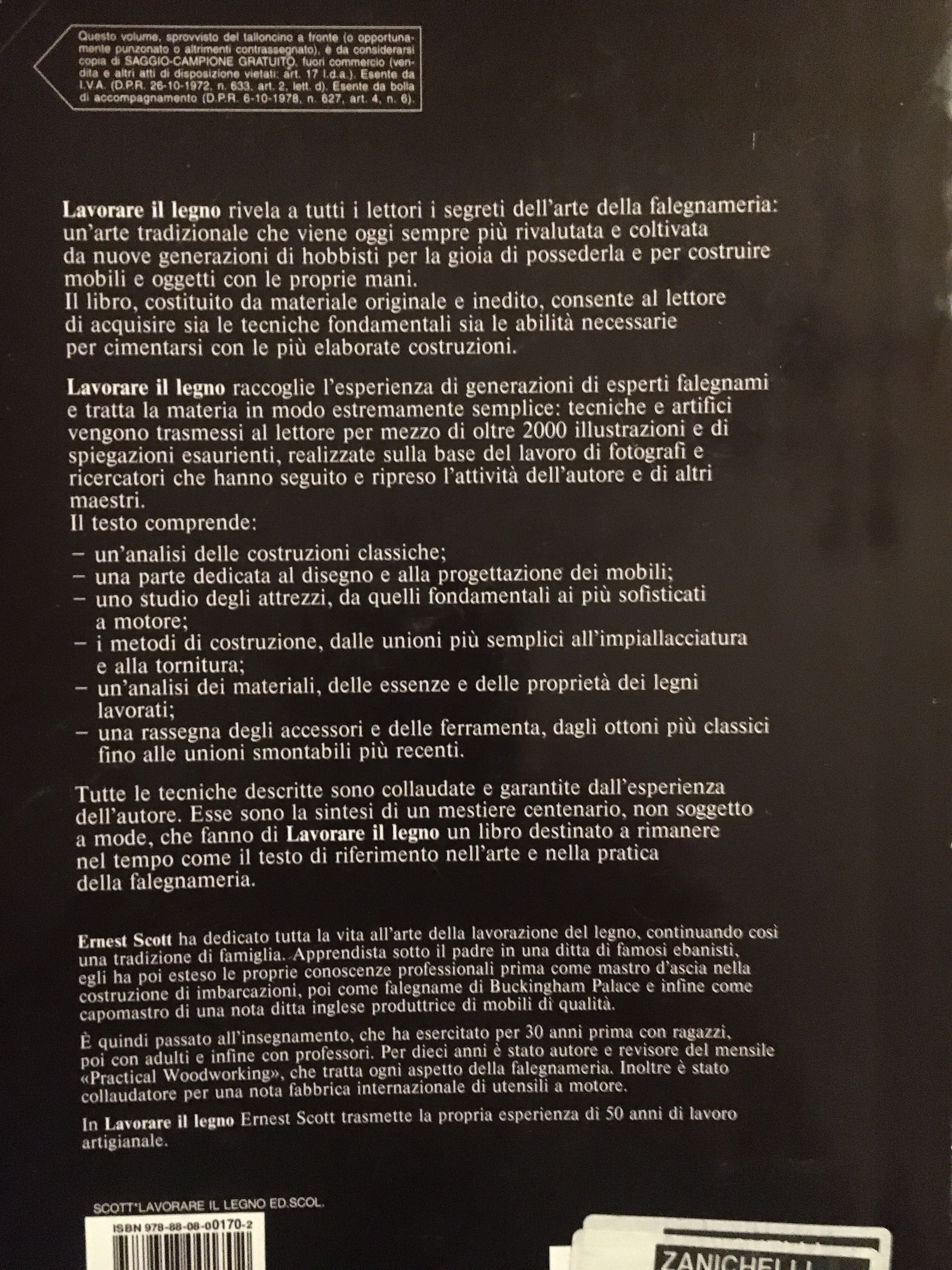
Ernest Scott è stato un rinomato artigiano inglese, maestro d’ascia, falegname e scrittore che ha lavorato anche come ebanista presso Buckingham Palace. Dalla sua esperienza nasce “lavorare il legno” un libro pubblicato nel 1980 che da allora ha visto molteplici ristampe. Il libro è veramente molto bello e ben fatto. Illustra tutte le principali tecniche di lavorazione del legno privilegiando quelle amanuensi della falegnameria classica.
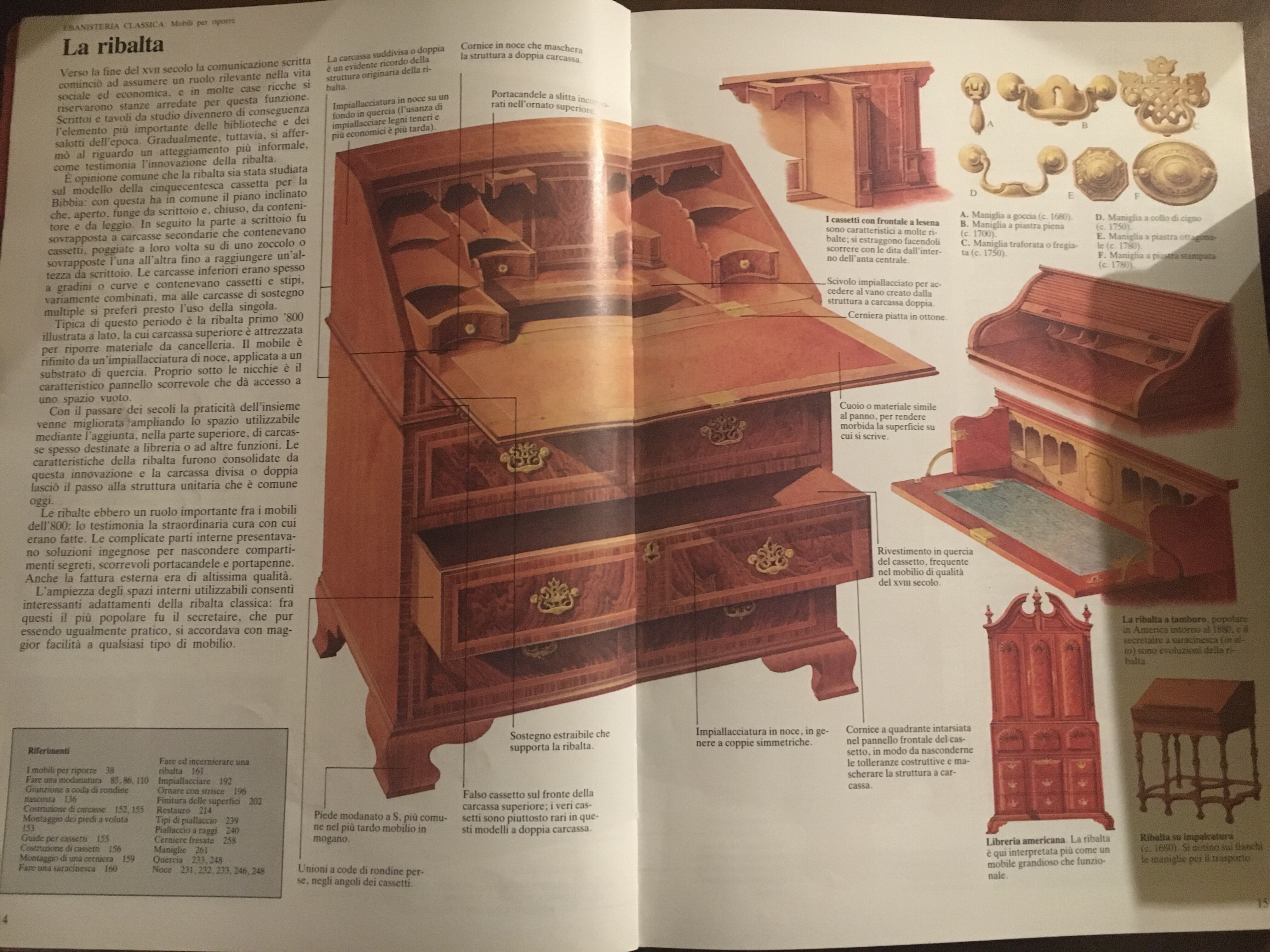
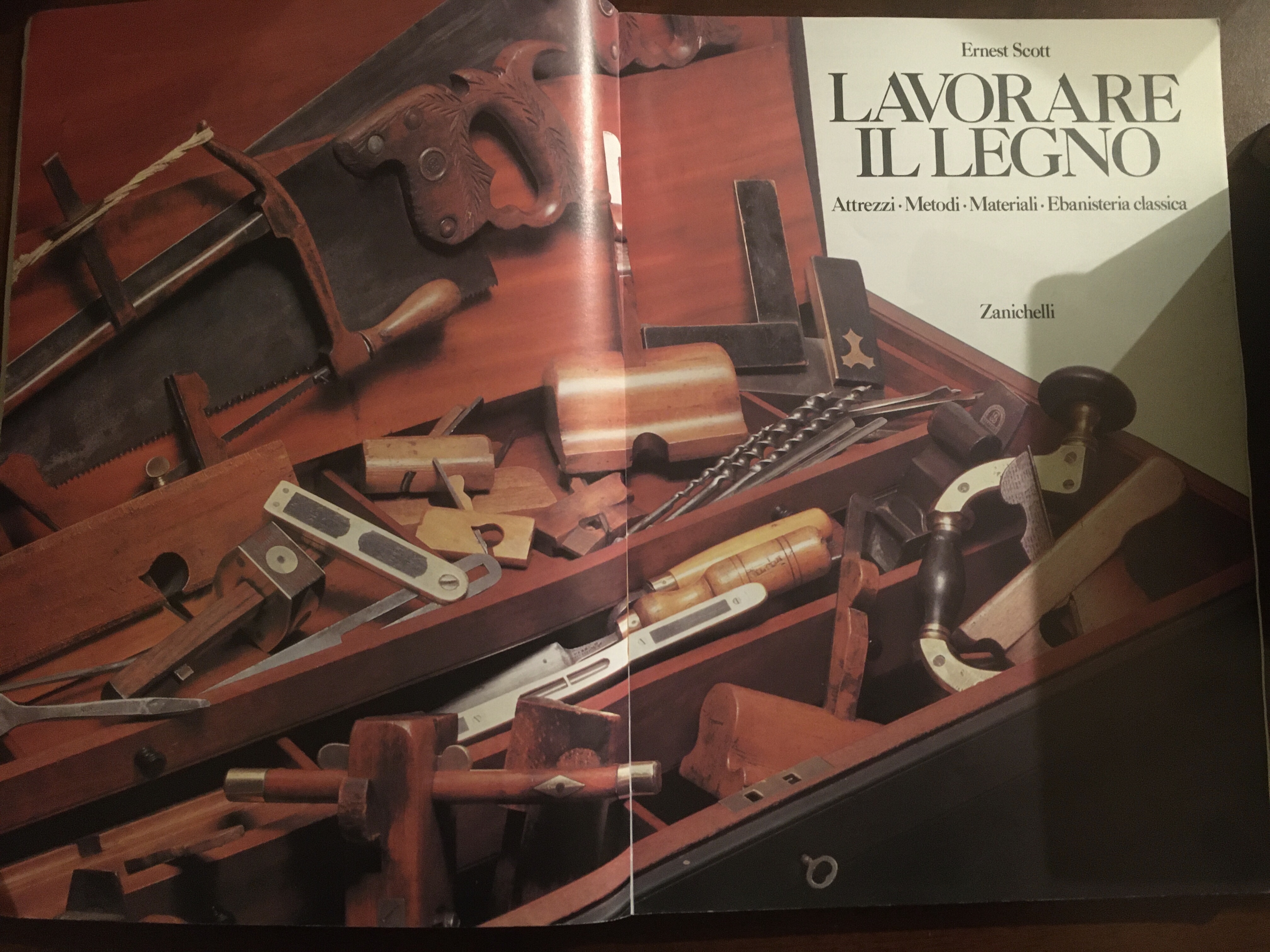
Degno di nota il primo capitolo, dove vengono passati in rassegna alcuni mobili, divenuti in seguito vere e proprie pietre miliari dell’arredamento classico, dei quali ne viene esposta nel dettaglio la tecnica costruttiva grazie all’inserimento di stupende immagini dal grande impatto visivo. Il libro ha anche una sezione dedicata agli utensili elettrici ma, essendo questo un settore in continua evoluzione, alcune delle informazioni in esso contenute appaiono superate. Come è logico aspettarsi da un grande ebanista, la gran parte del libro è occupata dalla descrizione degli utensili manuali, dalla loro affilatura e dalle lavorazioni amanuensi. Inoltre vi trovano spazio disegno e progettazione, tornitura, intaglio, scultura, impiallacciatura, restauro, materiali e ferramenta.
Tutte le tipologie di lavorazione e tutti gli aspetti della falegnameria vengono trattati in modo semplice e comprensibile ma forse proprio il voler ricomprendere in sole 272 pagine l’intero scibile fa sì che ci si riduca nell’affrontare i vari argomenti in maniera un po’ generica. Personalmente avrei preferito degli approfondimenti su quelle tematiche che sappiamo essere di maggiore utilità per chi lavora il legno mentre invece, leggendo, si avverte come la sensazione di un generico appiattimento su uno stesso livello di tutti gli argomenti trattati.
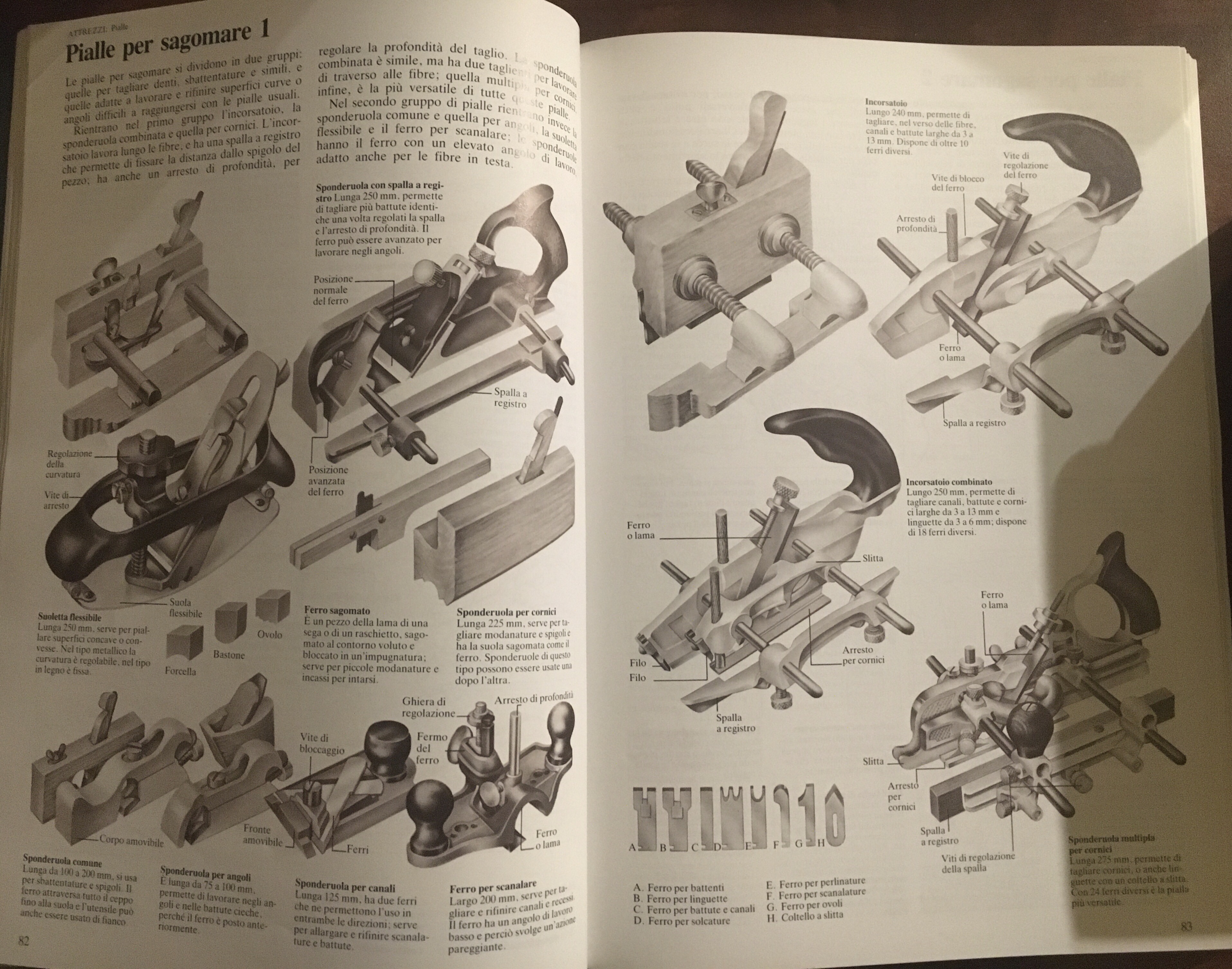
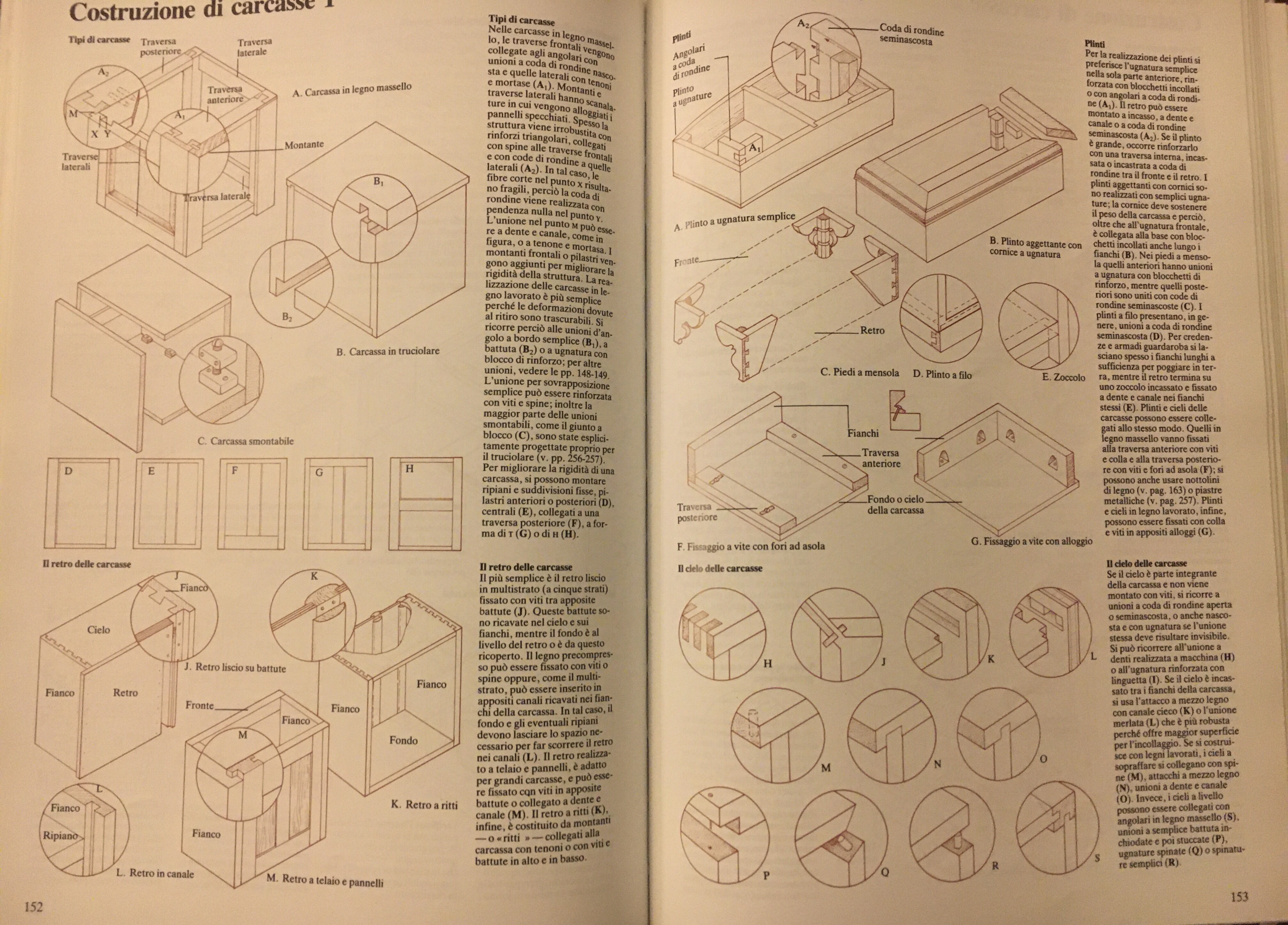
Molto belle comunque le illustrazioni, estremamente curate, ma soprattutto i disegni, ricchi di particolari che ho trovato molto più utili, ai fini esplicativi, rispetto alle fotografie. Trattandosi di un libro tradotto dall’inglese è anche apprezzabile lo sforzo di adattamento all’italiano, considerato che non è semplice ricondurre alla nostra lingua termini anglofoni spesso prettamente tecnici. Per finire, nelle ultime pagine del libro, sono passate in rassegna essenze e proprietà di molte tipologie di legno. Reputo questo libro uno tra i migliori tra tutti quelli tradotti in italiano e che trattano della falegnameria classica amanuense. Questo, sia per la vastità degli argomenti trattati, seppure talvolta in modo generico, sia per la ricchezza dei disegni e delle illustrazioni che lo arricchiscono, che lo rendono di fatto una lettura indispensabile soprattutto per coloro che vogliono avvicinarsi alla lavorazione manuale del legno. Un must da tenere sempre a portata di mano.
___________________________________________________________________________________
Ernest Scott was a well renowned English craftsman, shipwright, carpenter and writer who also worked as a cabinetmaker at Buckingham Palace. From his experience was born “working in wood” a book published in 1980 which since then has seen many reprints. The book is really beautiful and well done. It illustrates all the main woodworking techniques, favoring the scribes of classic carpentry. The first chapter is noteworthy, where some pieces of furniture are reviewed, which later became real milestones of classic furniture, of which the construction technique is explained in detail thanks to the inclusion of beautiful images with a great visual impact. The book also has a section dedicated to power tools but, as this is a constantly evolving sector, some of the information it contains appears to be out of date. As it is logical to expect from a great cabinetmaker, most of the book is occupied with the description of hand tools, their sharpening and woodworking by hand. In addition, there is space for drawing and planning, turning, carving, sculpture, veneer, restoration, materials and hardware. All types of workmanship and all aspects of carpentry are treated in a simple and understandable way but perhaps just wanting to include the whole knowledge in just 272 pages means that we are reduced to addressing the various topics in a somewhat generic way. Personally, I would have preferred in-depth information on those issues that we know to be of greater use to those who work with wood, while reading, on the other hand, we feel the sensation of a generic flattening on the same level of all the topics covered. However, the illustrations are very beautiful, extremely accurate, but above all the drawings, rich in details that I found much more useful, for explanatory purposes, than the photographs. Since this is a book translated from English, the effort to adapt to Italian is also appreciable, considering that it is not easy to bring English-speaking terms, often purely technical, back to our language. Finally, in the last pages of the book, essences and properties of many types of wood are reviewed. I consider this book one of the best among all those translated into Italian and dealing with the classic hand woodworking. This, both for the vastness of the topics covered, albeit sometimes in a generic way, and for the richness of the drawings and illustrations that enrich it, which in fact make it an indispensable reading, especially for those who want to approach hand woodworking. A must to always keep at hand.
Alcune foto ed immagini sono state tratte da siti internet esterni / libri / altre fonti esterne per soli scopi informativo didattici e senza fini di lucro. Se si è proprietari delle immagini e se ne desidera la rimozione si prega di segnalarlo nella sezione contatti.

 CREAROBI
Lascia un commento