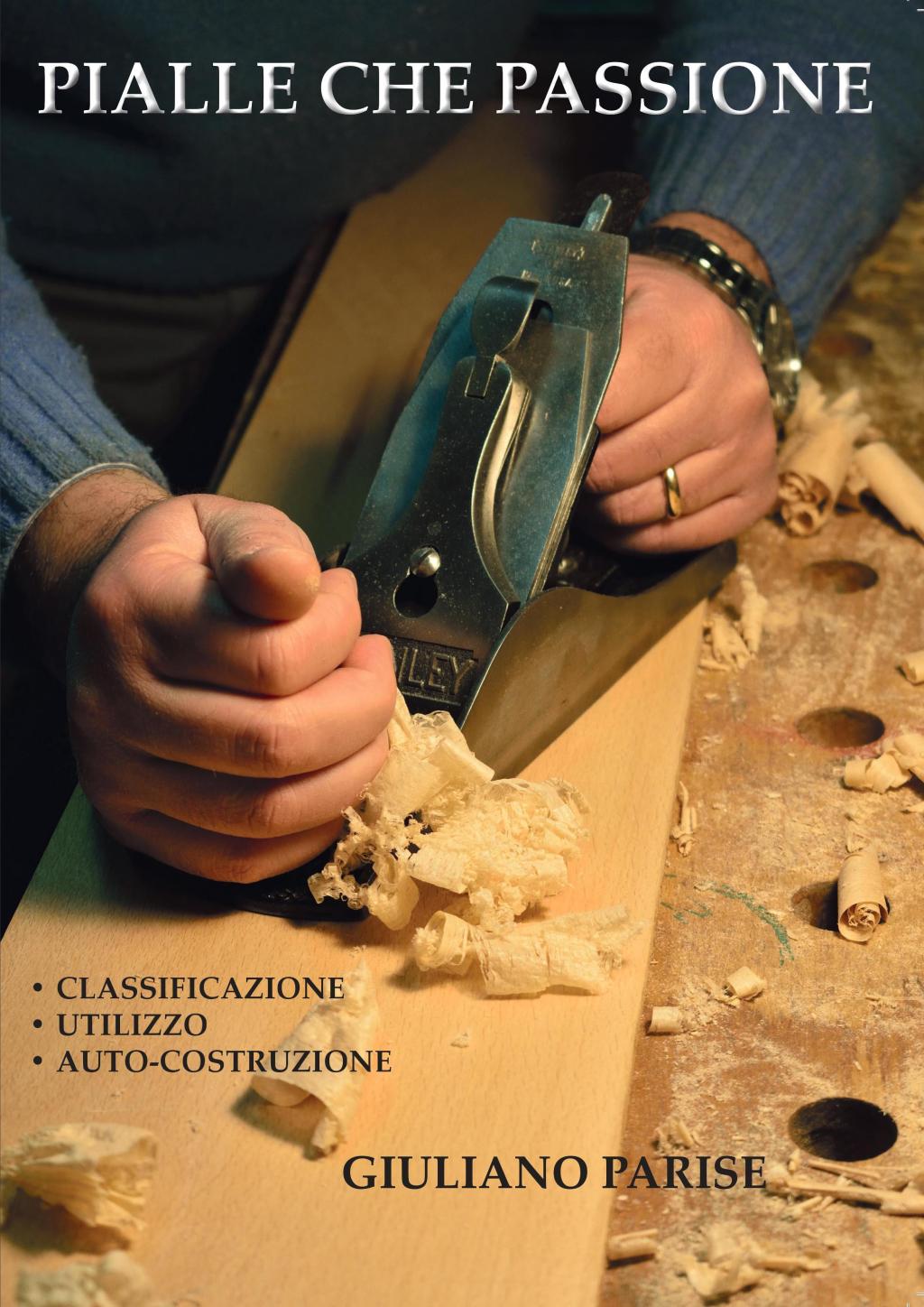
“PIALLE CHE PASSIONE” di G. Parise
English translation at the end of the article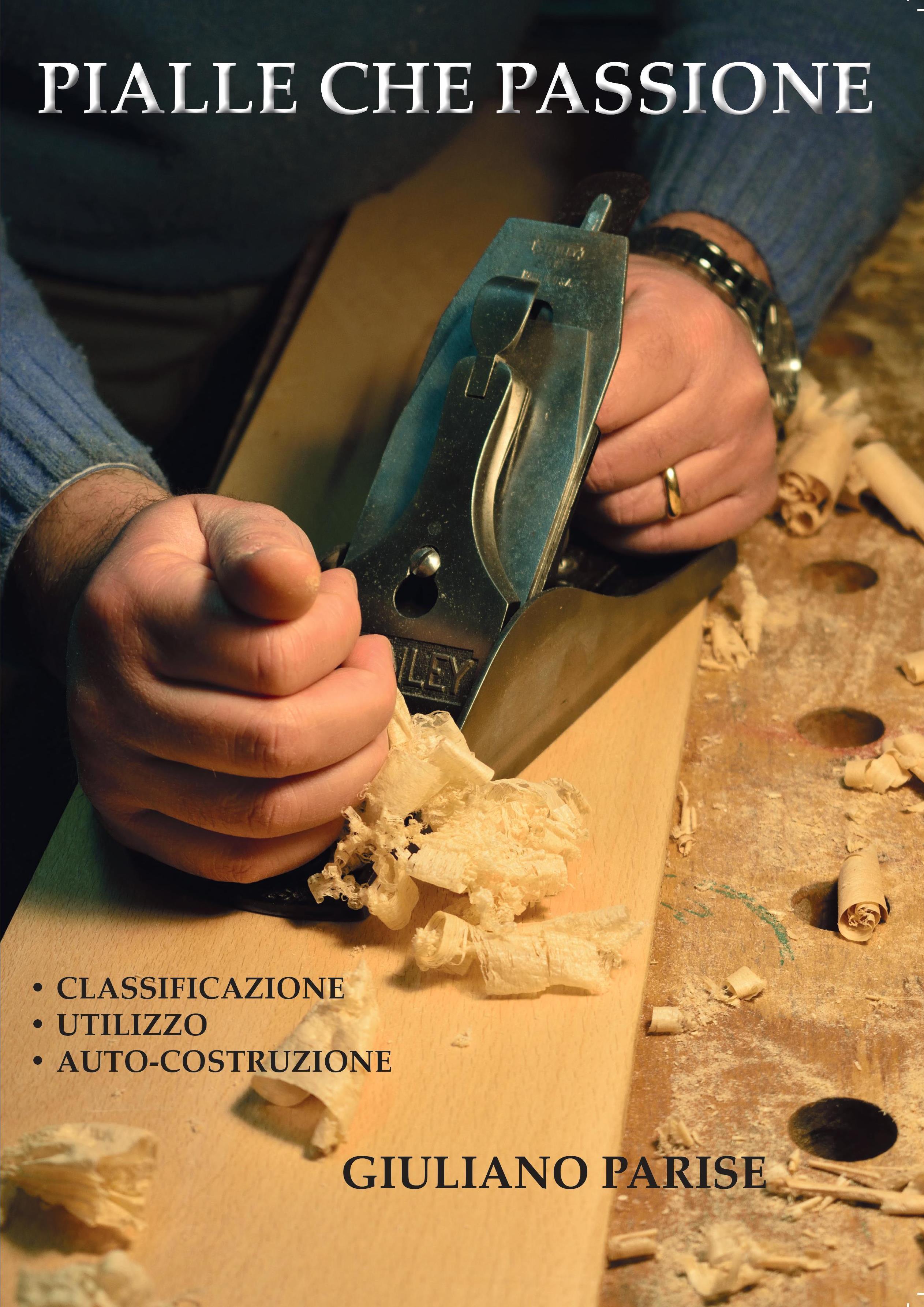
Tra le varie aree tematiche presenti nel blog ne mancava una che parlasse dei libri di falegnameria amanuense. Ho quindi pensato di colmare la lacuna aprendo questa sezione e intitolarla “libri letti per voi”, nella quale cercherò di riportare le impressioni suscitate dalla lettura di alcuni “classici” della falegnameria. La letteratura italiana in materia è purtroppo molto scarsa e proprio per questo motivo vorrei cominciare da un libro uscito da poco, che non è la solita traduzione di un testo scritto in inglese, ma qualcosa di genuino, con contenuti nuovi e finalmente scritto in italiano, che scaturisce direttamente dalla conoscenza e dalla pratica di un autore nostrano.
 I presupposti c’erano tutti. In primis perché si trattava del primo libro interamente scritto in italiano sull’argomento pialle. Secondariamente perché l’autore è veramente appassionato e tecnicamente preparato in materia. Tanto da spingerlo a scriverci un libro sopra. Alla fine posso dire che le aspettative non sono state tradite. Moltissime nozioni, illustrazioni, disegni e tabelle condensate in un volume di quasi 200 pagine, che fanno venire voglia di leggerlo tutto d’un fiato. In questo caso però la razionalità ha prevalso. Ho pensato che questo libro, unico nel suo genere nel panorama editoriale italiano, meritasse molto di più della semplice lettura mordi e fuggi. E quindi mi sono preso un po’ di tempo e me lo sono goduto poco a poco, così come si degusterebbe un buon whisky. È difficile dare una recensione a questo lavoro senza apparire compiacenti e tacciati di piaggeria. Perché questo libro ha effettivamente solo punti di forza.
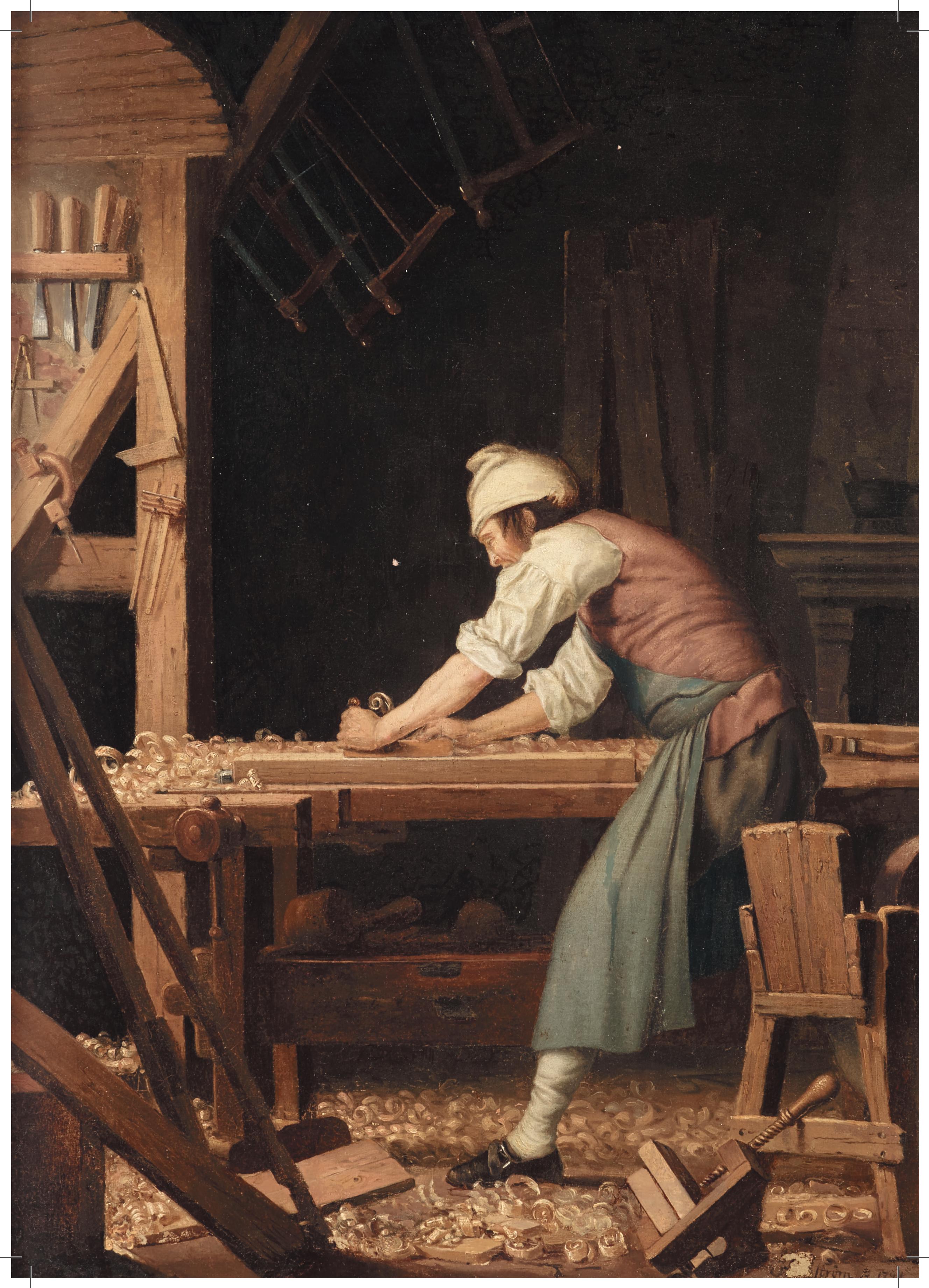 Per chi non conoscesse l’autore, Giuliano Parise è un grande appassionato della lavorazione manuale del legno alla vecchia maniera, quella che si faceva un tempo con i soli utensili manuali. E l’utensile principe di questo modo di fare falegnameria è senza dubbio la pialla. Di questo parla Giuliano. Dello sterminato universo delle pialle (e non solo), iniziando il libro con un breve ma efficace excursus che ne inquadra la storia, dalle origini fino ai giorni nostri. E già in questo è stato bravo. Ha sintetizzato in poche pagine secoli di avvenimenti, non cedendo alla facile tentazione documentaristica di riportare tanti e spesso inutili riferimenti bibliografici. Il libro si dispiega bene, seguendo una linea tematica ben definita e strategicamente ben pensata. Si parte con una panoramica sulle pialle, come sono strutturate, vivisezionate nelle tante foto del libro e descritte sino alla più piccola vite, con l’intento esplicito di far capire al lettore il loro funzionamento e al contempo enfatizzare i prodigi di questo piccolo capolavoro ingegneristico. Sono intriganti i riquadri di approfondimento che si trovano disseminati qua e là per le pagine del libro, divisi tra spunti tecnici, personaggi che hanno fatto la storia di questo utensile e semplici curiosità
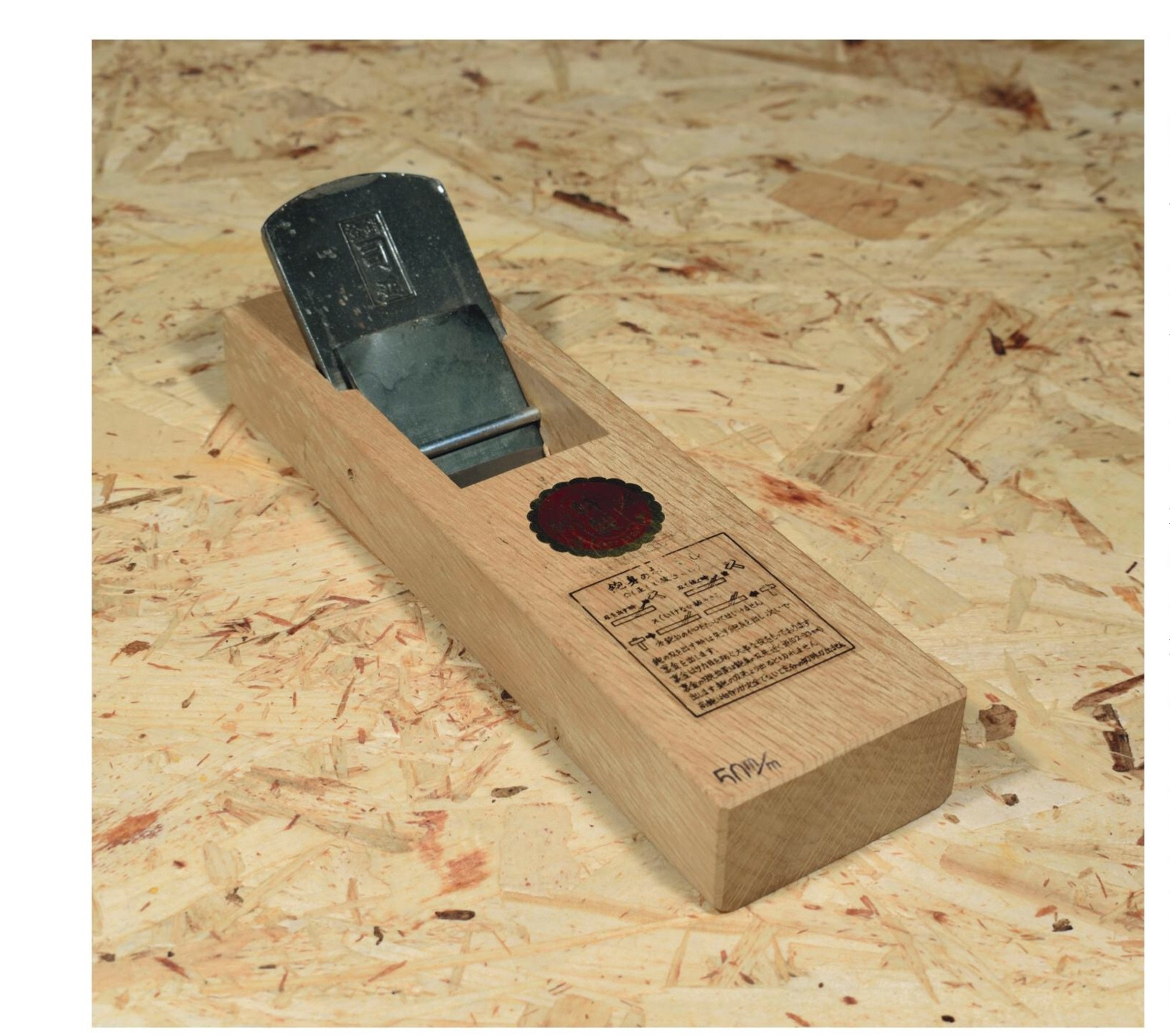 Tutto il libro è pervaso dall’eterna dicotomia tra pialle in metallo e pialle in legno, e l’autore, sebbene cerchi di rimanere imparziale, non riesce a celare del tutto una certa preferenza verso quest’ultime. C’è un capitolo dedicato alle pialle giapponesi che, seppur reputandole troppo lontane dal nostro modo di fare falegnameria, aprono di fatto una finestra su un mondo affascinante, su una grande cultura che si riflette nel modo di costruire, mantenere e adoperare gli utensili manuali.
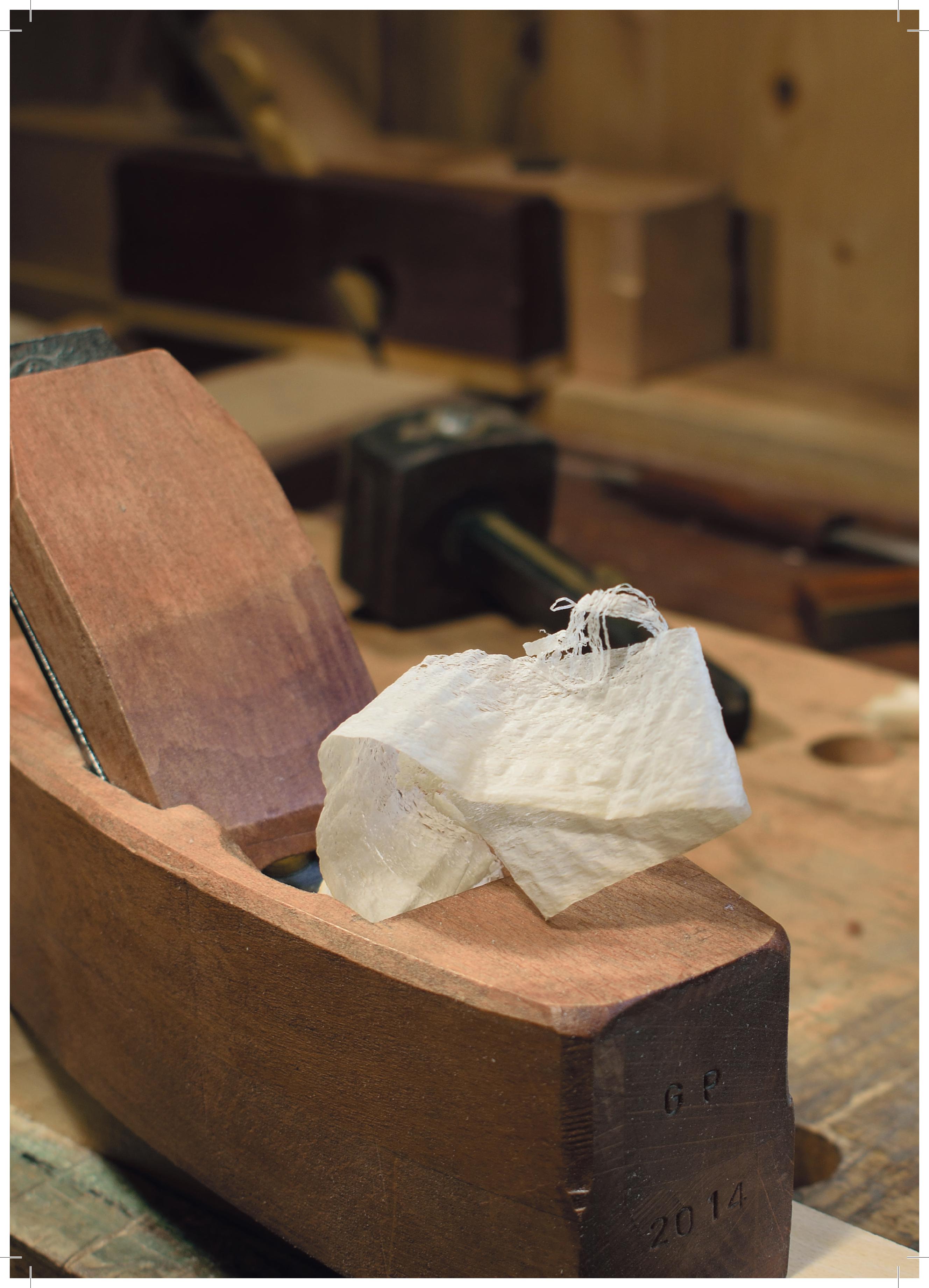 Ottenere una piallatura soddisfacente non è mai semplice e dipende da molteplici aspetti. Ecco allora che nei capitoli successivi l’autore ci conduce per mano, illustrando nei minimi particolari come allestire una pialla per farla lavorare a dovere, partendo dalla sua preparazione, passando per l’affilatura, e finendo con le tecniche di piallatura. La preparazione tecnica viene fuori ed il libro cresce d’interesse. Tantissime foto immortalano le fasi di preparazione e lavorazione catturando, con dovizia di particolari descrittivi, il momento importante, spesso corredato da disegni ben realizzati, laddove le immagini e le mille parole non possono arrivare. Le pagine sono piene di informazioni, assolutamente ben scritte, in un italiano fluido e corretto e si sposano magnificamente con le foto inserite, che sono sempre vicine e pertinenti a quanto stiamo leggendo.
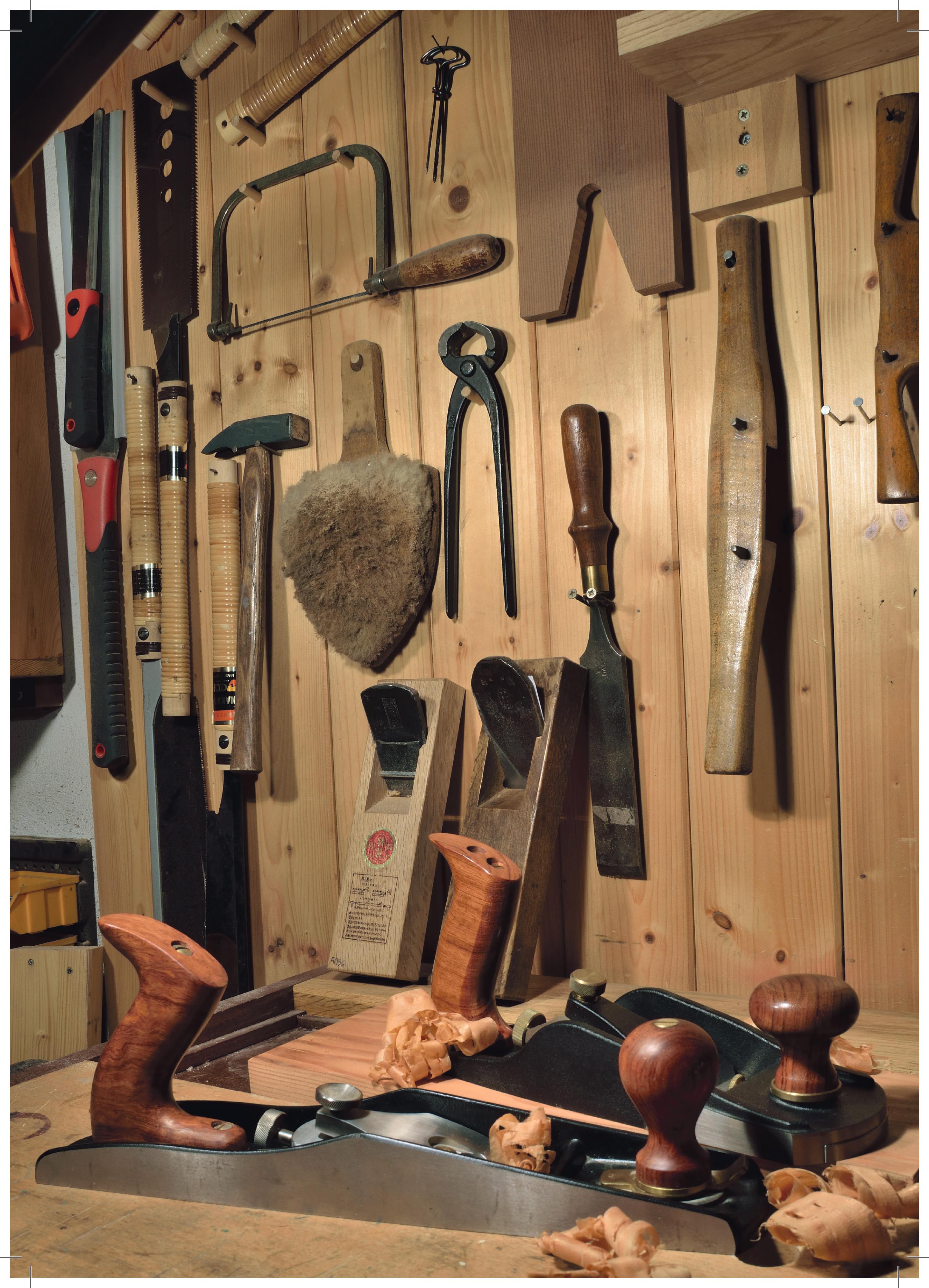
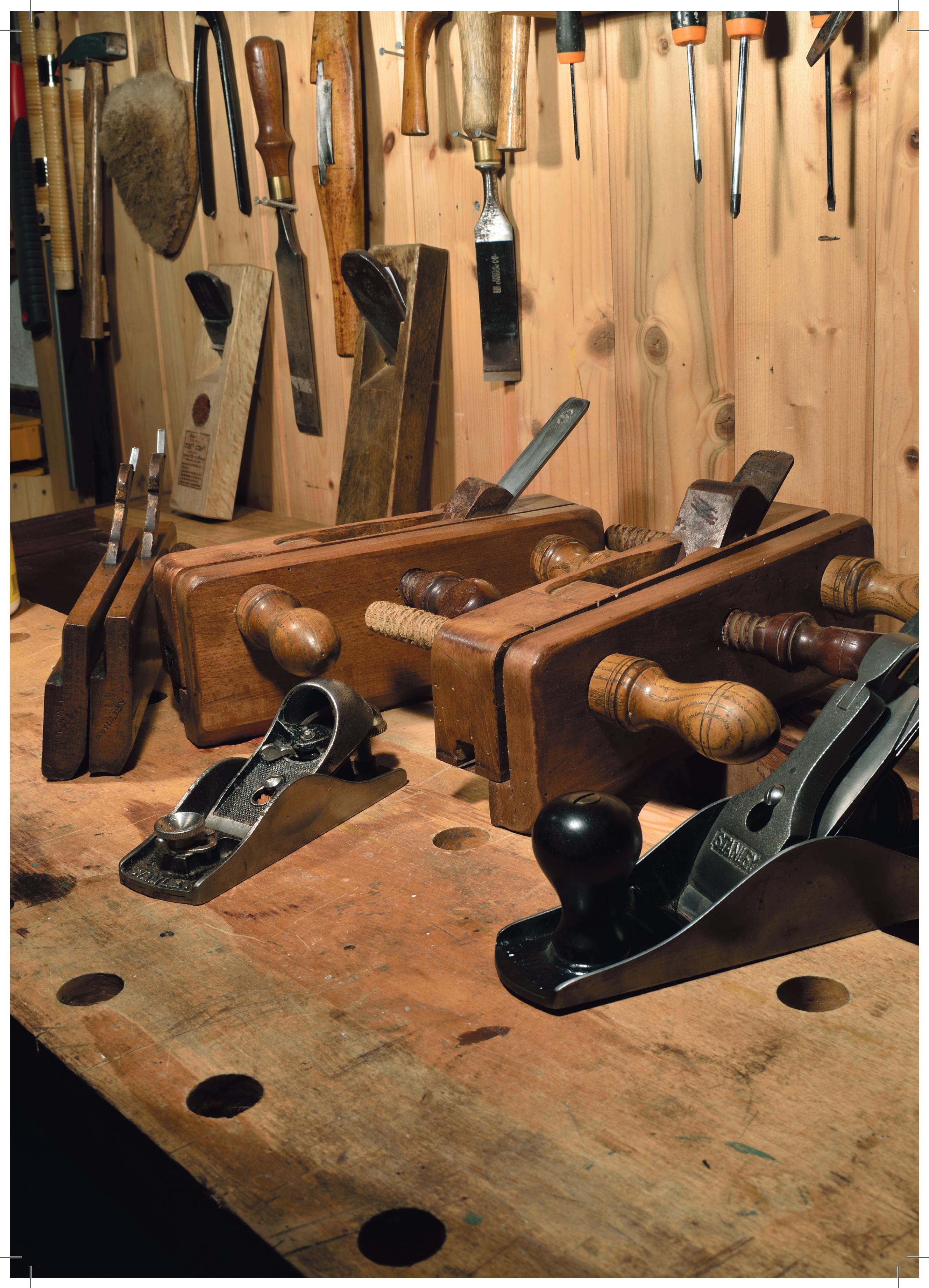
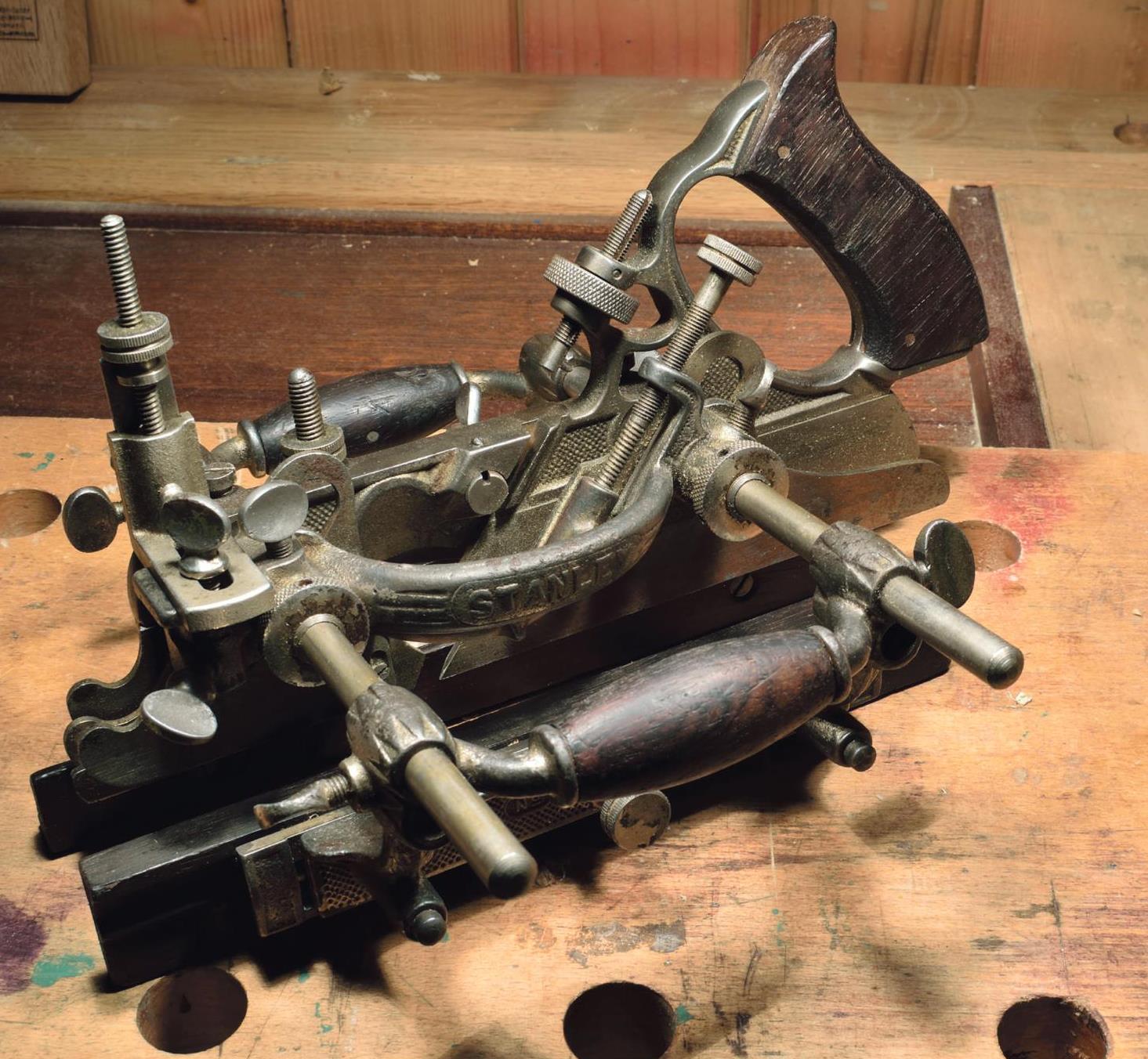 Entriamo nel vivo del libro quando, nei capitoli centrali, si passano in rassegna i più importanti esemplari di pialle mai costruite. Sono state raggruppate per grandi famiglie, assecondandone la loro destinazione d’uso. Molti termini sono tecnici e in lingua inglese ma d’altronde, chi legge questo genere di libri, sa già che le pialle sono soprattutto una questione anglofona. Questa parte, giocoforza enciclopedica, è probabilmente quella meno scorrevole dell’intero libro, ma in grado di offrire una panoramica a 360 gradi sul variegato mondo delle pialle, con i suoi tanti modelli, quasi sempre utili, talvolta ridondanti e sopra le righe. Quello che colpisce però è la straordinaria raccolta fotografica presente, che mostra alcuni dei più bei pezzi mai realizzati nella storia di questo utensile, con annesse descrizioni precise ed accurate delle principali caratteristiche e funzionalità. Tutte informazioni nuove, non rintracciabili altrove nella nostra lingua, frutto di una ricerca personale dell’autore e di una sperimentazione fatta “sul campo”.
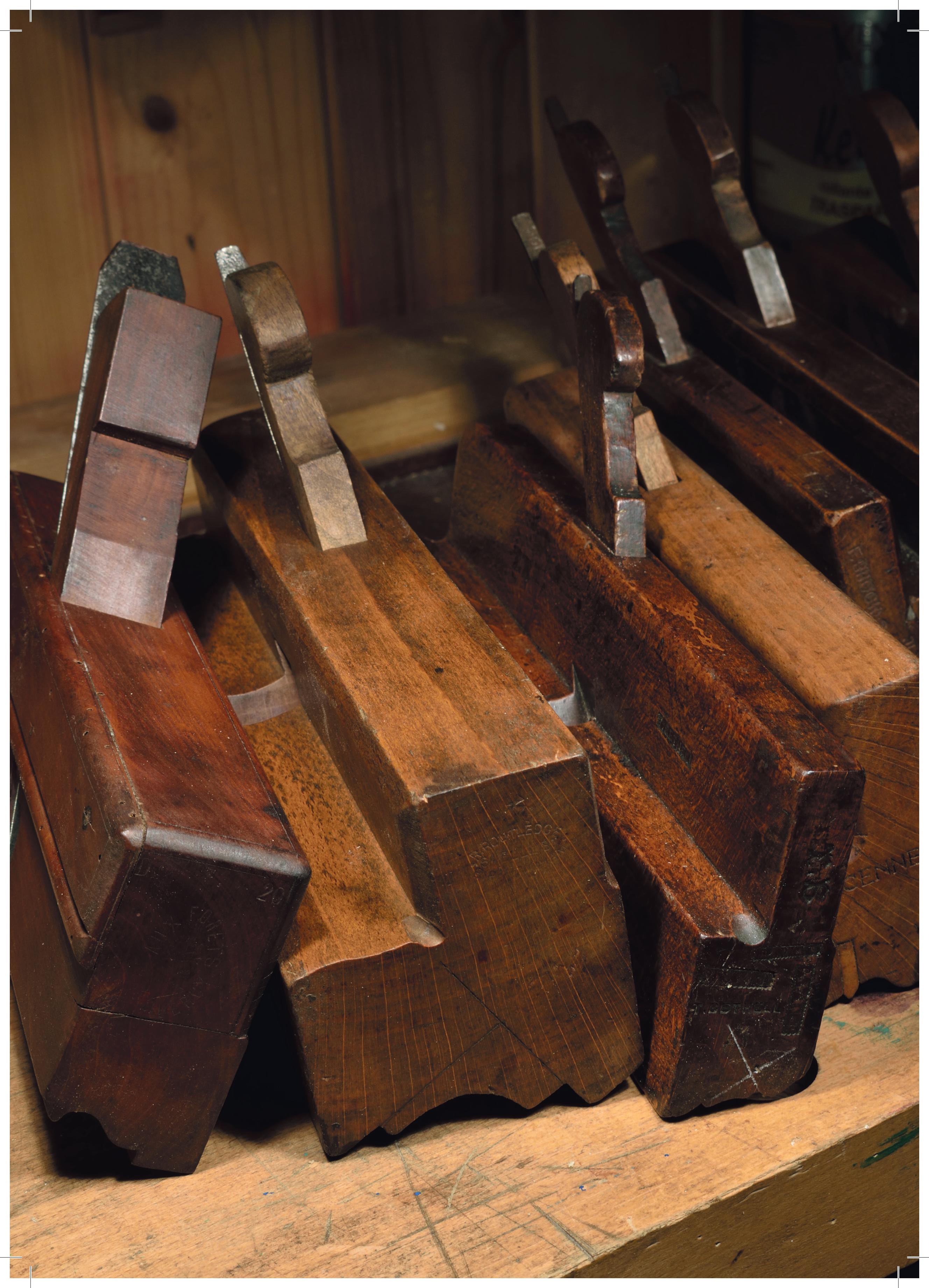 Scorrendo le tante pagine del libro facciamo anche alcune piacevoli scoperte, come quando si parla delle pialle da modanatura, un genere molto spesso dimenticato dai più, genuina testimonianza di una maniera antica di sagomare il legno.
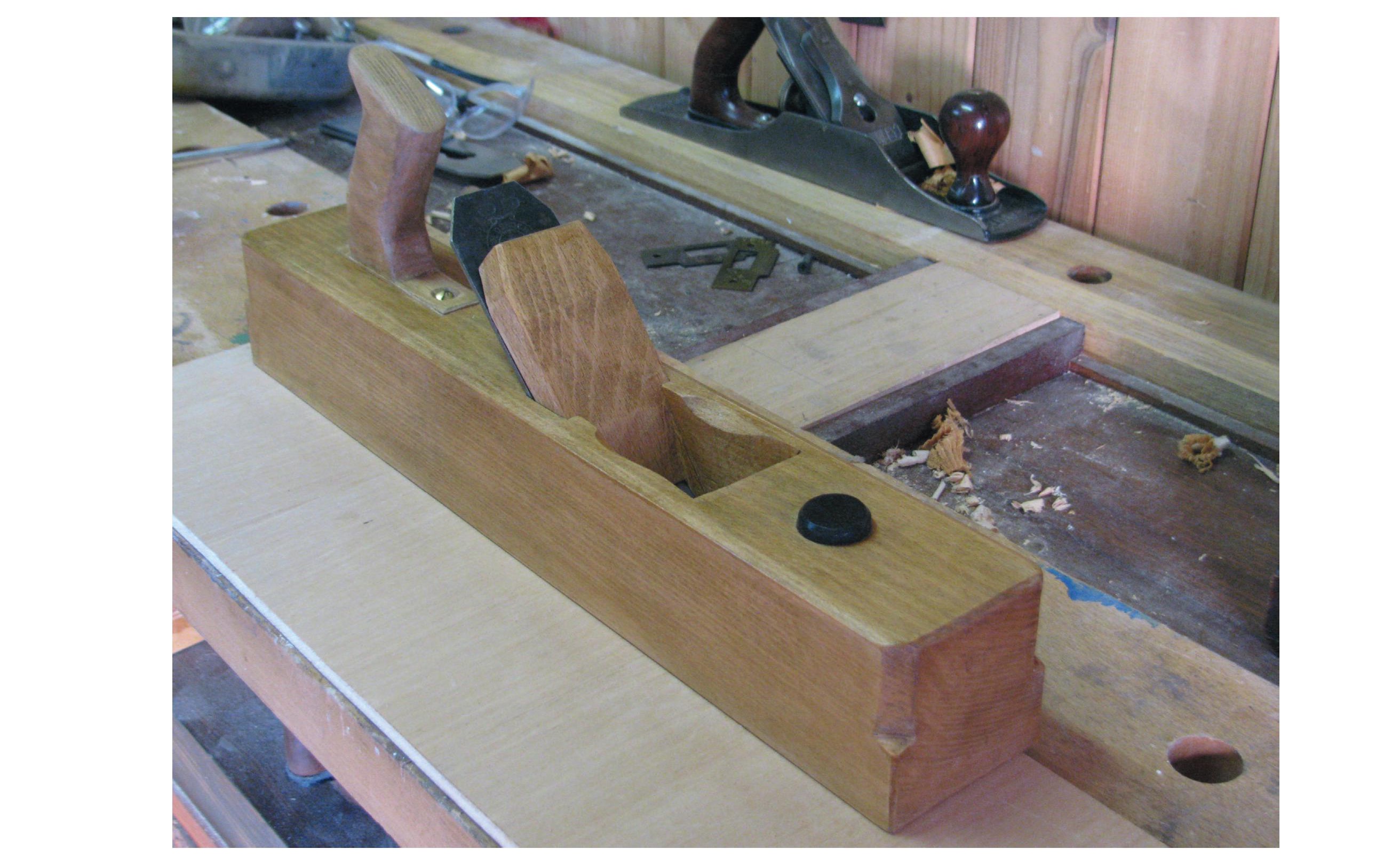 Infine tanti utili suggerimenti per il neofita (e non solo) che voglia avvicinarsi alla piallatura, partendo dall’acquisto, passando per il restauro del vintage e la sua manutenzione. Un percorso che trova il sua naturale traguardo in una guida precisa ed esauriente all’auto costruzione di una pialla in legno, per tutti coloro che volessero cimentarsi nell’impresa di creare con le proprie mani un qualcosa che possa sopravvivere a noi stessi, sfruttando le conoscenze messe a disposizione anche da questo libro.
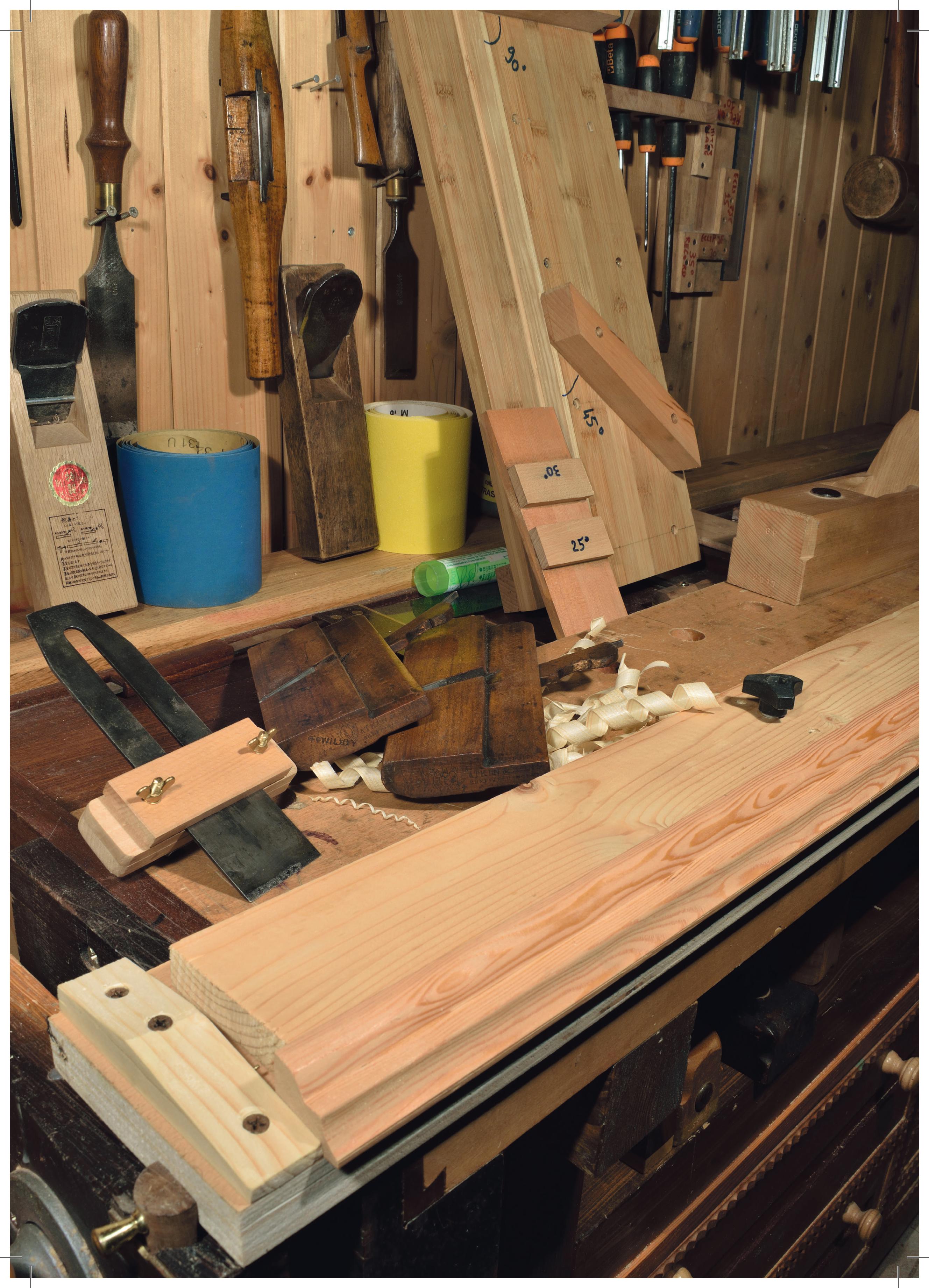 E se qualcuno pensasse che a questo punto tutto sia stato detto, arrivano le ultime pagine a mantenere vivo l’interesse del lettore proponendo una vasta scelta di sagome utili per restaurare i manici di diversi tipi di pialle, esaustivi tutorial per la realizzazione di alcuni ausili e soprattutto minuziose tabelle riportanti informazioni e consigli per aiutare nel riconoscimento e nella scelta del giusto modello di pialla. Tutto l’essenziale è stato descritto e niente è stato tralasciato.
 In definitiva un libro unico nel suo genere, assolutamente da acquistare, che trattando in maniera semplice ed esaustiva un argomento non facile, niente ha da invidiare alla migliore letteratura straniera in materia. Il seme per la nascita di una cultura tutta italiana sulla falegnameria amanuense è stato gettato.
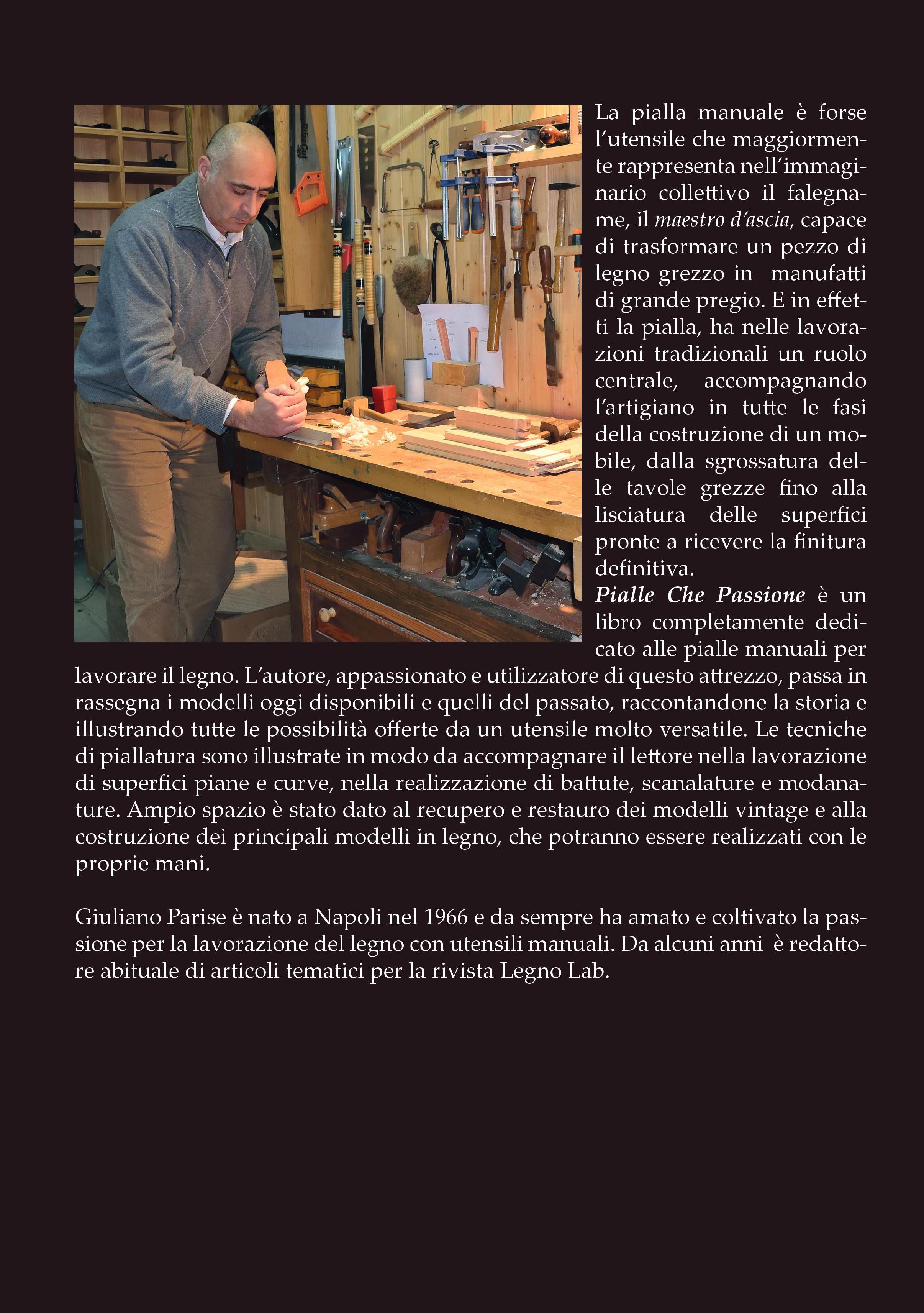 Acquistabile su Amazon al seguente link.
https://www.amazon.it/Pialle-che-Passione-Giuliano-Parise/dp/1087447186/ref=sr_1_1?__mk_it_IT=ÅMÅŽÕÑ&keywords=Pialle+che+passione&qid=1568486584&s=books&sr=1-1
Among the various thematic areas featured in the blog I realized that one about books speaking of woodworking by hand was missing. I then thought of filling the gap by opening this section and naming it “libri letti per voi/books read for you”, in which I will try to report the impressions aroused by reading some “classics” of the woodworking. The Italian literature on the subject is unfortunately very rare and for this reason I would like to start with a recently published book, which is not the usual translation of a text written in English, but something genuine, with new contents and finally written in Italian, which springs directly from the knowledge and practice of an Italian author. The assumptions were all there. First of all because it was the first book entirely written in Italian on the subject of planes. Secondly because the author is really passionate and technically prepared on the subject. Much to push him to write a book on it. I can say that expectations have not been betrayed. Many notions, illustrations, drawings and tables condensed in a book of almost 200 pages, which make you want to read it all in one go. In this case however rationality prevailed. I thought that this book, the only one of its kind in the Italian publishing scene, deserved much more than just reading hit and run. And so I took some time and enjoyed it little by little, just as one would taste a good whiskey. It is difficult to review this work without appearing complacent. Because this book really only has strengths. For those unfamiliar with the author, Giuliano Parise is a great lover of old-fashioned woodworking by hand, the one that was once done with only hand tools. And the main tool of this way of making woodworking is undoubtedly the plane. Giuliano speaks of this. Of the endless universe of planes (and not only), starting the book with a brief but effective excursus that frames the story, from its origins to the present day. And already in this he was good. He summarized in a few pages centuries of events, not yielding to the easy documentary temptation to report many and often useless bibliographical references. The book unfolds well, following a well-defined and strategically well thought-out thematic line. It starts with an overview of the planes, how they are structured, vivisected in the many photos of the book and described up to the smallest screw, with the explicit intent to make the reader understand how they works and at the same time emphasize the wonders of this small engineering masterpiece . The tips written here and there on the pages of the book are intriguing, divided between technical ideas, characters that have made the history of this tool and simple curiosities. The whole book is pervaded by the eternal dichotomy between metal planes and wooden planes, and the author, although he tries to remain impartial, cannot completely hide a certain preference for the latter. There is a chapter dedicated to Japanese planes which, although I consider too far from our way of doing woodworking, open a window on a fascinating world, on a great culture that is reflected in the way they make, maintain and use hand tools. To get a satisfactory planing is never easy and depends on many aspects. Here is that in the following chapters the author leads us by the hand, illustrating in detail how set up a plane to make it work properly, starting from its setting, passing through sharpening, and ending with planing techniques. The technical knowledge comes out and the book grows in interest. A large number of photos catch the setting and processing phases, taking, with a wealth of descriptive details, the important moment, often together with well-made drawings, where the images and the thousand words cannot arrive. The pages are full of information, absolutely well written, in a fluid and correct Italian (with very few typing errors) and marry beautifully with the photos inserted, which are always close and relevant to what we are reading. Let’s get to the heart of the book when, in the central chapters, we review the most important examples of planes never built. They have been grouped for large families, complying with their intended use. Many terms are technical and in English, but those who read this kind of books already know that planes are above all an English-speaking issue. This part, definitely encyclopedic, is probably the least smooth part of the whole book, but able to offer a 360-degree view on the variegated world of planes, with its many models, almost always useful, sometimes redundant and over the top. What is striking, however, is the extraordinary photographic collection present, which shows some of the most beautiful pieces ever made in the history of this tool, together with precise and accurate descriptions of the main features and functionality. All new information, not traceable elsewhere in our language, the result of a personal research by the author and an experiment made “in the field”. Through the many pages of the book we also make some pleasant discoveries, such as when talking about moulding planes, often forgotten by the most, genuine testimony of an ancient way of shaping wood. Finally many useful suggestions for the beginners (and not only) who wants to approach the planes, starting from the purchase, passing through the restoration of the vintage and its maintenance. A path that finds its natural goal in a precise and exhaustive guide to the hand making of a wooden plane, for all those who want to try test theirself creating with their own hands something that can survive ourselves, even through the knowledge made available by this book. And if someone thought that at this point everything was said, the last pages arrive to keep alive the interest of the reader proposing a vast choice of useful shapes to restore the handles of different types of planes, exhaustive tutorials for making some jigs and above all detailed tables showing information and advice to help in the knowledge and selection of the right plane model. All the essentials have been described and nothing has been left out. Ultimately a unique book of its kind, absolutely to be purchased, which treats a not easy subject in a simple and exhaustive way, nothing has to envy the best foreign literature on the subject. The seed for the birth of an all-Italian culture on woodworking by hand was thrown.
You can buy it to the following link:
https://www.amazon.it/Pialle-che-Passione-Giuliano-Parise/dp/1087447186/ref=sr_1_1?__mk_it_IT=ÅMÅŽÕÑ&keywords=Pialle+che+passione&qid=1568486584&s=books&sr=1-1
Alcune foto ed immagini sono state tratte da siti internet esterni / libri per soli scopi informativo didattici e senza fini di lucro. Se si è proprietari delle immagini e se ne desidera la rimozione si prega di segnalarlo nella sezione contatti.


 CREAROBI
Lascia un commento