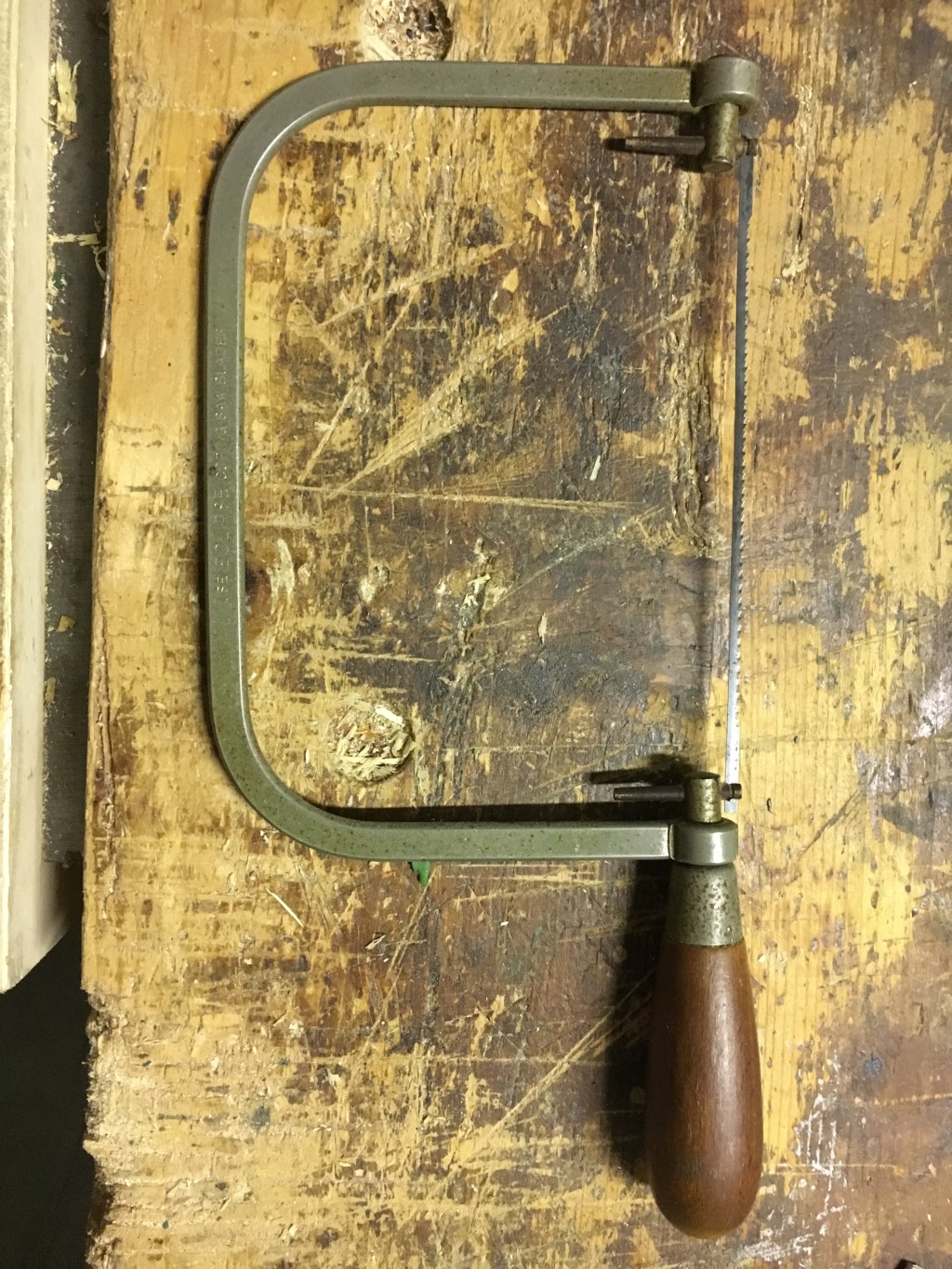
Seghetto a copiare (ad archetto o traforo) / Coping saw
English translation at the end of the article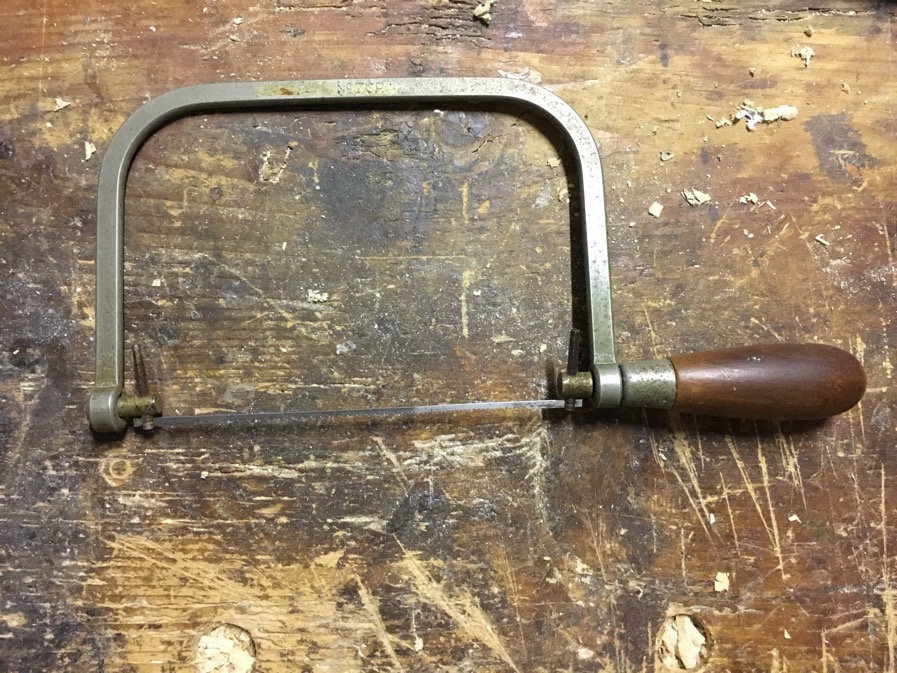
Seghetto a copiare, ad archetto o traforo: esistono svariati modi di riferirsi a questo tipo di utensile relativamente moderno (risalente ai primi del ‘900), antenato dell’attuale traforo elettrico e indispensabile per talune lavorazioni di falegnameria
amanuense. Trattasi di seghe leggere e flessibili che, effettuando tagli fini e curvilinei, sono in grado di eseguire modanature e forme nel legno. All’atto pratico lo si adopera per segare il legno seguendo linee curve già disegnate, così da creare sagome di diversa forma e dimensione in qualsiasi tipo di legno e con diversi spessori. La differenza con le altre seghe di cui abbiamo parlato sino ad adesso è evidente. Le normali seghe, segacci e seghe per tenoni o a code di rondine possono effettuare soltanto tagli dritti. Il seghetto invece, grazie alla sua particolare conformazione e soprattutto perché dotato di una lama fine e con molti denti, permette di effettuare tagli curvilinei.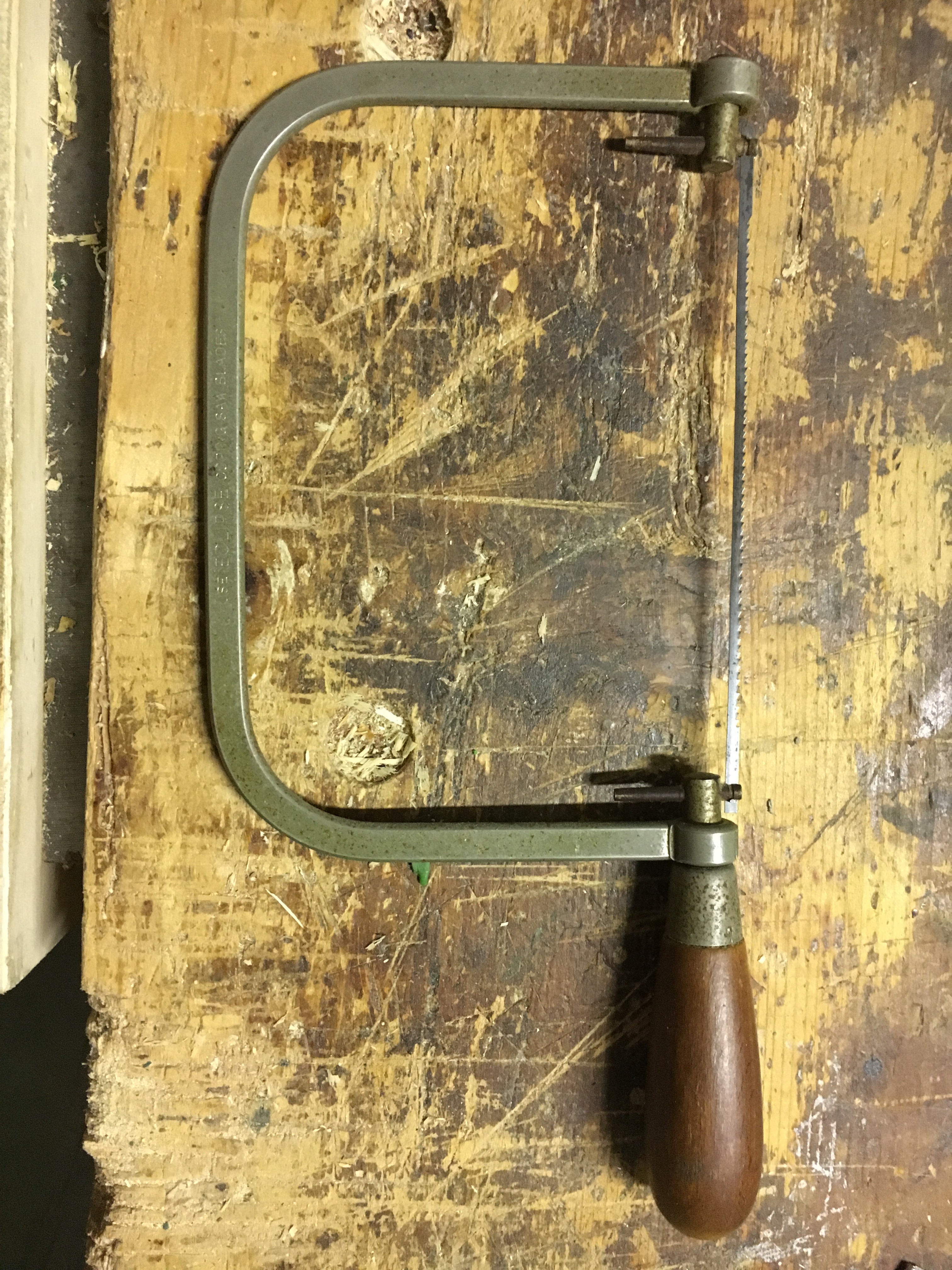
Esistono seghetti di varie forme e dimensioni, ma quelli più comunemente usati in falegnameria misurano circa 12,5 cm., misurando partendo dall’arco del traforo fino alla lama. In commercio esistono inoltre svariate tipologie di lame studiate per segare metalli leggeri e legno. Quelle più comunemente usate sono quelle a 14 ppi, 18 ppi e 24 ppi (points per inches, punte per pollice). La prima tipologia taglia più velocemente ma lascia una finitura più grossolana. La tipologia con maggior numero di denti viceversa taglia più lentamente ma per contro il taglio ottenuto è più pulito. Le differenze tra una lama e l’altra sono comunque trascurabili e, secondo me, qualsiasi tipo di lama andremo ad usare, andrà comunque bene per lo scopo. Le lame sono tutte affilate con affilatura ripsaw (per tagli lungovena). Sarebbe infatti inutile dare un’affilatura crosscut (traversovena) a lame con un così elevato numero di denti, come avviene d’altronde nelle seghe dovetail saw (per code di rondine) e tenon saw (seghe per tenoni).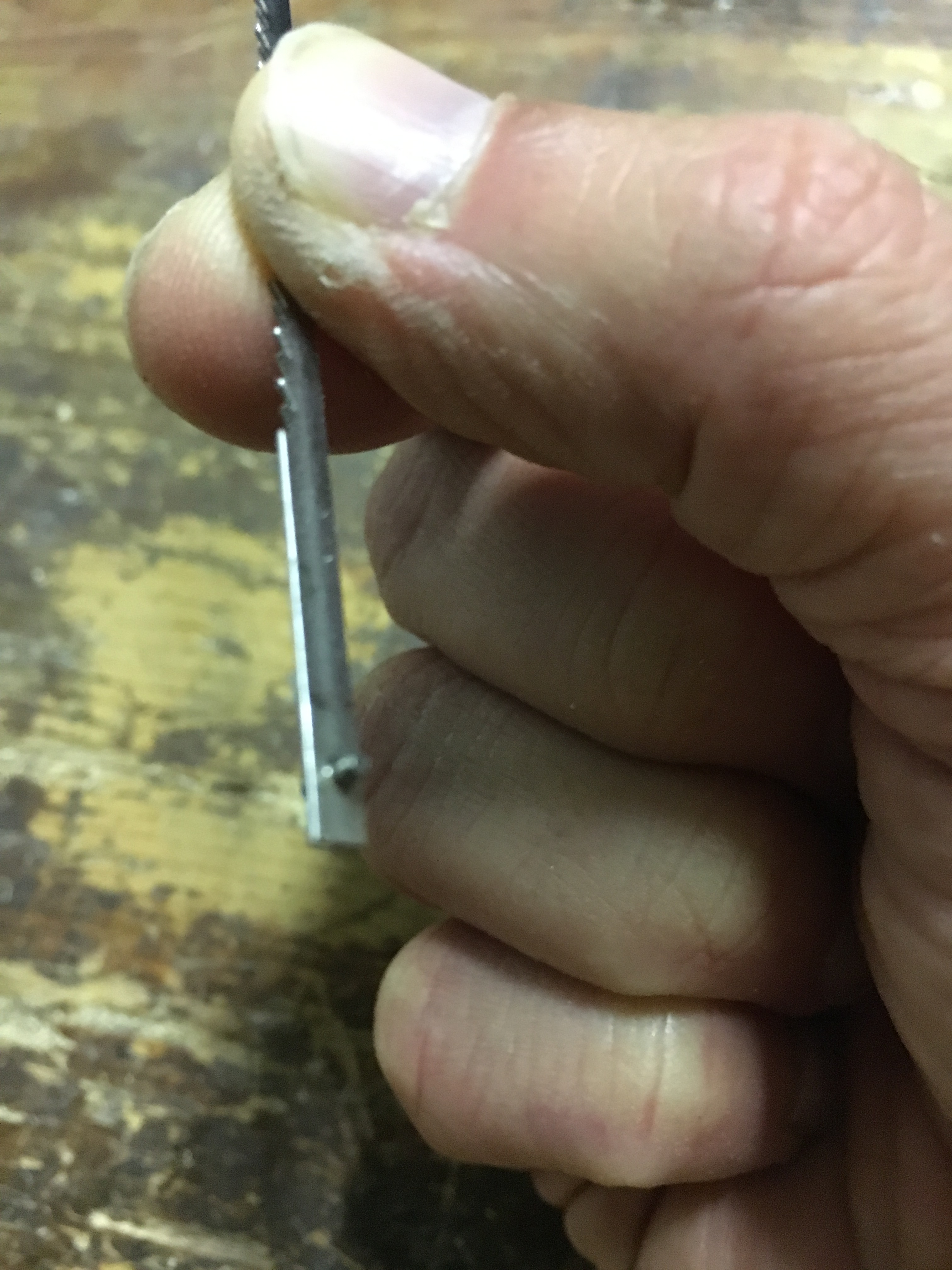
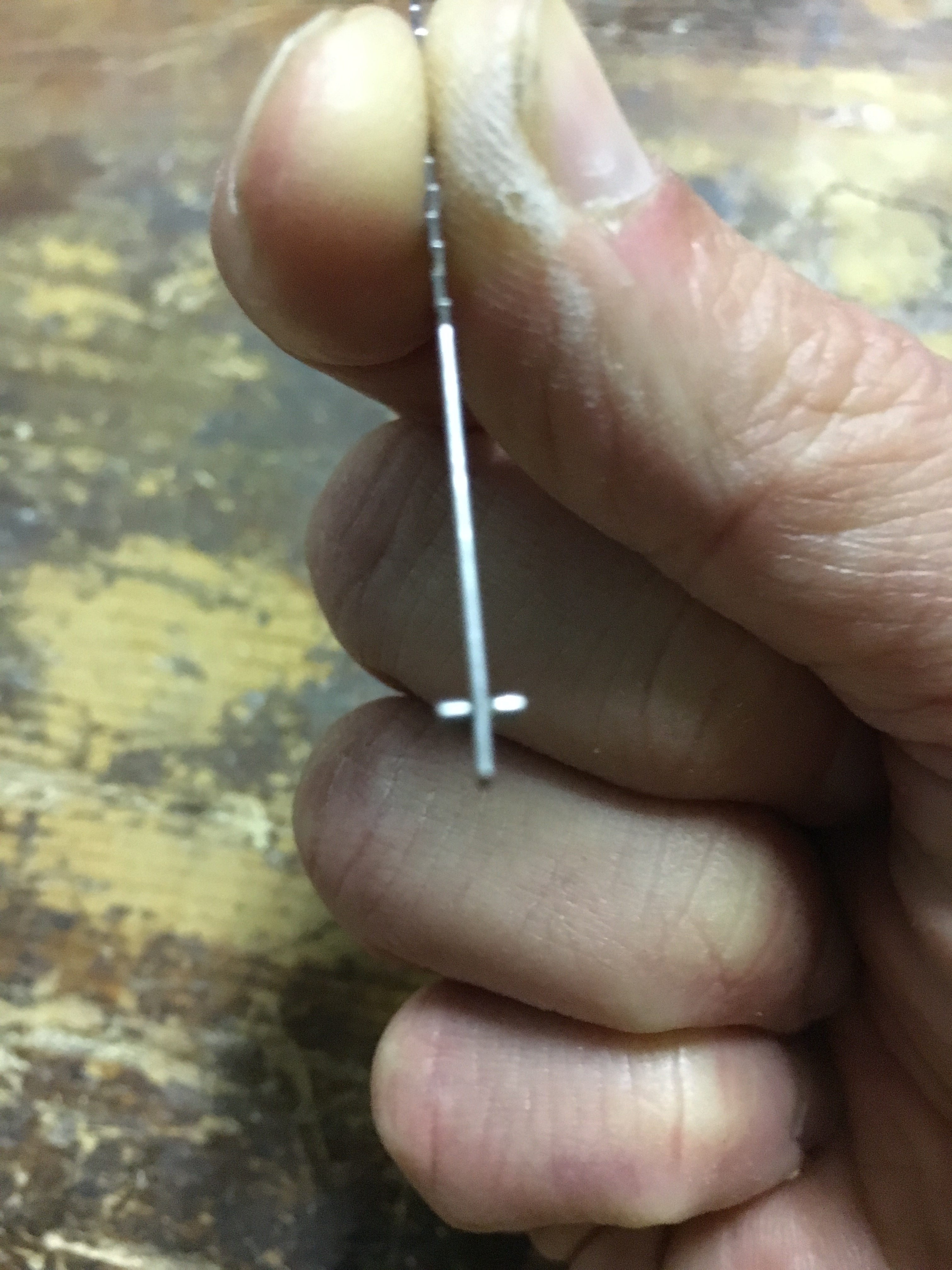
Come vedremo in seguito la particolare conformazione ad archetto è particolarmente utile quando dobbiamo lavorare su pezzi che prevedono un taglio dall’interno.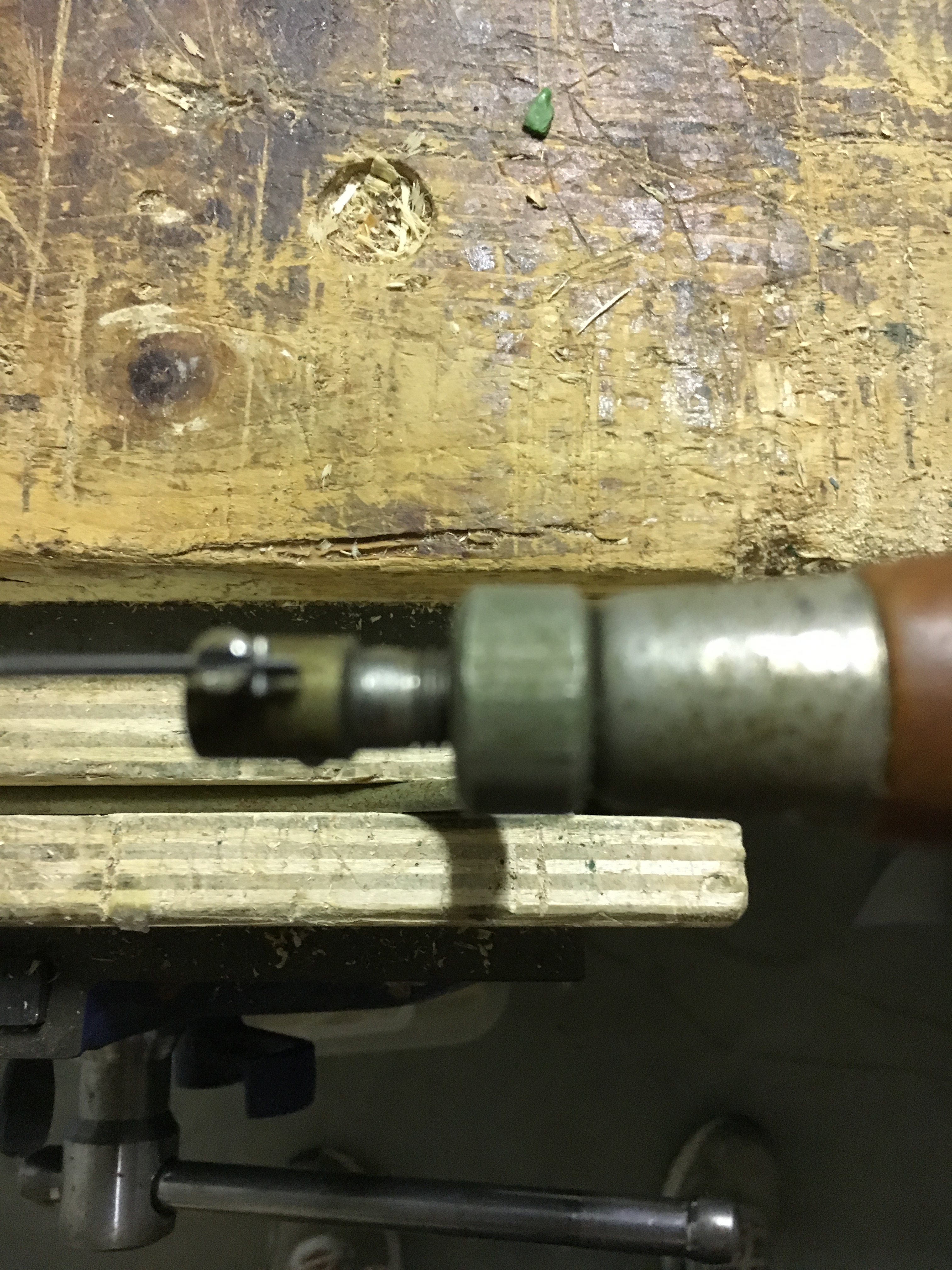
La lama viene montata allentando dapprima il manico del seghetto in senso antiorario così da detensionare il blocco che tiene ferma la lama. Le lame sono dotate di due piccoli stop ricavati nella lama stessa. La lama si inserisce nelle scanalature dei blocchi dove sono presenti le levette direzionali guidalama poste alle estremità dell’archetto del seghetto. Grazie ai blocchi di cui sopra la lama rimarrà in posizione. Il serraggio avviene girando il manico in senso orario così riportando in tensione la lama appena inserita.
Dato l’elevato numero di denti presenti ed il fatto che questo tipo di lame siano fatte in acciaio rinforzato non è di fatto possibile effettuarne la riaffilatura; quando si deteriorano andranno semplicemente buttate e sostituite con quelle nuove. Il prezzo delle lame è veramente contenuto e vengono solitamente vendute in confezioni contenenti più pezzi. Comunemente l’utilizzo di questo tipo di sega prevede in primo luogo la tracciatura di una sagoma sul legno e quindi con l’impiego del seghetto il seguire quanto più precisamente possibile la segnatura effettuata, ricavando nel legno la sagoma voluta (da questa operazione il termine “seghetto a copiare”).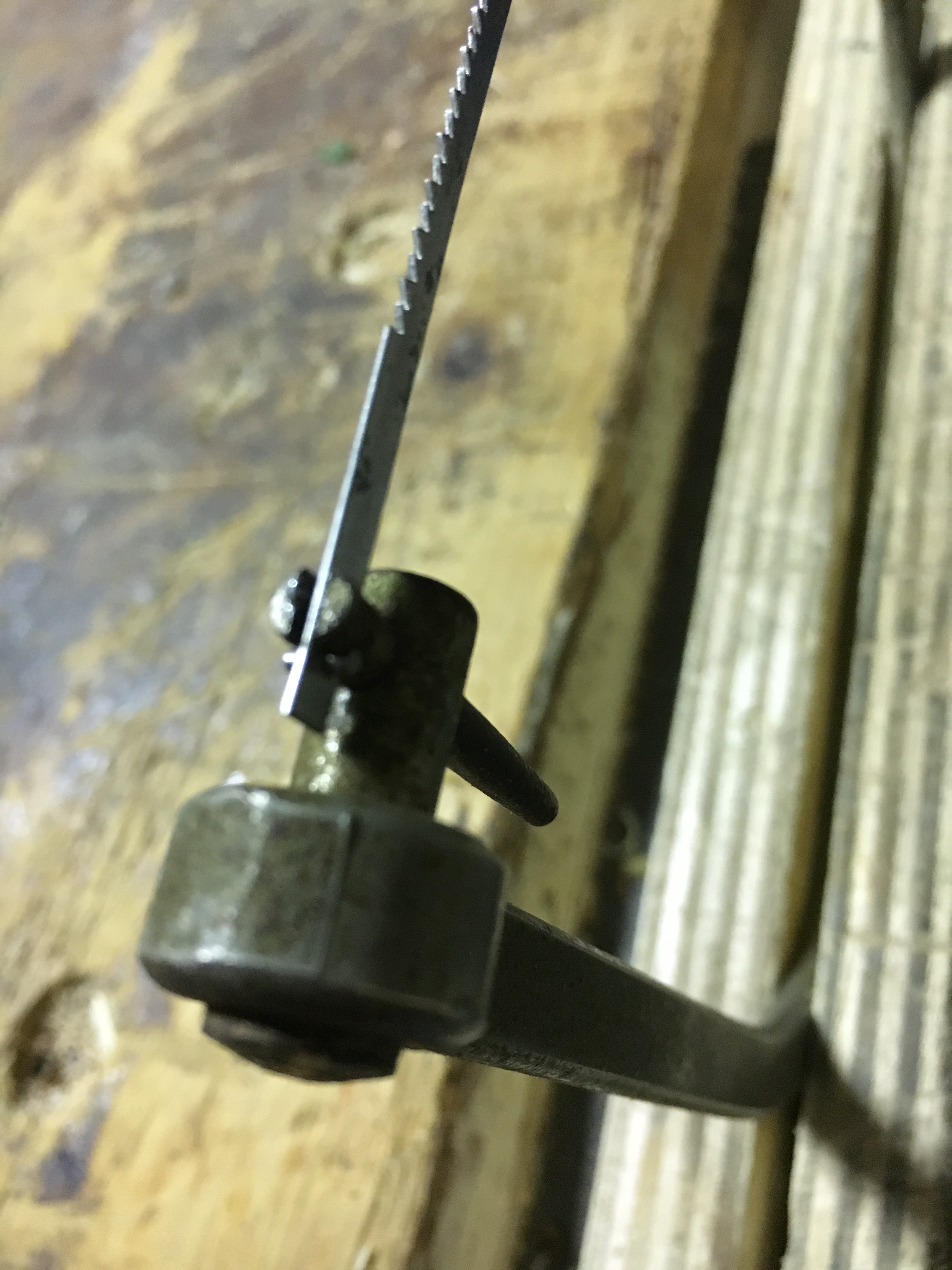
Quando dobbiamo effettuare tagli che richiedono repentini cambi di direzione, risulta utile agire sulle due levette guidalama presenti alle estremità della sega mediante le quali, agendo sempre in contemporanea su entrambe le levette per evitare distorsioni della lama, è possibile agevolare l’operazione di taglio su curve particolarmente difficili. Il sistema di blocco della lama (assieme alle levette), può ruotare di 360 gradi e quindi dà la possibilità di presentare la lama per il taglio da qualsiasi direzione possibile. L’impugnatura del manico avviene solitamente a due mani, per mantenere maggior controllo sulla sega ma, in particolari condizioni o per tagli dritti, può risultare conveniente impugnare l’utensile con una sola mano ed aiutarsi con l’altra poggiandola sul pezzo in lavorazione.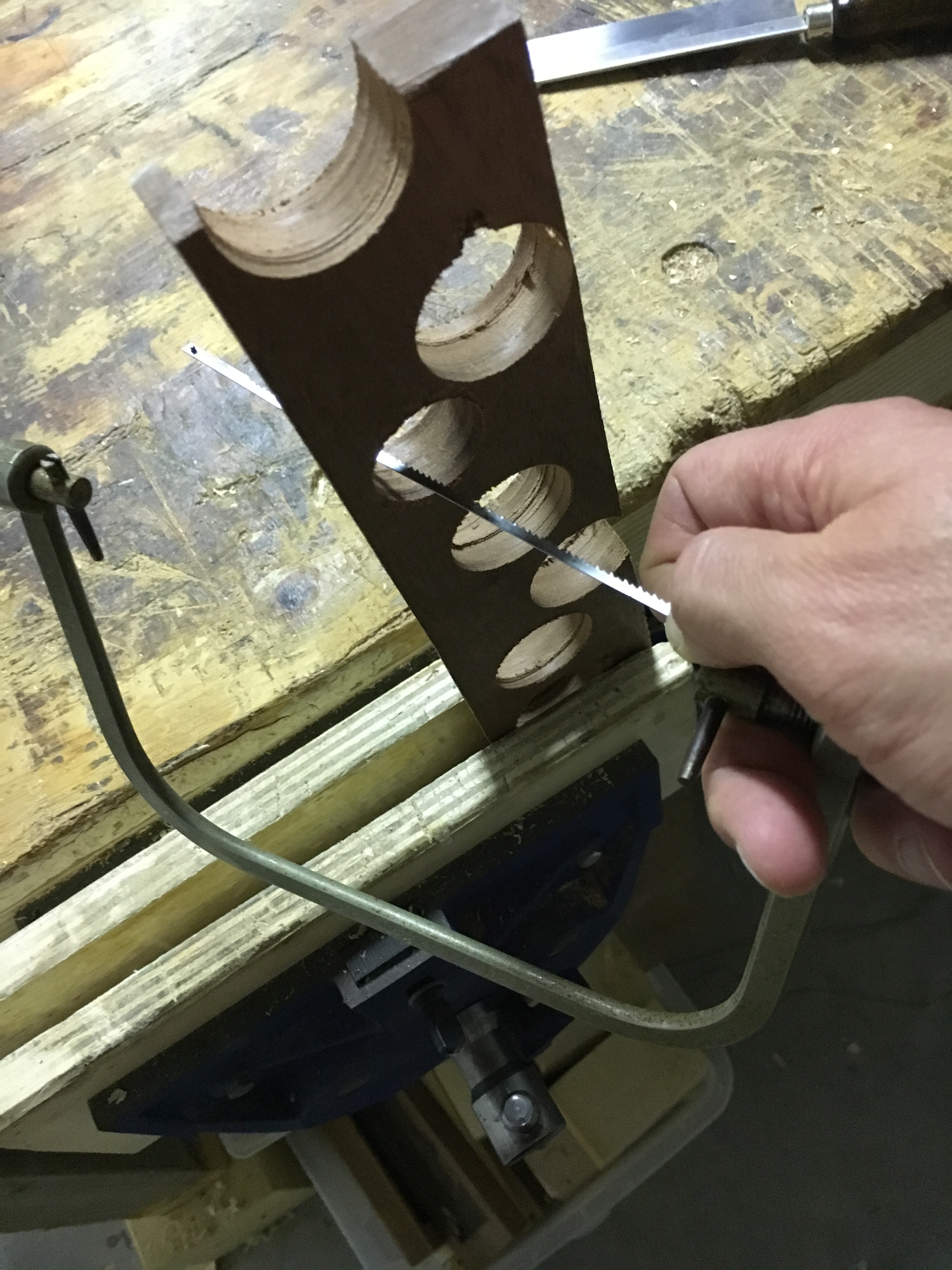
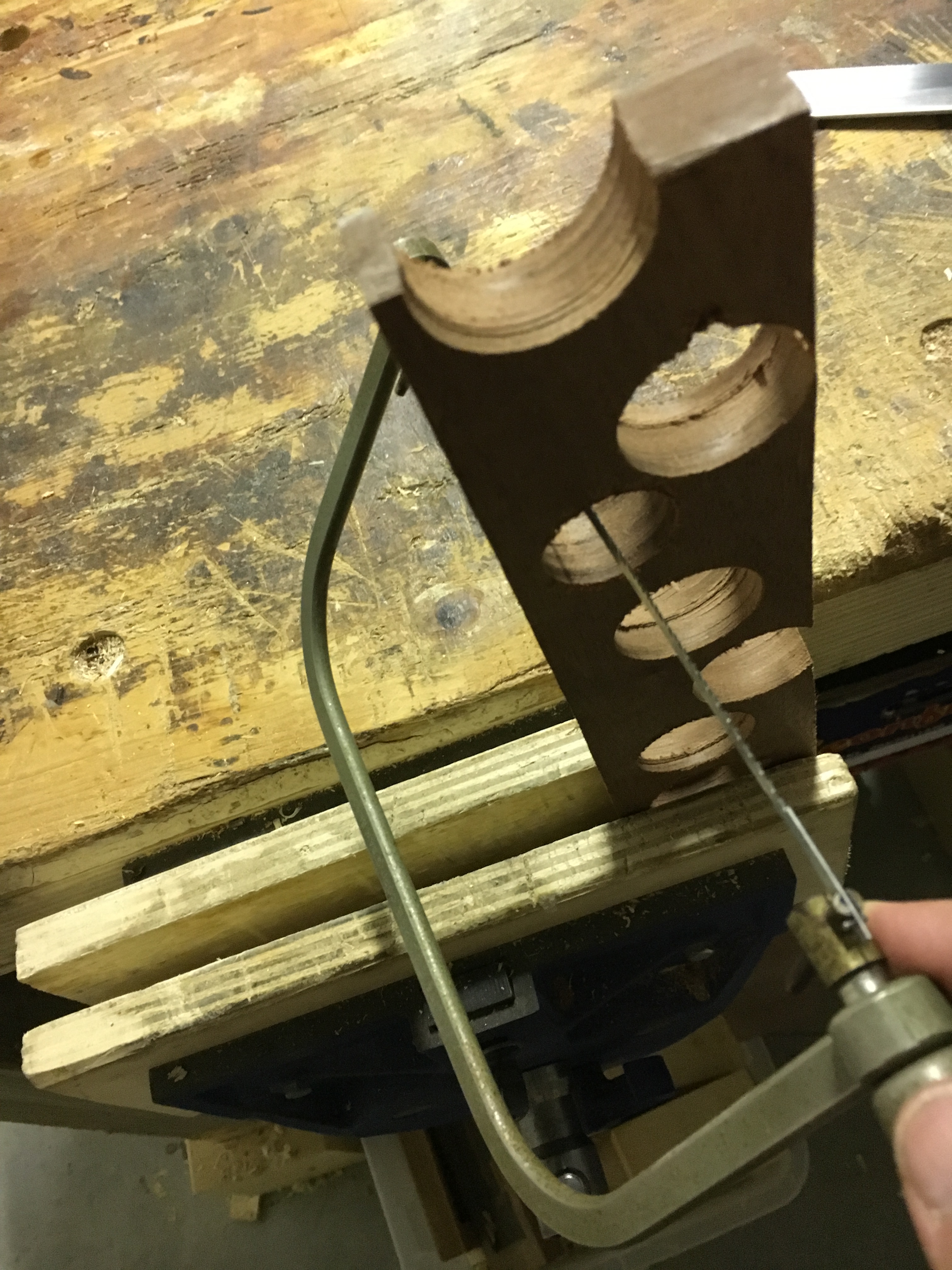
Molto spesso la lavorazione avviene partendo dall’esterno del pezzo ma può accadere che si debba ricavare uno scavo dall’interno del pezzo per creare, ad esempio, degli inserti. In questo caso si pratica all’interno della sagoma disegnata sul pezzo di legno un foro più o meno grande con l’ausilio di un trapano o con il girabacchino e, dall’interno del foro così creato far passare la lama sganciata dal seghetto e rimontandola una volta fatta passare la lama. Il seghetto può tagliare sia in azione a tirare che a spingere a seconda di come viene montata la lama e quindi dalla direzione che assumono i denti rispetto al manico. Personalmente preferisco un’azione a spingere che poi è quella che viene usata prevalentemente. Questo tipo di sega è utilizzato anche per velocizzare determinate operazioni, come ad esempio rimuovere il legno tra le code di rondine, in questo tipo di incastro. I seghetti attualmente in commercio sono veramente economici. Il consiglio però è quello di trovarne uno vintage su Ebay, come ad esempio il modello Eclipse N.7 CP che è stato probabilmente il più diffuso e quello di migliore qualità. E’ possibile aggiudicarsene facilmente uno per pochi euro. Il seghetto ad archetto é un utensile semplice, economico, multifunzionale, importante per tante lavorazioni amanuensi.
——————————————————————————-
Copying saw: In Italy there are various ways of referring to this type of relatively modern tool (dating back to the early 1900s), the ancestor of the current scroll saw and indispensable for some woodworking by hand. These are light and flexible saws that, by making fine and curved cuts, are able to make moldings and shapes in the wood. In practice it is used to saw the wood following curved lines already designed, so as to create shapes of different shape and size in any type of wood and with different thicknesses. The difference with the other saws we have talked about so far is evident. Handsaws, tenon saws and dovetail saws can only make straight cuts. The coping saw instead, thanks to its particular shape and especially because it has a fine blade and many teeth, allows you to make curvilinear cuts. There are saws of various shapes and sizes, but those most commonly used in woodworking measure about 12.5 cm. measuring starting from the arch up to the blade. On the market there are also various types of blades designed for sawing light metals and wood. The most commonly used ones are 14 ppi, 18 ppi and 24 ppi (points per inches). The first type cuts faster but leaves a coarser finish. The type with the highest number of teeth cuts slower but the cut obtained is cleaner. The differences between a blade and the other are however negligible and, in my opinion, any type of blade we will use, will still be fine for the purpose. The blades are all sharpened with a ripsaw pattern (for long cuts). It would be useless a crosscut pattern with such a high number of teeth, as it is in the dovetail saws and in tenon saws. As we will see later, the particular shape of the arch is useful when we have to work on pieces that require a cut from the inside. The blade is mounted by first loosening the handle of the saw counterclockwise so as to loose the block that holds the blade. The blades are equipped with two small stops made in the blade itself. The blade is inserted into the grooves of the blocks where there are the directional guide levers placed at the ends of the arch. Thanks to the blocks the blade will remain in place. The tightening is done by turning the handle clockwise, thus bringing the blade just inserted into tension. Given to the high number of teeth present and the fact that this type of blades are made of reinforced steel, it is not possible to re-sharpen them; when they deteriorate they will simply be thrown away and replaced with new ones. The blades are really unexpensive and are usually sold in packages containing several pieces. Commonly the use of this type of saw involves first tracing a shape on the wood and then using the saw to follow as precisely as possible the trace made, obtaining in the wood the desired shape (so we call them coping saw). When we have to make sudden changes of direction it is useful to act on the two blade guide levers present at the ends of the saw, which, always acting simultaneously on both to avoid blade distortions, it is possible to facilitate the cutting operation on particularly difficult curves. The blade locking system (together with the levers), can rotate 360 degrees and so give the possibility to present the cut from any possible direction. Usually the coping saw is used double hand so to maintain a much better control on the saw, but in particular conditions or for straight cuts, it may be convenient to hold the tool with one hand and help with the other by resting it on the workpiece. Very often the work takes place starting from the outside of the piece but it may happen that you have to work from the inside of the piece to create, for example, some inserts. In this case we practice a more or less large hole in the shape drawn on the piece of wood with the aid of a drill or with the hand brace drill and, we pass the blade through the hole unhooked from the saw and reassembling it once the blade has passed. The saw can cut with a push or pull action depending on how the blade is mounted and therefore from the direction that the teeth take over the handle. Personally I prefer the push motion which is the one that is used the most. This type of saw is also used to remove wood quickly, when we make the dovetail joints for example. The coping saws currently on the market are really unexpensive. The advice, however, is to find a vintage coping saw on Ebay, such as the Eclipse N.7 CP model that was probably the most widespread and the best quality ever made. It is possible to get one for a few euros. The coping saw is a simple, unexpensive, multifunctional tool, important for many woodworkers.


 CREAROBI
Lascia un commento