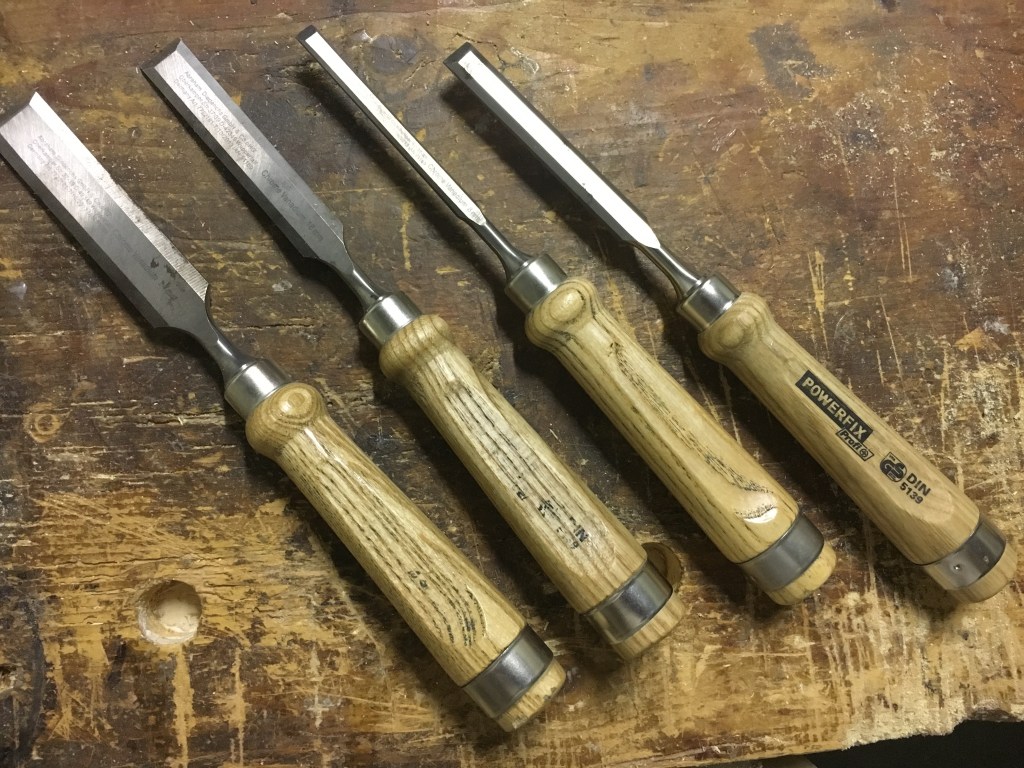
Scalpelli / Chisels
English translation at the end of the article
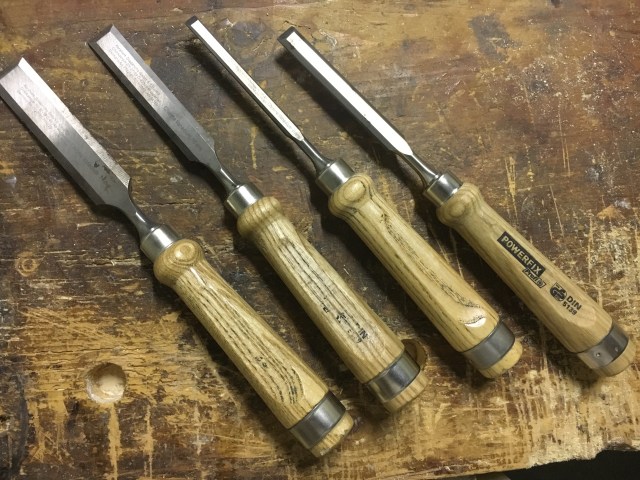
Lo scalpello e’ uno di quegli utensili ai quali ci si avvicina sempre con qualche perplessita’ e molti timori. Effettivamente per riuscire ad utilizzarlo al meglio occorre fare un po’ di pratica ma mi sono reso
conto che, se usato in modo appropriato, a lungo termine arricchisce la nostra sensibilità e la nostra conoscenza per la vera natura del legno.
Nel corso dei secoli si sono prodotti tanti tipi di scalpelli variandoli in forme e dimensioni così da renderli sempre più adatti alle lavorazioni da effettuare. Lo scalpello, comunque, nella sua versione base, e’ sempre costituito da una lama di acciaio di varia durezza fissata in un manico solitamente fatto di legno o di plastica, e due ghiere di rinforzo una posta sul collo della lama ed una posta sul manico vicino alla cima. L’utilizzo dello scalpello e’ molto intuitivo: lo si impugna per il manico con una mano e con l’altra lo si percuote sulla testa con un martello, solitamente fatto di legno, il cosiddetto mazzuolo. In particolari lavorazioni lo scalpello si può usare afferrandolo con ambedue le mani e talvolta lo si puo’ utilizzare anche senza martello, con la sola forza di spinta del palmo della mano. Per ottenere risultati soddisfacenti bisogna che il tagliente della lama sia assolutamente affilato. Una lama non affilata ci porterà a fare più fatica, impiegando maggior tempo e ottenendo una peggiore finitura. Per contro il suo utilizzo richiede sempre una particolare attenzione. In linea generale le mani e le dita non si devono mai frapporre tra la lama ed il pezzo da lavorare.
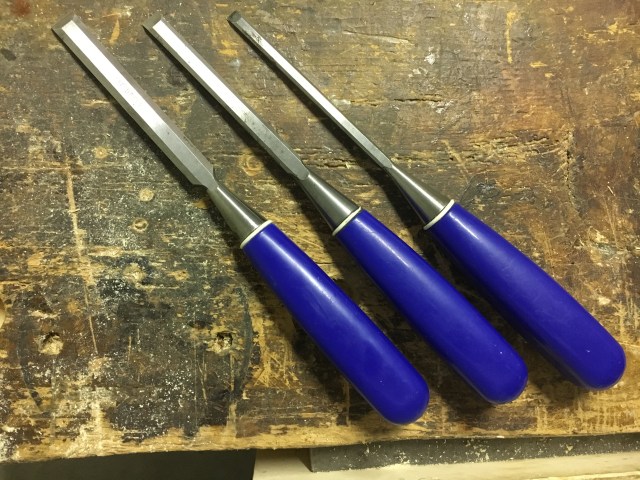
Gli scalpelli si possono raggruppare in due categorie principali:
– scalpelli (bevel edge chisels);
– bedani (mortise chisels).
I bevel edge chisels sono i miei preferiti. Sono leggeri ed estremamente versatili. La loro particolare conformazione con i tre lati della lama smussati per tutta la loro lunghezza ed i bordi sottili mi permettono di avere un’ ottima visibilità delle linee di taglio, ottenere una maggiore finitura ed offrire una molteplicità di utilizzi, come ad esempio nella lavorazione delle code di rondine.
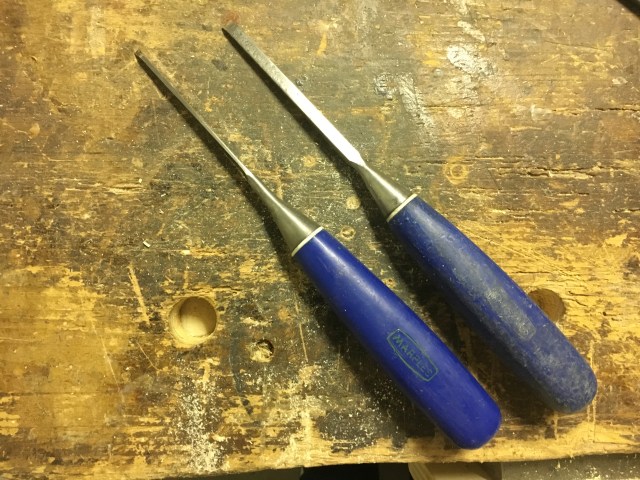
I mortise chisels sono più robusti, possiedono un maggiore spessore della lama, un tagliente molto accentuato ed un manico generalmente piu’ grande. Queste caratteristiche li rendono particolarmente adatti per lavori gravosi come scavare mortase profonde e di dimensioni generose cosi’ come la grandezza del manico e’ progettata per sopportare il peso e l’azione di grossi mazzuoli.
In commercio esistono altre tipologie di scalpelli come ad esempio i firmer chisels, scalpelli con il tagliente squadrato, utili per lavori generici.
Anche per gli scalpelli esistono gli alter ego Orientali sui quali però non saprei dare un’opinione, non possedendoli, ma per i quali ho letto recensioni lusinghiere.
Marchi di scalpelli prestigiosi e che hanno fatto la storia sono Marples, I Sorby, Ward, Two Cherries, Ashley solo per citarne alcuni e tra i moderni Narex, Lie Nielsen e molti altri. Possiedo alcuni bedani e firmer chisels Marples e degli scalpelli bevel edge Faithfull e Lidl. Sono economici ma se non si hanno particolari pretese sono più che buoni.
Ho realizzato che con circa 6 / 8 scalpelli, spaziando dalle misure dai 4 mm. ai 38 mm. e scegliendoli in base alle esigenze che ci si prospettano, si puo’ coprire la stragrande maggioranza delle lavorazioni possibili.
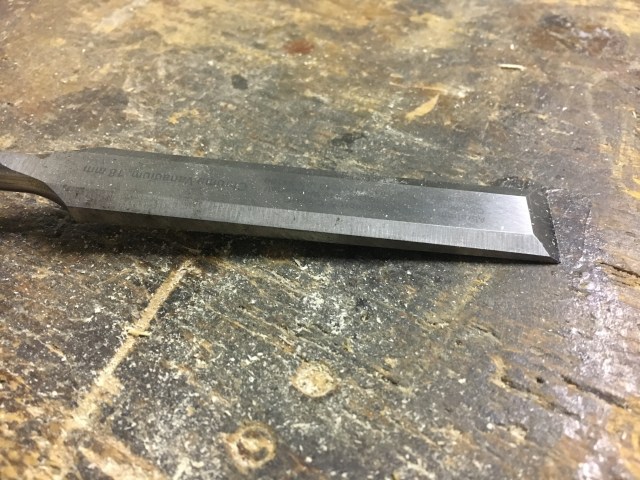
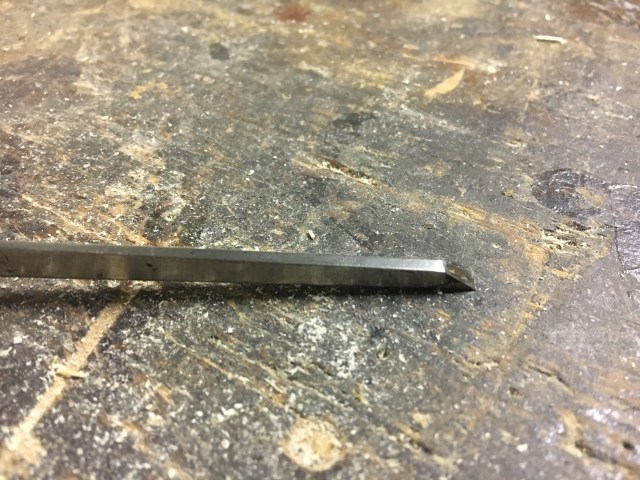
Fondamentale, oltre ad un’ottima affilatura della lama, e’ anche il suo grado di durezza. Una buona lama dovrebbe possedere un acciaio sopra i 59/61 hrc. L’affilatura del tagliente solitamente viene fatta tra i 25 ed i 30 gradi per i bevel edge e a 35 gradi per i mortise chisel. Il grado di affilatura da dare al tagliente dipende comunque da svariati fattori che vedremo in seguito parlando dell’affilatura.
Con lo scalpello si possono fare molteplici lavorazioni. Scavare per praticare mortase, pareggiare incastri, rifinire giunzioni, dividere il legno ed altro ancora.
Approfondiremo l’argomento affilatura e le tecniche di lavorazione con gli scalpelli in post dedicati.
Chisel is one of those tools to which you always come up with some perplexity and many fears. Indeed, in order to be able to use it at its best, you need just a little practice. I realized that if used appropriately, in the long run, it enhances our sensitivity and our knowledge about the true nature of wood.
Over the centuries, many types of chisels have been produced, varying them in shapes and sizes to make them more and more suitable for the works to be carried out. The chisel, in its basic version, has always a steel blade of various hardness fixed in a handle usually made of wood or plastic a ferrule on the neck of the blade and a steel hoop near the top of the handle. The use of the chisel is very intuitive: you take the handle with one hand and with the other you strike on the head with a mallet. In some cases the chisel can be used with both hands, and sometimes it can be used without a mallet, with the only pushing force of the palm of the hand. For good results the cutting edge should be absolutely sharpened. A dull cutting edge will get you to work harder, taking longer time and getting a worse finish. However you always have to pay attention. Hands and fingers should never be between the blade and the workpiece.
Chisels can be grouped into two main categories:
– bevel edge chisels;
– mortise chisels.
Bevel edge chisels are my favorites. They are light and extremely versatile. Their special shape with the three sides of the bevel along all the length and the thin edges allow me to have a great visibility of the cutting lines, to get more finish and offer a variety of uses, such as in dovetails.
The mortise chisels are heavier , they have a thicker blade, a long cutting edge and a bigger handle. These features make them particularly suitable for hard work such as deep and large mortises as well as the size of the handle is designed to withstand the weight and strength of heavy strikes.
In trading there are other types of chisels, such as firmer chisels, square chisels, useful for general purposes.
Does exists Oriental alter ego chisels but I can not give my opinion because I don’t own them, but I read good information about them.
Famous old producers are Marples, I Sorby, Ward, Two Cherries, Ashley Isles and so on and among the modern ones I read good information about Narex, Lie Nielsen and many others. I own some Marples mortise chisels and Faithfull and Lidl bevel edge chisels. They are cheap but if you do not have particular demands they work well.
I realized that with about 6/8 chisels, ranging from 4 mm measures. to 38 mm. and choosing them according to your needs, you can cover about 100/100 of your woodwork.
Very important, in addition to a perfect sharpening, is also its hardness degree. A good blade should have a steel over 59/61 hrc. Sharpening is usually made between 25 and 30 degrees for bevel edge chisels and at 35 degrees for mortise chisels. When choosing the sharpening degree you have to consider many factors. We will talk about that and the several woodworking techniques that can be make with the chisels, such as making mortises, joinery and splitting wood, in dedicated future posts.


 CREAROBI
Lascia un commento