
Coltellino da tracciatura / Layout knife
English translation at the end of the article
Il coltello da tracciatura e’ un utensile essenziale in ogni laboratorio di falegnameria anche se non si è dei puristi amanuensi. Il suo utilizzo e’ strettamente collegato a quello della squadra e con la stessa lavora
praticamente sempre a stretto contatto.
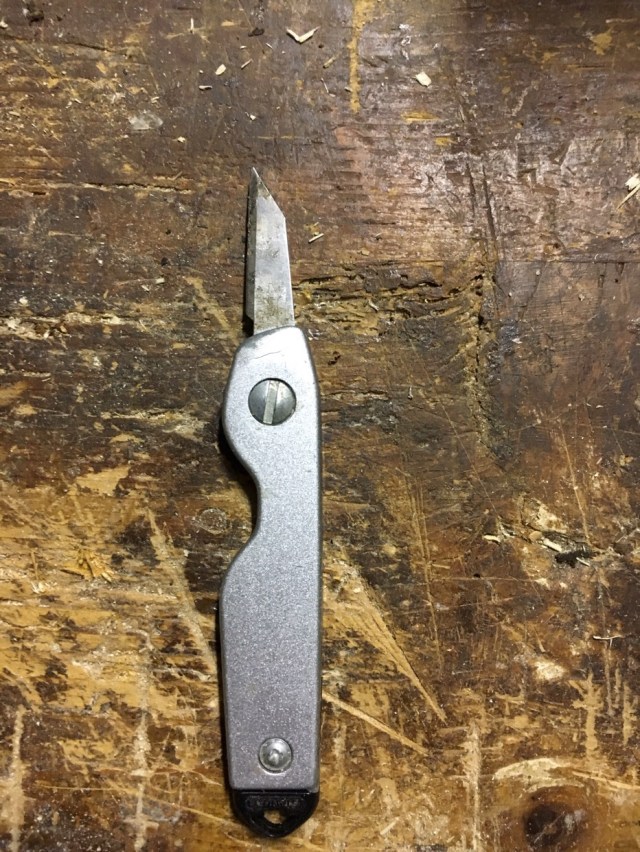
Quello che utilizzo io e’ semplice, leggero e si conforma bene alla mia mano, oltre ad essere molto performante.
E’ importante che sia sempre ben affilato soprattutto la parte terminale della lama verso la punta, essendo quest’ultima la parte che lavora maggiormente dovendo raggiungere angoli e punti difficili negli incastri da eseguirsi.
La lunghezza utile della lama dovrebbe essere di almeno 1 o 1,5 cm.
Con il tempo mi sono reso conto che questo attrezzo e’ tanto semplice quanto indispensabile trovando applicazione in molteplici lavorazioni, prettamente manuali.
Si usa per tracciare solchi nel legno definendone le sezioni per il successivo dimensionamento, per riportare misure sulle diverse facce di un pezzo di legno, per creare vere e proprie scanalature per il successivo utilizzo di seghe e scalpelli. Ridefinisce esattamente le misure che si erano precedentemente segnate a matita.
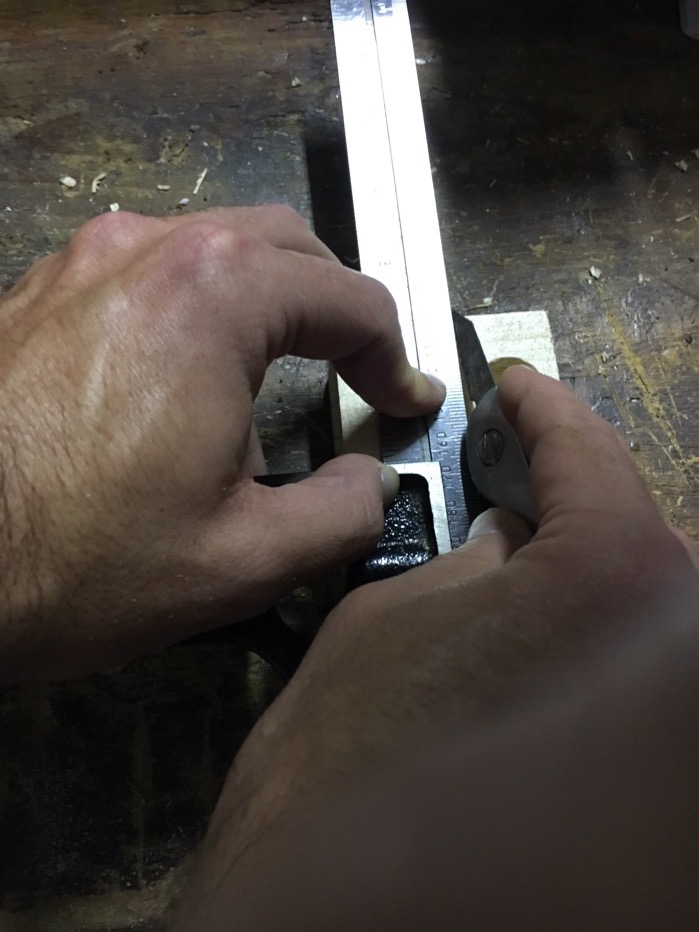
Il passaggio della lama del coltello non rimuove le fibre del legno ma le comprime creando il solco visibile. Il suo utilizzo a battuta con la squadra prevede di essere direzionato con un certo grado di inclinazione per compensare lo smusso della lama stessa. Trovo comodo impugnarlo mantenendo il dito indice verso la lama così da poterne assumere un maggior controllo.
In linea teorica si può fare lo stesso lavoro anche con un comunissimo trincetto, o addirittura modificando un coltello da cucina ma, visto il prezzo abbordabile, a mio parere conviene orientarsi su un attrezzo specifico per l’uso.
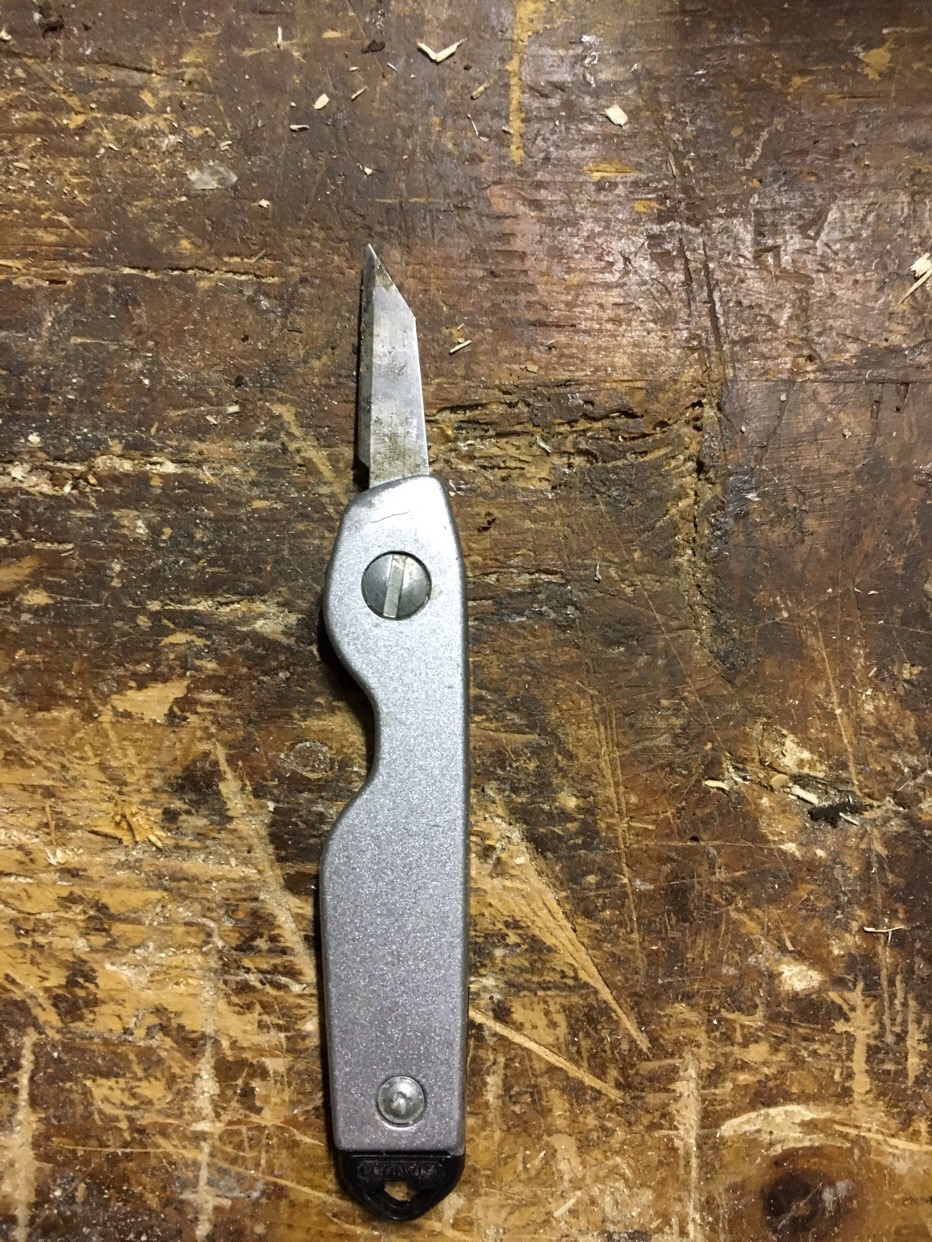
In commercio esistono svariati modelli di coltello da tracciatura, diversificandosi per grandezza e spessore della lama, la forma il peso e ovviamente l’estetica. Molti hanno delle specifiche che li rendono utili in particolari lavorazioni del legno. Per un uso generico, ed utile soprattutto per tracciare giunzioni, ho trovato un ottimo rapporto qualità prezzo in questo articolo, lo Stanley Folding Pocket Knife 0 – 10 – 598 con lama ripiegabile ed una lama di ricambio in dotazione.
Allego due link dove poterlo acquistare ad un prezzo che reputo conveniente. Ne esistono sicuramente di più belli e più costosi e magari anche più performanti ma francamente non ho mai sentito la necessità di cambiarlo.
http://www.axminster.co.uk/stanley-folding-pocket-knife-135737
——————————————————————————
The layout knife is an essential tool in every carpentry workshop even if you are not a real woodworker by hand. Its use is closely linked to that of the square and it works almost always in close contact with it.
What I use is a simple, lightweight knife and conforms well to my hand as well as being very performing.
It is important that the end of the blade is always well sharpened to the tip, since the latter is the part that works the most because it has to reach corners and difficult points in the joints to be executed.
The useful length of the blade should be at least from 1 cm. to 1,5 cm.
By the time I realized that this tool is as simple as it is indispensable, finding application in various processes purely by hand.
It is used to draw grooves in the wood by defining the sections for the next dimension, to take measurements on the different faces of a piece of wood, to create grooves for the subsequent use of saws and chisels. Define exactly the measures that were previously marked with the pencil.
The blade of the knife does not remove any wood fibres but compresses them by creating the visible groove. Used against the straightedge of the square it expects to be directed with a certain degree of inclination to compensate for the bevel of the blade itself. I find comfortable to hold it by putting the index finger towards the blade so that it can take more control.
Theoretically, you can do the same work with a very good trinket, or even by modifying a kitchen knife but, given the affordable price, in my opinion it is best to orient yourself to a specific tool for use.
On the market there are several models of layout knife, varying by the size and thickness of the blade, the shape, the weight and obviously the aesthetics. Many have specifications that make them useful in particular woodworking. For a generic use and especially useful for joinery, I found a great value for money in this article, Stanley Folding Pocket Knife 0 – 10 – 598 with folding blade and a spare blade supplied.
I attach a link where you can buy it at a convenient price. Certainly there are more beautiful and expensive knives and even more performing but honestly I have never felt the need to change it.
http://www.axminster.co.uk/stanley-folding-pocket-knife-135737


 CREAROBI
Lascia un commento